
International Association
of Universities
The Global Voice of Higher Education
The IAU at a Glance
The International Association of Universities (IAU), established under the auspices of UNESCO in 1950, is a membership-based organization serving the global higher education community. It unites members from more than 120 countries around a set of common values and supports them through advocacy, expertise, and exchange. Watch an introductory video.
-
About the IAU
The International Association of Universities, created under the auspices of UNESCO in 1950, is a membership-based organisation serving the global higher education community through: expertise & trends analysis, publications & portals, advisory services, peer-to-peer learning, events, and global advocacy.
-
Membership
The IAU counts almost 600 Members from more than 120 countries amongst its four categories of Members: Institutions, Organizations, Affiliates and Associates. Benefiting from the IAU’s complete range of services, institutional and organisational Members may also participate in the election of the President and Administrative Board.
-
Areas of Work
The IAU has four priority which inform the Association’s work, namely: Value-based Leadership, Internationalization for the Common Good, Sustainable Development, and Digital Transformation. In addition, the IAU also maintains and develops the World Higher Education Database (WHED) alongside UNESCO.
Get Involved
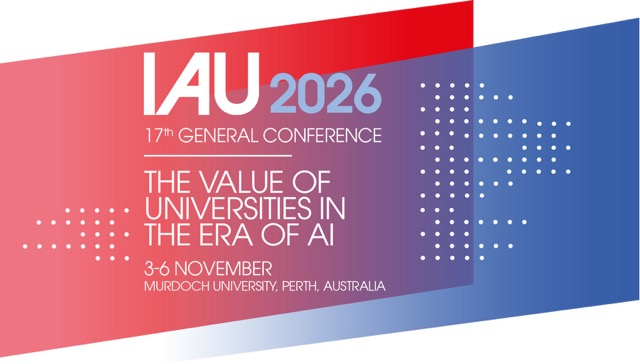
A Personal Invitation to the IAU 17th General Conference. The International Association of Universities' 17th General Conference comes at an important moment for higher education.
From 7 to 15 July 2026, the United Nations High-Level Political Forum on Sustainable Development (HLPF) will be held under the auspices of the Economic and Social Council. The 2026 Forum will focus on the theme “Transformative, equitable, innovative and coordinated actions for the 2030 Agenda for Sustainable Development and its Sustainable Development Goals for a sustainable future for all.”

Hosted by Murdoch University from 3-6 November 2026, the IAU 17th General Conference event will feature a dynamic programme exploring emerging trends in higher education, drawing on diverse perspectives from all regions of the world.
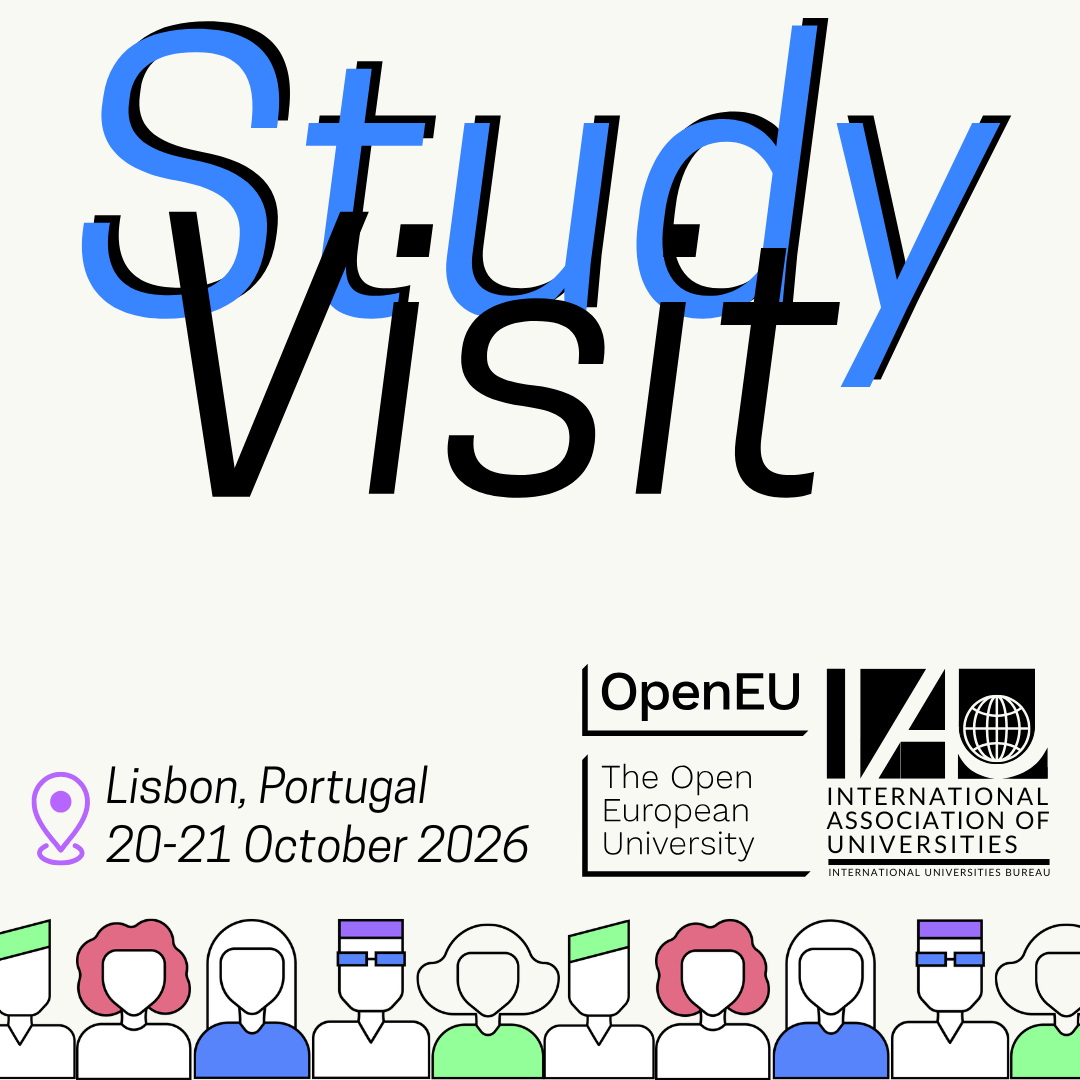
The International Association of Universities (IAU) is pleased to announce the opening of applications for the second in a series of four OpenEU Study Visits, organised by the IAU in its role as an Associative partner of OpenEU. This Study Visit will take place at the Universidade Aberta in Lisbon, Portugal.
Each year, the IAU reserves a dedicated budget to offer a HEIAS Annual Fee Waiver to one IAU Member institution. This Fee Waiver provides access, free of charge, to selected online modules of the HEIAS services, allowing institutions to strengthen their internationalisation strategy through structured, expert-led support.
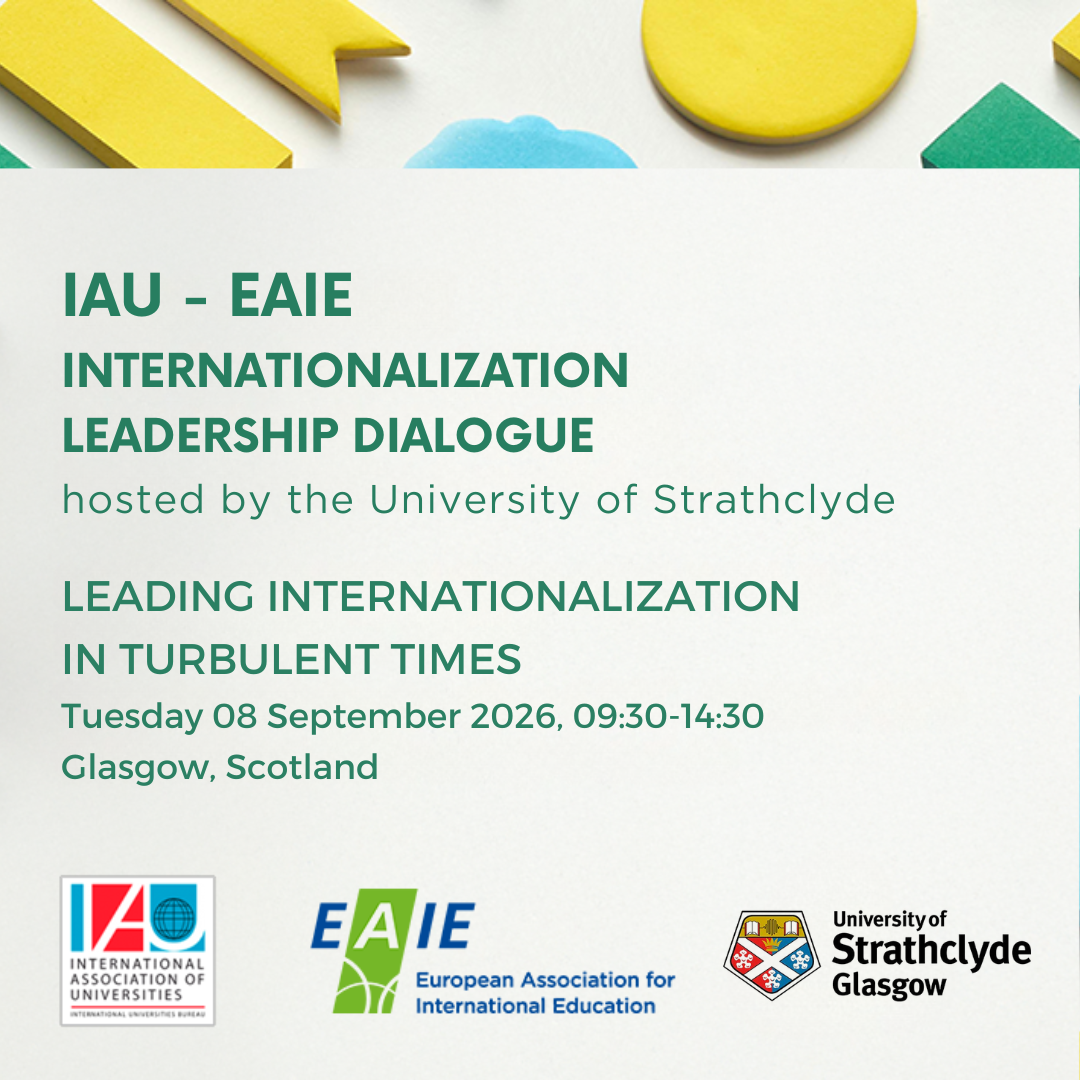
The IAU and EAIE invite you to join us for the 2nd Internationalisation Leadership Dialogue hosted by the University of Strathclyde in Glasgow, Scotland on Tuesday, 8 September 2026 from 9:30 – 14:30.
Since 2025, the IAU offers one fee waiver to cover the participation of one IAU Member HEI for the Responsible Futures International programme.

The IAU is pleased to announce that it will conduct the 4th Global Survey on Higher Education and Research for Sustainable Development in 2026.
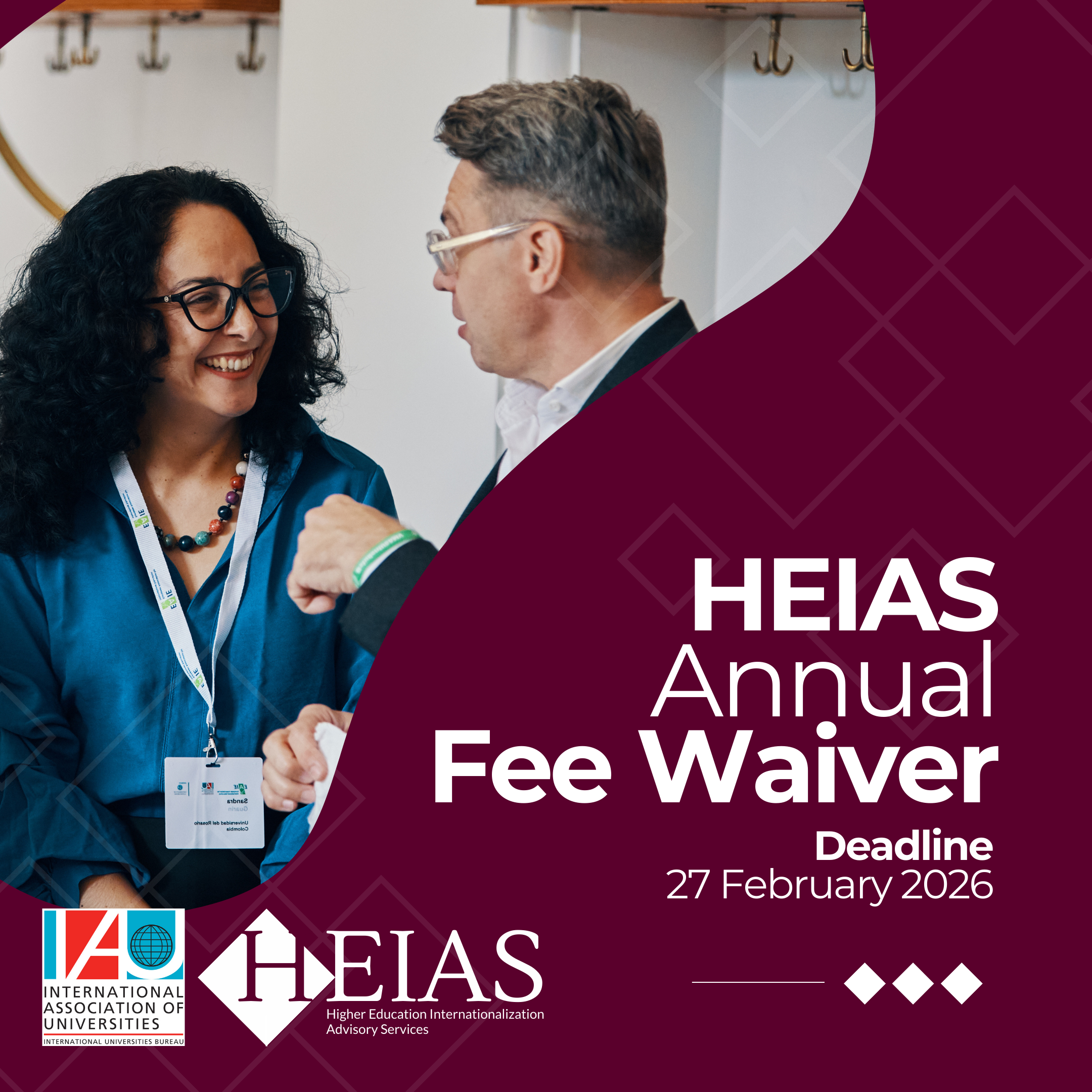
Each year, the IAU reserves a dedicated budget to offer a HEIAS Annual Fee Waiver to one IAU Member institution. This Fee Waiver provides access, free of charge, to selected online modules of the HEIAS services, allowing institutions to strengthen their internationalisation strategy through structured, expert-led support.
Mission of the IAU
By articulating the fundamental values and principles that underpin education and the pursuit, dissemination and application of knowledge, the Association leads and advocates for the development of higher education policies and practices that respect diverse perspectives, promote social responsibility, and contribute to the development of a sustainable future.

Advocating for Higher Education
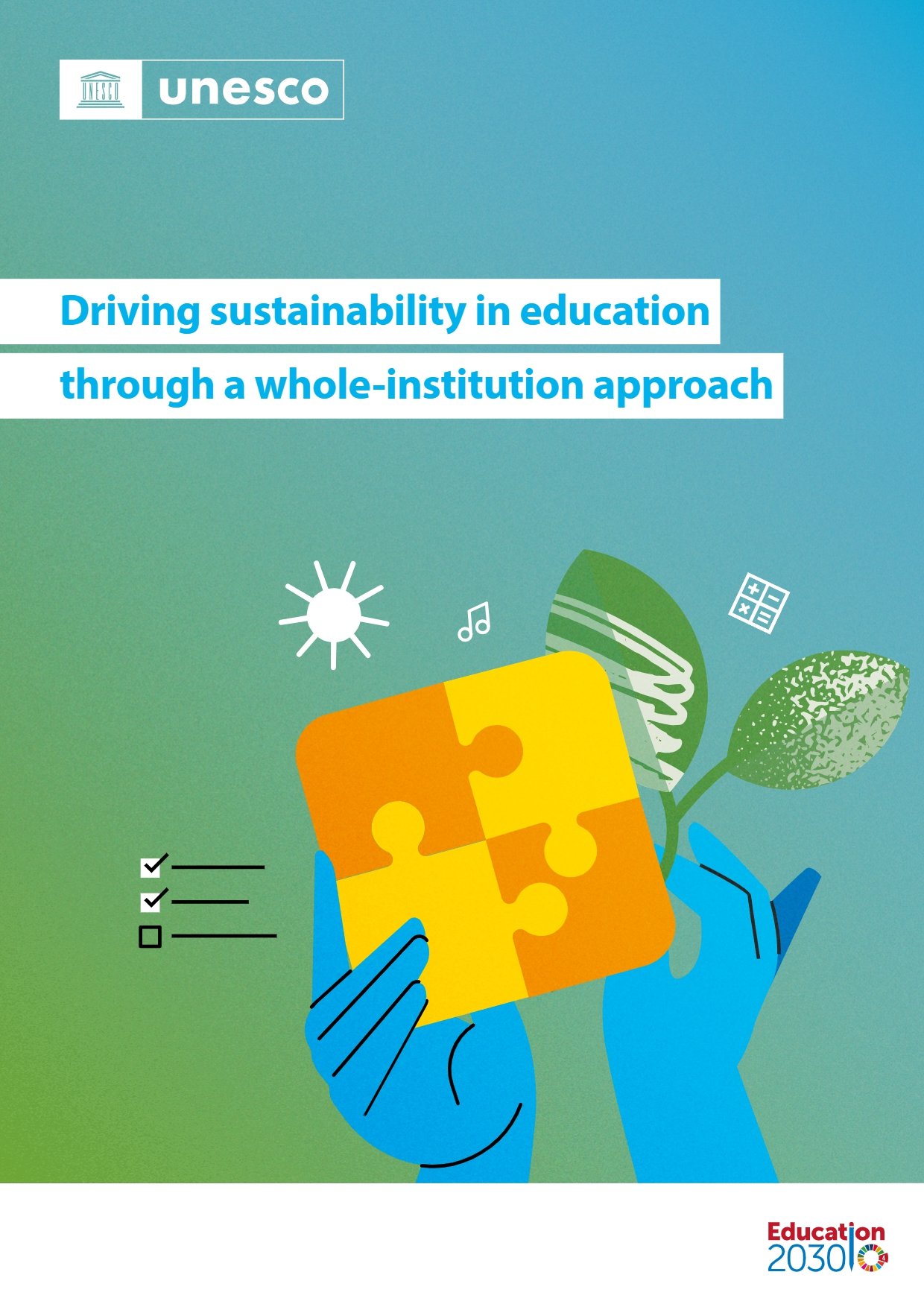
The IAU is pleased to announce that on 17 September 2026, UNESCO launched 3 new guidance tools for Education for Sustainable Development (ESD) during an online event.
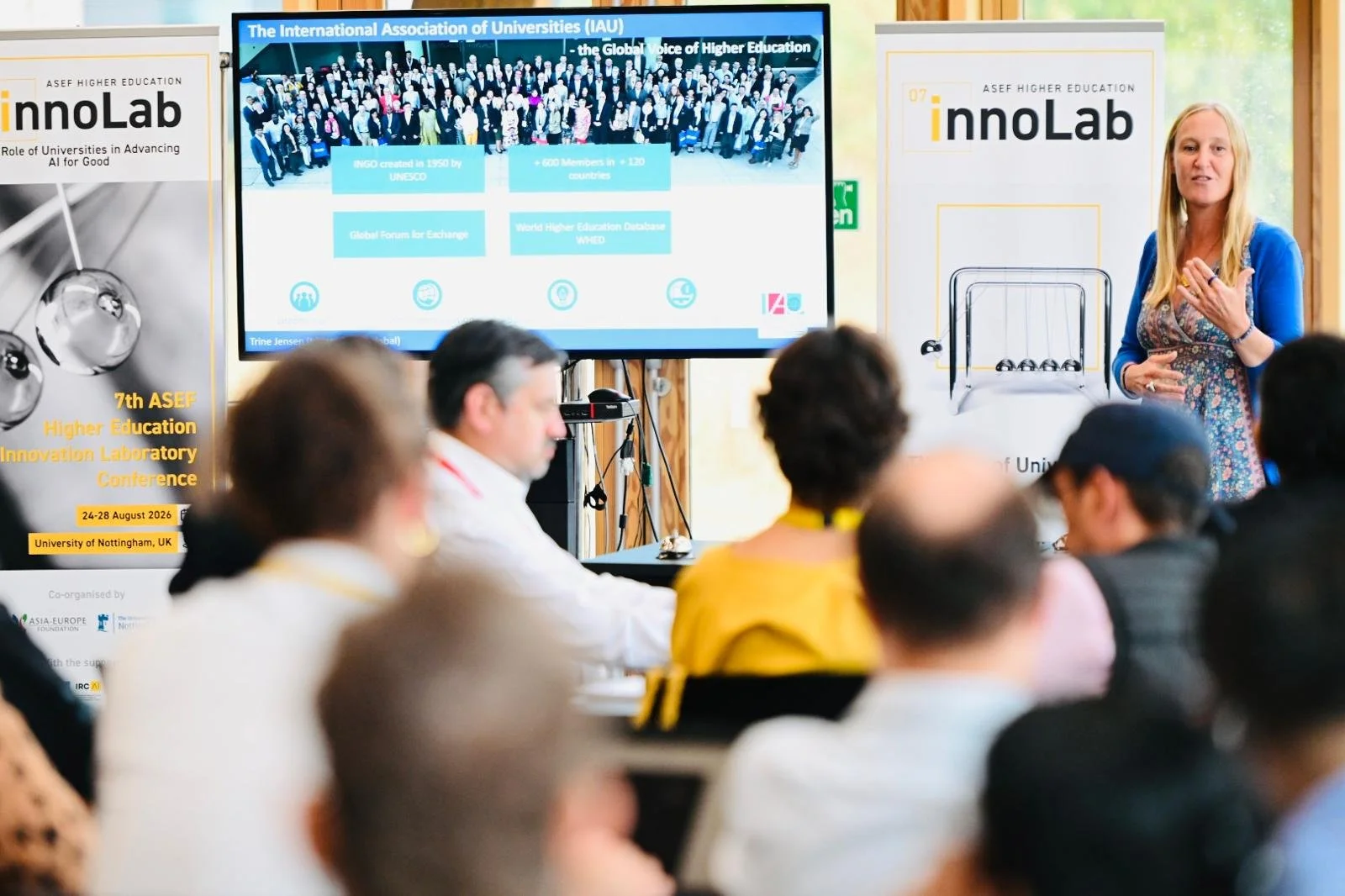
In 2026, the 7th ASEF Higher Education Innovation Laboratory (ASEFInnoLab7) brought together university leaders, policy researchers, and innovators from across Asia and Europe under the banner of “The Role of Universities in Advancing AI for Good.”
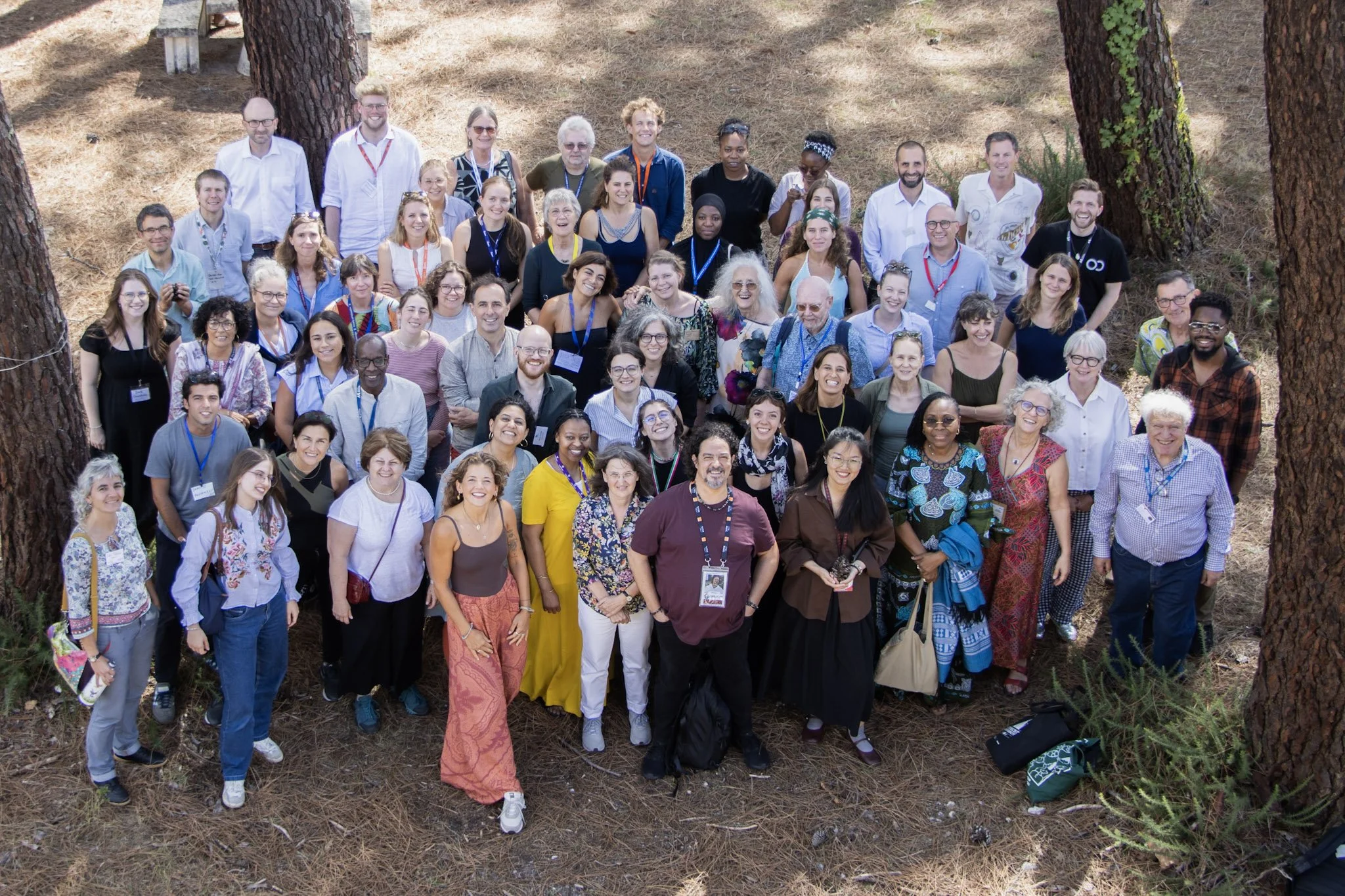
From 26-28 August, Isabel Toman, IAU Senior Programme Officer for Higher Education and Sustainable Development (HESD) attended and presented a paper at the 2026 Higher Education Summit.
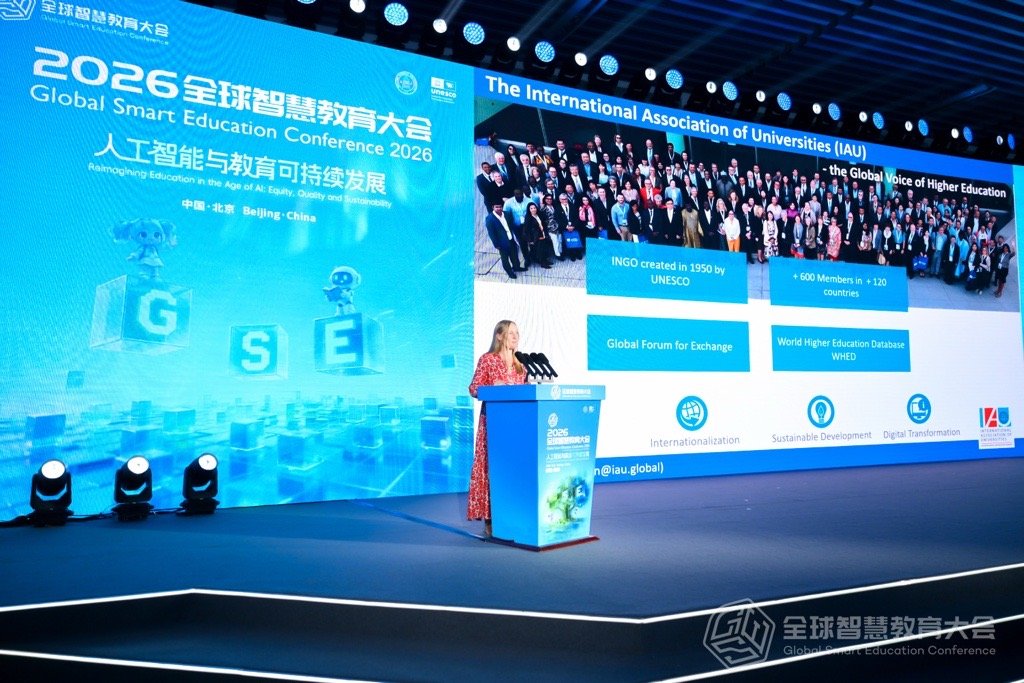
From 18 to 20 August, the International Association of Universities (IAU) participated in the Global Smart Education Conference 2026 (GSE 2026) held at Beijing Normal University (BNU), China.

In July 2026, the IAU actively participated in two pivotal UNESCO events this July: the Transforming Education Summit +4 (TES+4) and the 2026 Global Conference on the International Decade of Sciences for Sustainable Development (IDSSD 2024–2033).
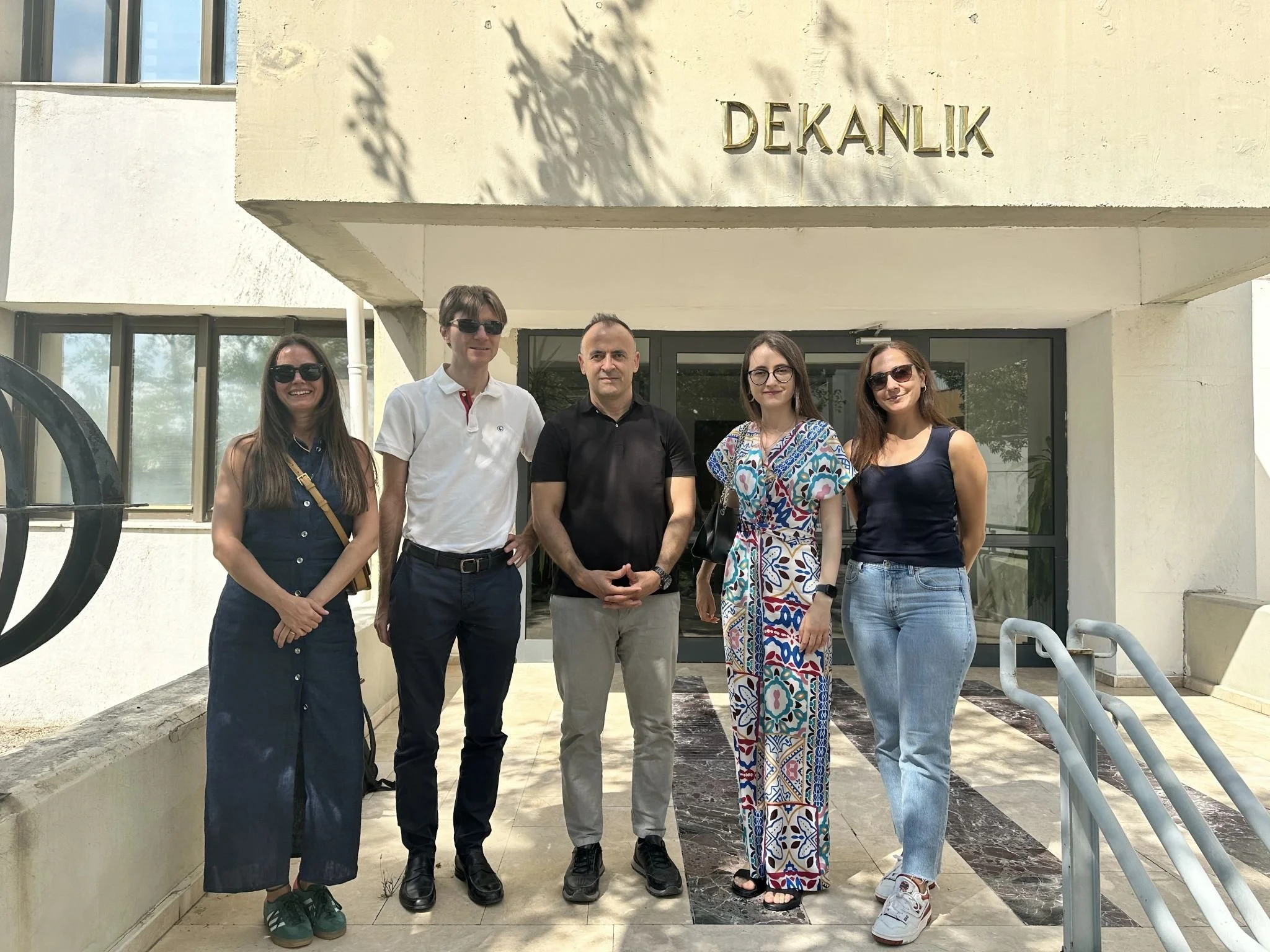
The IAU is pleased to announce that the article Navigating forcibly displaced learners’ pathways to higher education and beyond: Ukrainian students in French higher education has recently been published. This publication, written by Yasar Kondakci, Sevgi Kaya Kasikci, Giorgio Marinoni, and Kateryna Nakvatska, was born on the initiative of Kateryna during her internship at the IAU in 2024.
The IAU is pleased to announce the signing of a Memorandum of Understanding (MoU) with the Brazilian Federal Agency for Support and Evaluation of Graduate Education (CAPES) under the CAPES-Global.edu project, a major Brazilian government initiative for the internationalization of post-graduate higher education.
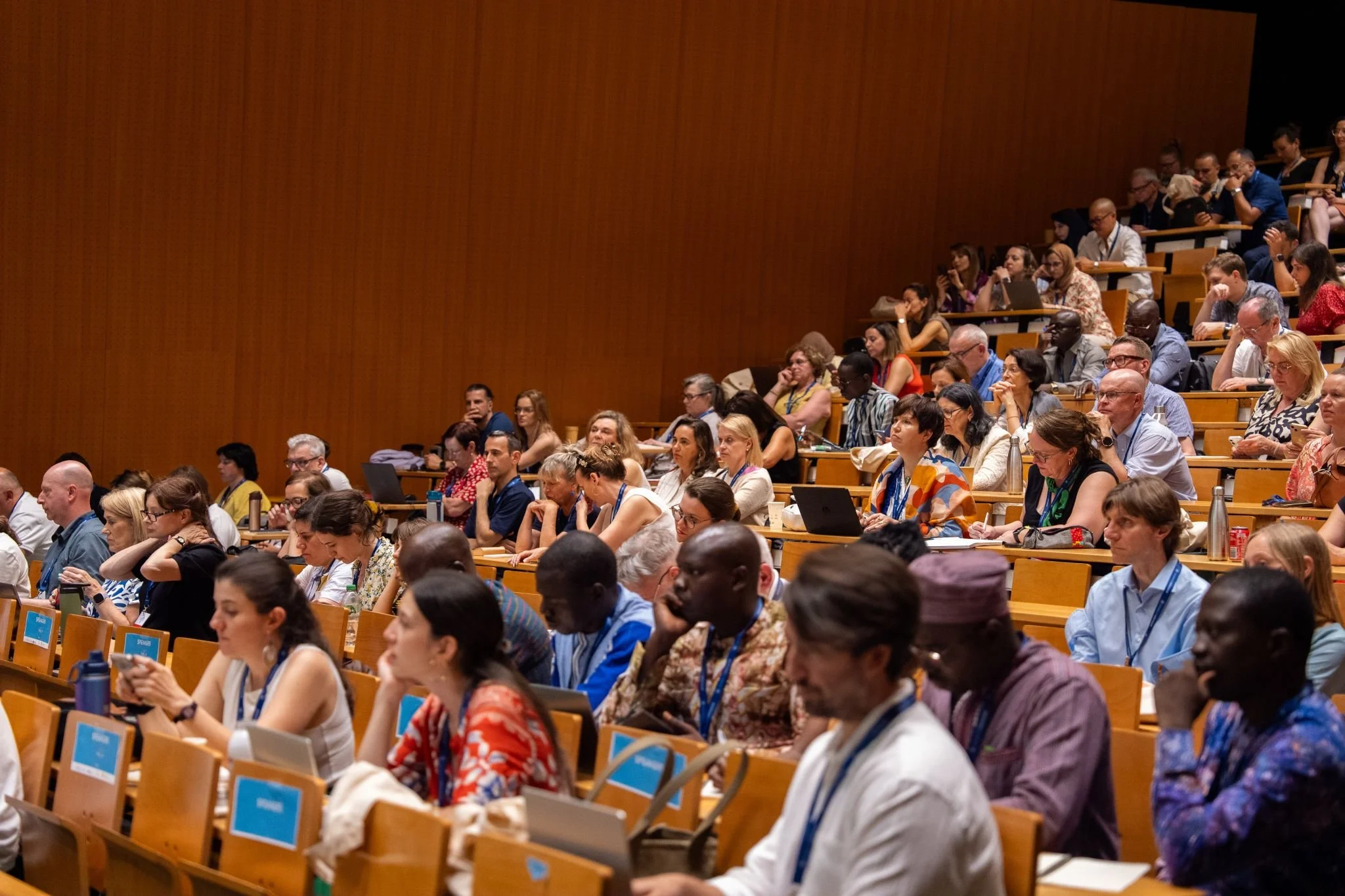
The IAU was pleased to participate in the 5th edition of the Université Côte d'Azur International Digital Week, contributing expert insights and facilitating critical discussions on the intersection of digital transformation, internationalisation, and the future of higher education.
In the three decades since the adoption of the UNESCO Recommendation concerning the Status of Higher-Education Teaching Personnel (1997), the global higher education landscape has undergone profound transformation.
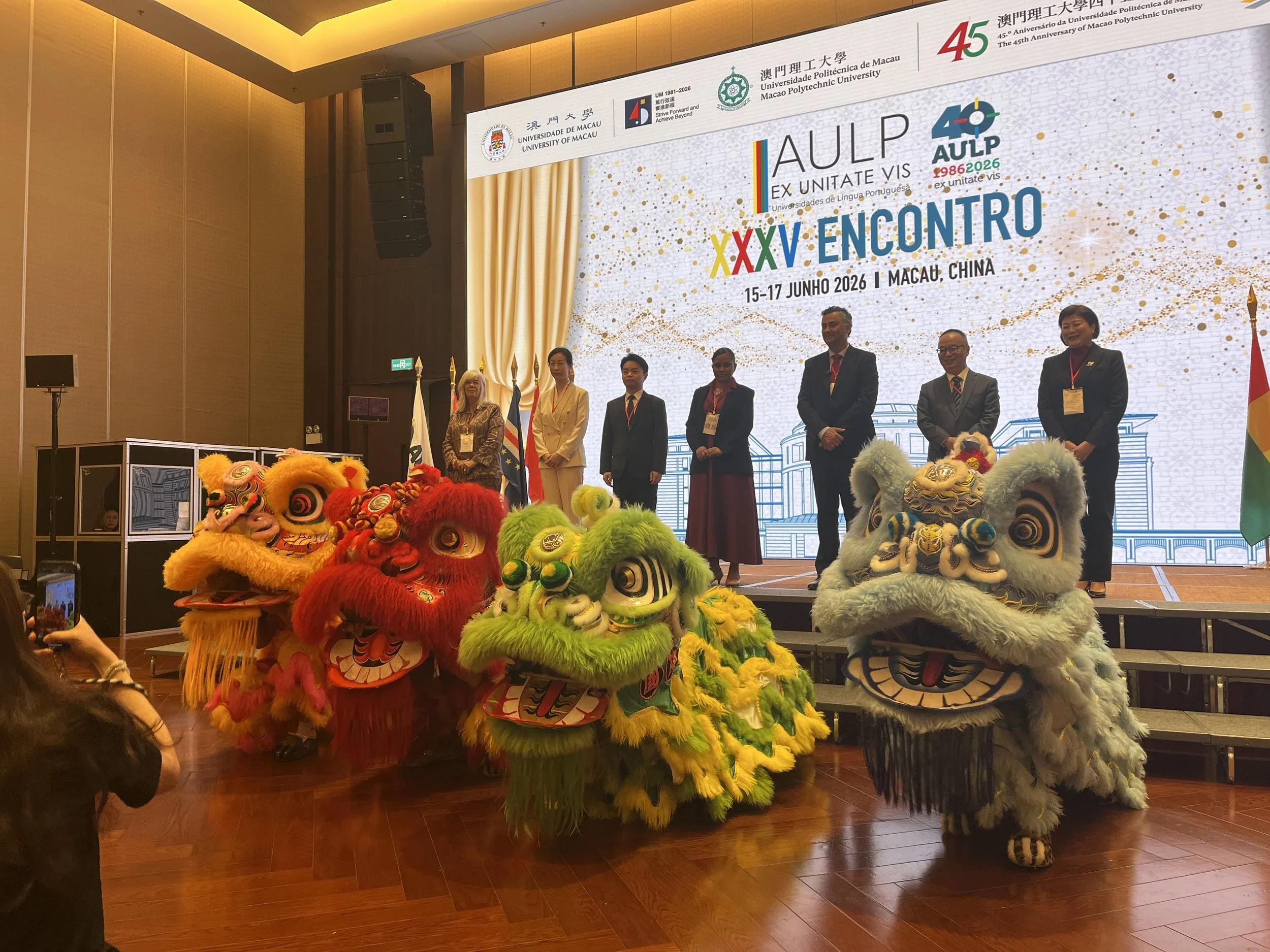
From 15–17 June 2026, IAU Secretary General Hilligje van’t Land joined 150 university leaders from Lusophone countries and China at the 35th Meeting of the Association of Portuguese Language Universities (AULP), marking the organisation’s 40th anniversary.
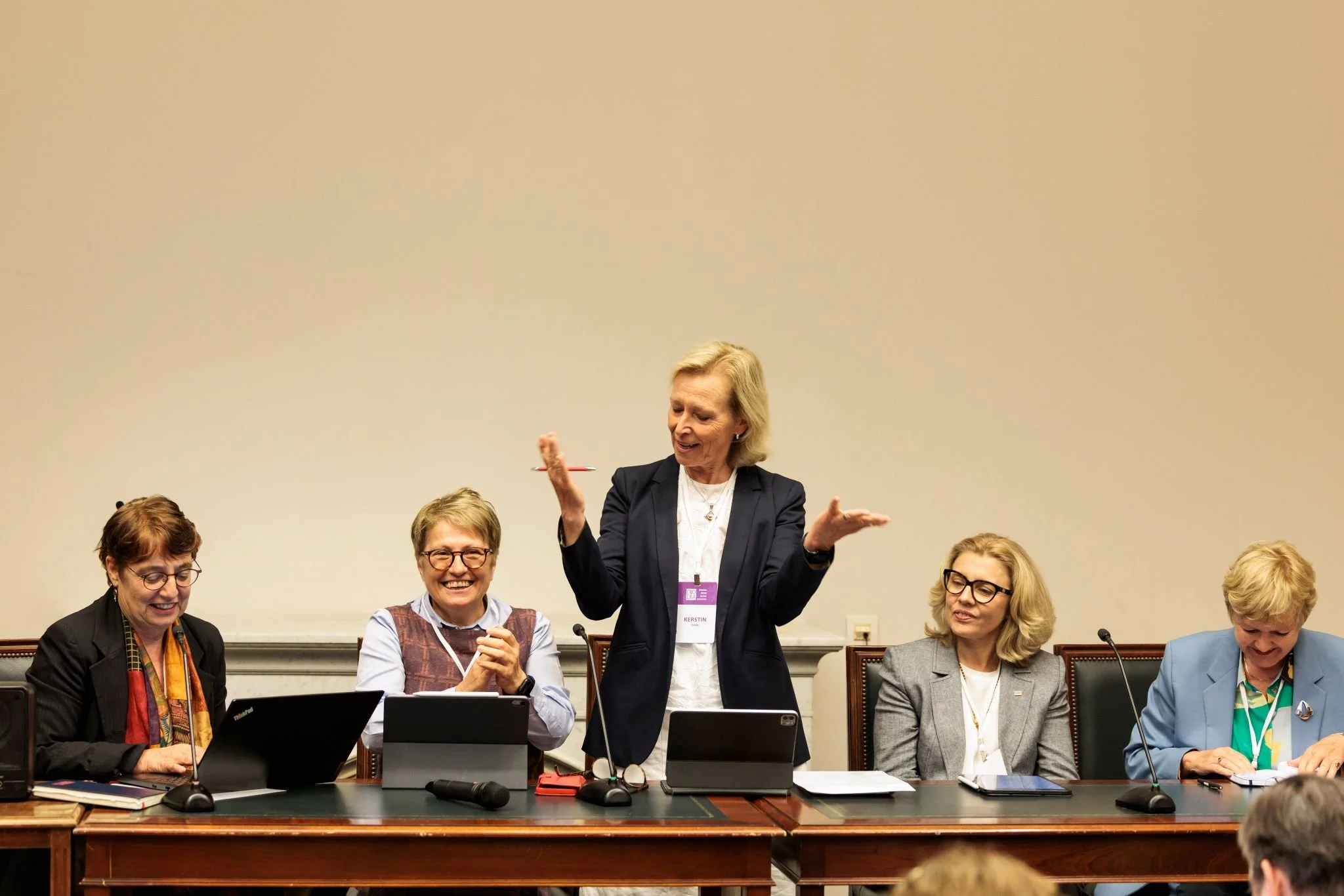
On 10 June 2026, the European Women Rectors Association (EWORA) convened its annual conference in Brussels, bringing together women academic leaders from Europe and beyond under the theme: “Women’s Leadership in Academia in Times of Rising Geopolitical Tensions”. The event provided a critical space to reflect on the role of universities in upholding democracy, academic freedom, and international cooperation—values under pressure in an era of fragmentation and uncertainty.
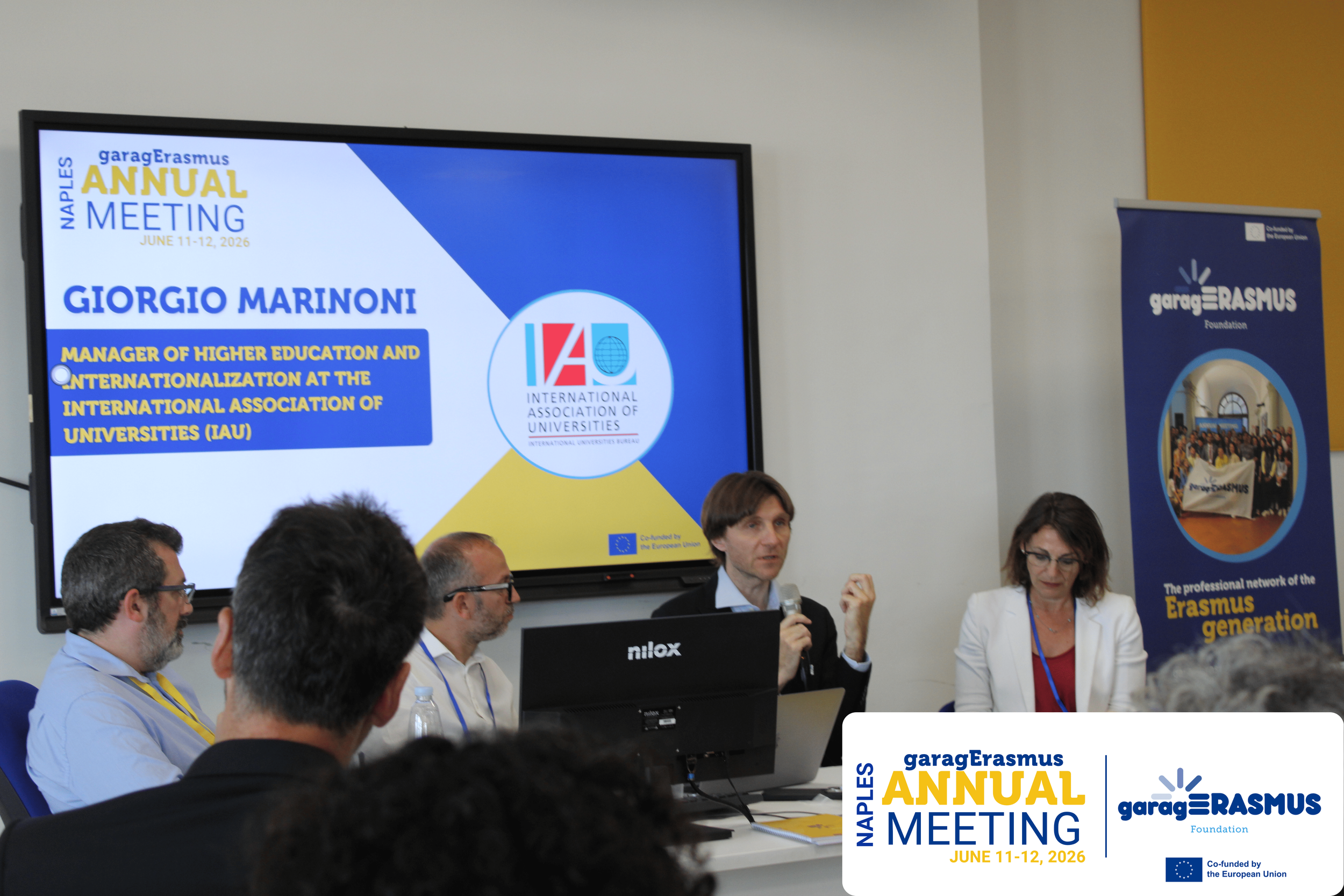
IAU Manager of Higher Education and Internationalization, Giorgio Marinoni, recently contributed to the 2026 Annual Meeting of the garagErasmus Foundation. GaragErasmus is the Erasmus Generation Professional Network and aims t be a creative hub for mobile talents to support the shaping of a new Europe.
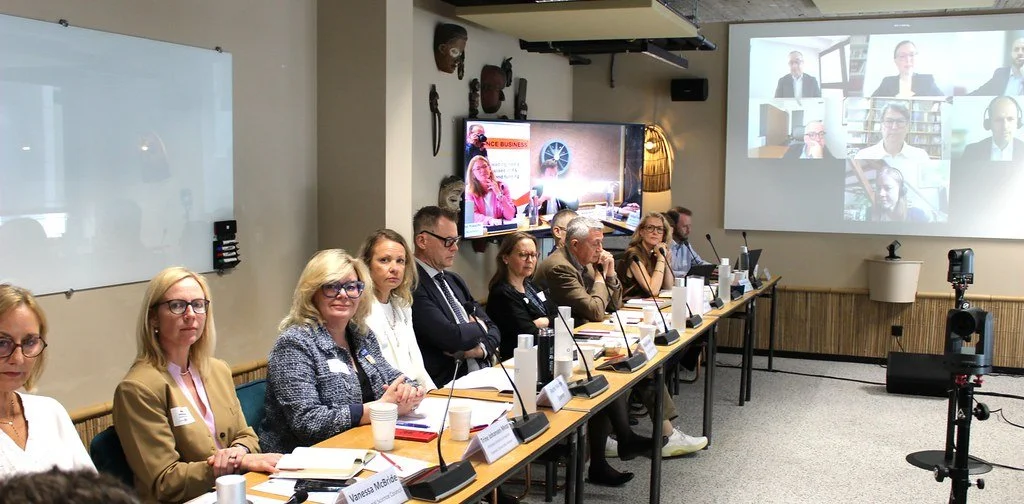
IAU Secretary General Hilligje van’t Land participated in the Science|Business roundtable "Pillars of Freedom: Safeguarding knowledge, building institutional resilience" in Brussels.
From 7 to 15 July 2026, the United Nations High-Level Political Forum on Sustainable Development (HLPF) will be held under the auspices of the Economic and Social Council. The 2026 Forum will focus on the theme “Transformative, equitable, innovative and coordinated actions for the 2030 Agenda for Sustainable Development and its Sustainable Development Goals for a sustainable future for all.”

The IAU was pleased to participate and contribute to the 33rd Annual Joint Meeting of the ENIC and NARIC Networks held on 24-26 May 2026 in Athens, Greece.
Explore IAU Publications
Discover the latest report on SDGs activities carried out by the IAU HESD Cluster members.
In recent years, the world has undergone a profound transformation. In many countries, extreme right political movements with ideologies anchored in nationalism, nativism, xenophobia, and illiberalism pose threats to democratic institutions…
The International Association of Universities is pleased to present the 2025 Annual Report of activities. In 2025, the IAU hosted 7 webinars, published numerous reports and policy statements, strengthened and engaged with our Membership base, and continued our advocacy work for our four priority areas: value based leadership, internationalization, sustainable development and digital transformation. Through these thematic priorities, the IAU has been able to continue project based work to facilitate international collaboration and knowledge production. To learn more about what IAU achieved in 2025, read the latest Annual Report.
Note in Support of the Report of the UNU-Convened Independent Expert Group on Global University Rankings

The university, in its corporate structure, is one of very few institutions in global history that have survived the passing of time. Ideally, universities are marked by unique ethical commitments that enhance their trustworthiness. The idealized view of academia stresses its openness, its universality, its institutionalized procedures for self-criticism and self-correction, being a force for good across all its missions. However, it has become increasingly harder to convincingly demonstrate its merits and benefits.

This report presents findings from a qualitative study on emerging priorities in internationalization, including how internationalization is linked to equity, diversity, and inclusion (EDI) and sustainable development (SD). It also considers how approaches to international partnerships are changing.
Discover the latest report on SDGs activities carried out by the IAU HESD Cluster members.
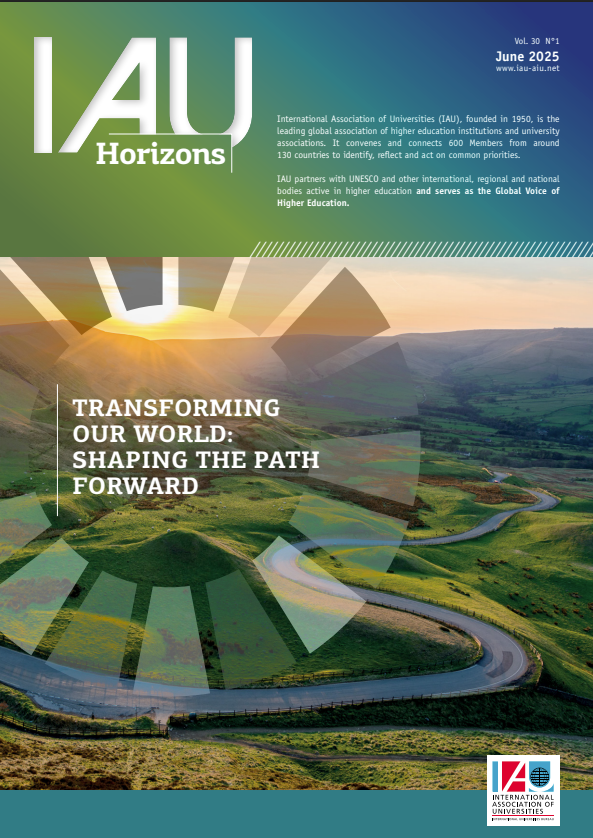
A decade ago, the United Nations set a bold and inclusive vision for global transformation with the adoption of the UN Agenda 2030 – Transforming our World and its 17 Sustainable Development Goals (SDGs) – a holistic framework built on 5 pillars, environmental, social, economic dimensions, and peace and partnerships as key enablers for this much needed progress. It acknowledged the essential contributions of all sectors, yet, while higher education was recognized as a stakeholder, its pivotal role in advancing the SDGs was not given the centrality it deserves.
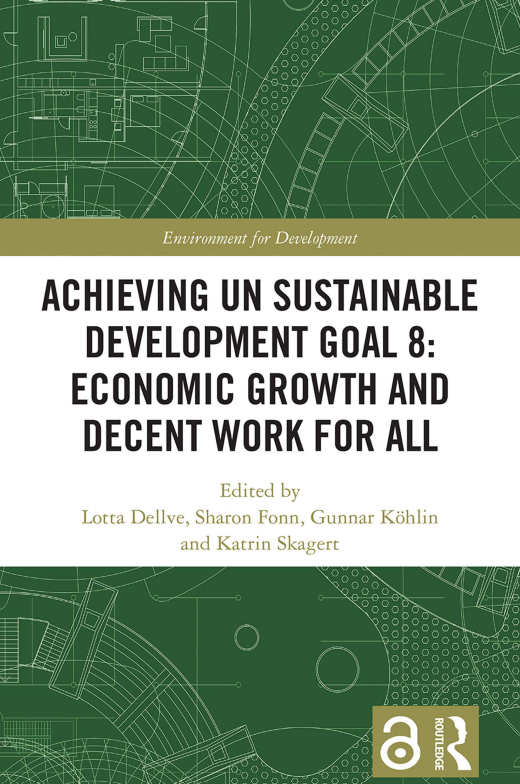
“Achieving UN Sustainable Development Goal 8: Economic Growth and Decent Work for All” is a comprehensive, open-access book that explores the challenges and solutions for achieving SDG 8, put together by the University of Gothenburg and the SDG 8 Cluster.
Universities have endured over time as centres of knowledge, adapting to significant changes in their environments. They often share the ambition of being both flexible and reflective, and at the same time remaining committed to the fundamental values of higher education and to a core mission, namely fostering critical thinking, creativity, social progress, social responsibility, inclusivity, diversity and upholding the role of arbitrators of truth through academic integrity in knowledge production respectful of various epistemological traditions
In 2024, IAU hosted 9 webinars, published numerous reports and policy statements, strengthened and engaged with our Membership base, and continued our advocacy work for our four priority areas: value based leadership, internationalization, sustainable development and digital transformation. Through these thematic priorities, the IAU has been able to continue project based work to facilitate international collaboration and knowledge production. To learn more about what IAU achieved in 2024, read the latest Annual Report.
In today’s dynamic, complex, and ever-evolving global landscape, universities are increasingly finding themselves on the front lines of social tension, economic and environmental uncertainty, and political change. These challenges transcend geographical boundaries, impacting universities worldwide irrespective of their size, traditions, cultures, or operational styles.
This fourth comprehensive report on the activities of the IAU HESD Cluster provides valuable insights into the efforts of the Members of the International Association of Universities (IAU) to address the 2030 Agenda and the Sustainable Development Goals (SDGs). It underscores the crucial role of higher education and partnership in achieving these global goals.
The mandate of the International Association of Universities includes taking a public stand on issues of importance to its membership – higher education institutions and university organisations from around the world. To fulfill this advocacy function, Working Groups set up by its Administrative Board help IAU elaborate policy statements that call for changes and improvements within the higher education institutions or within the broader policy framework which sets the context for higher education development.
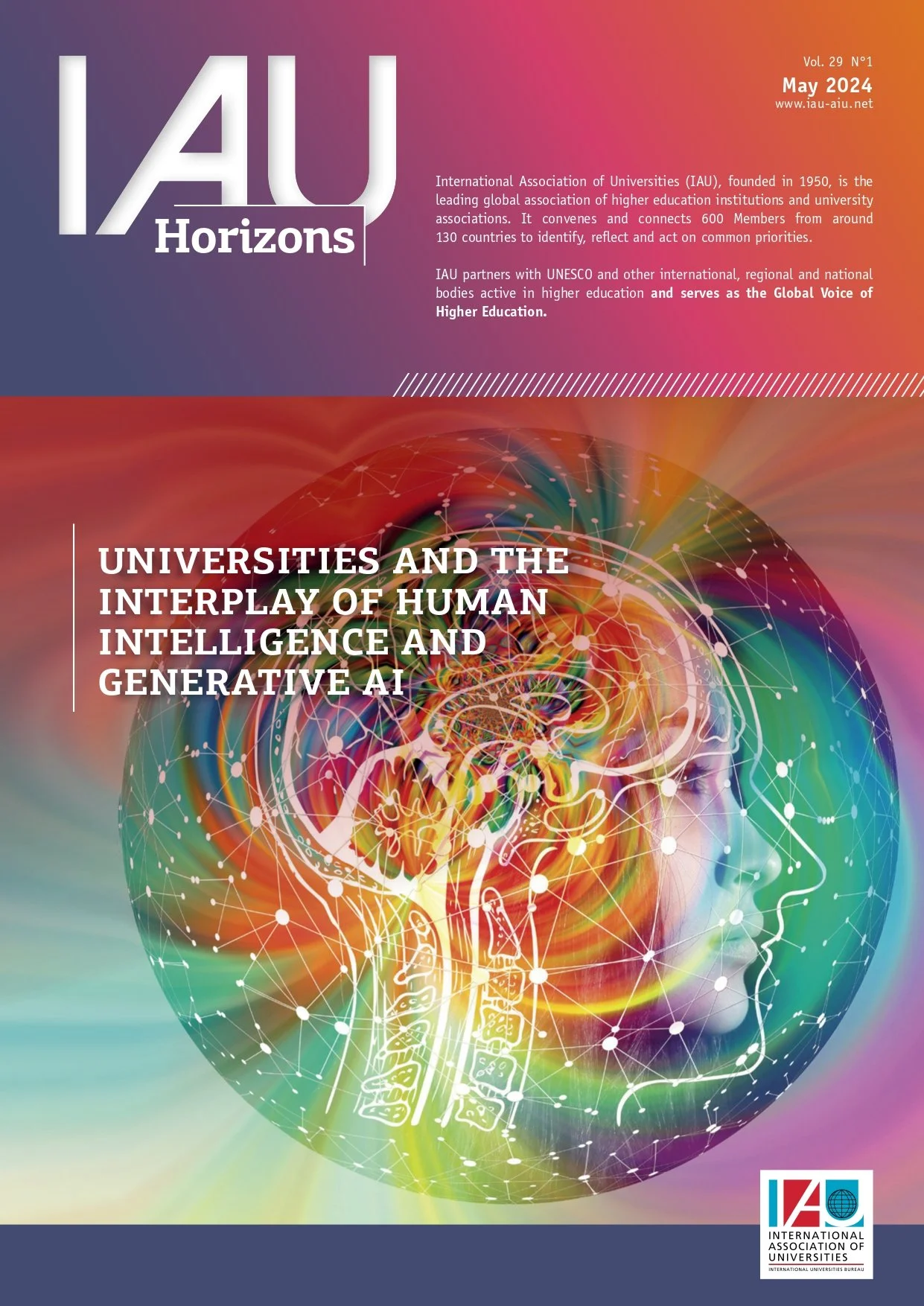
The widespread distribution of generative AI has raised many questions for higher education institutions to address, spanning a wide spectrum of visions from utopian ideals to dystopian scenarios. To shed light on what is at stake for higher education, this ‘In Focus’ section is devoted to Universities and the Interplay between Human Intelligence and Generative AI.
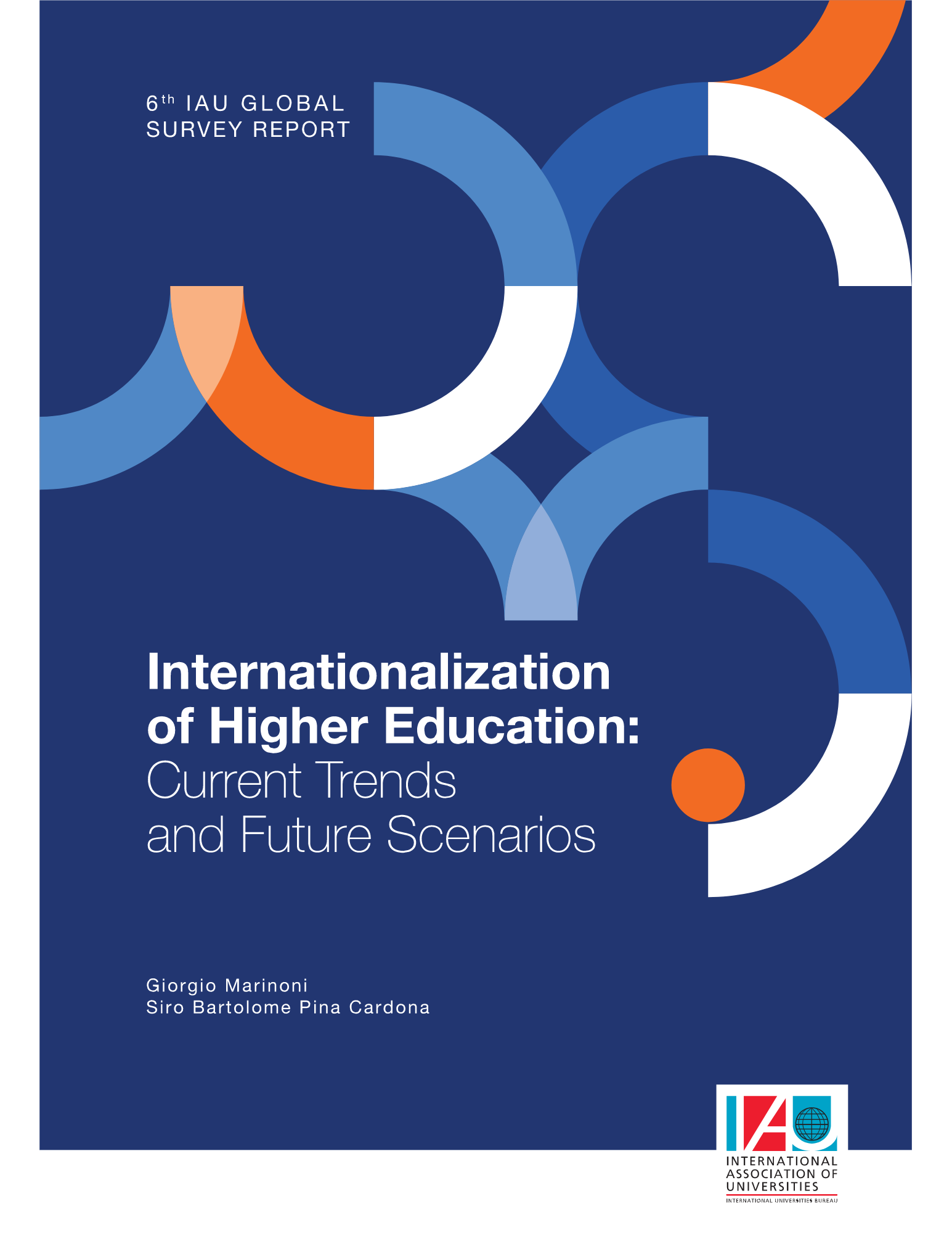
The IAU 6th Global Survey on the Internationalization of Higher Education received responses from 722 higher education institutions (HEIs) in 110 countries and territories. The resulting survey report analyses the findings in order to present both global and regional trends. Furthermore, the report compares current findings with data from the IAU’s previous Global Surveys on Internationalization in order to explore long-term changes occurring in the internationalization field. Discover first results of the survey here.
The Annual Report for 2023 of the International Association of Universities highlights key events, achievements, and activities for the year.
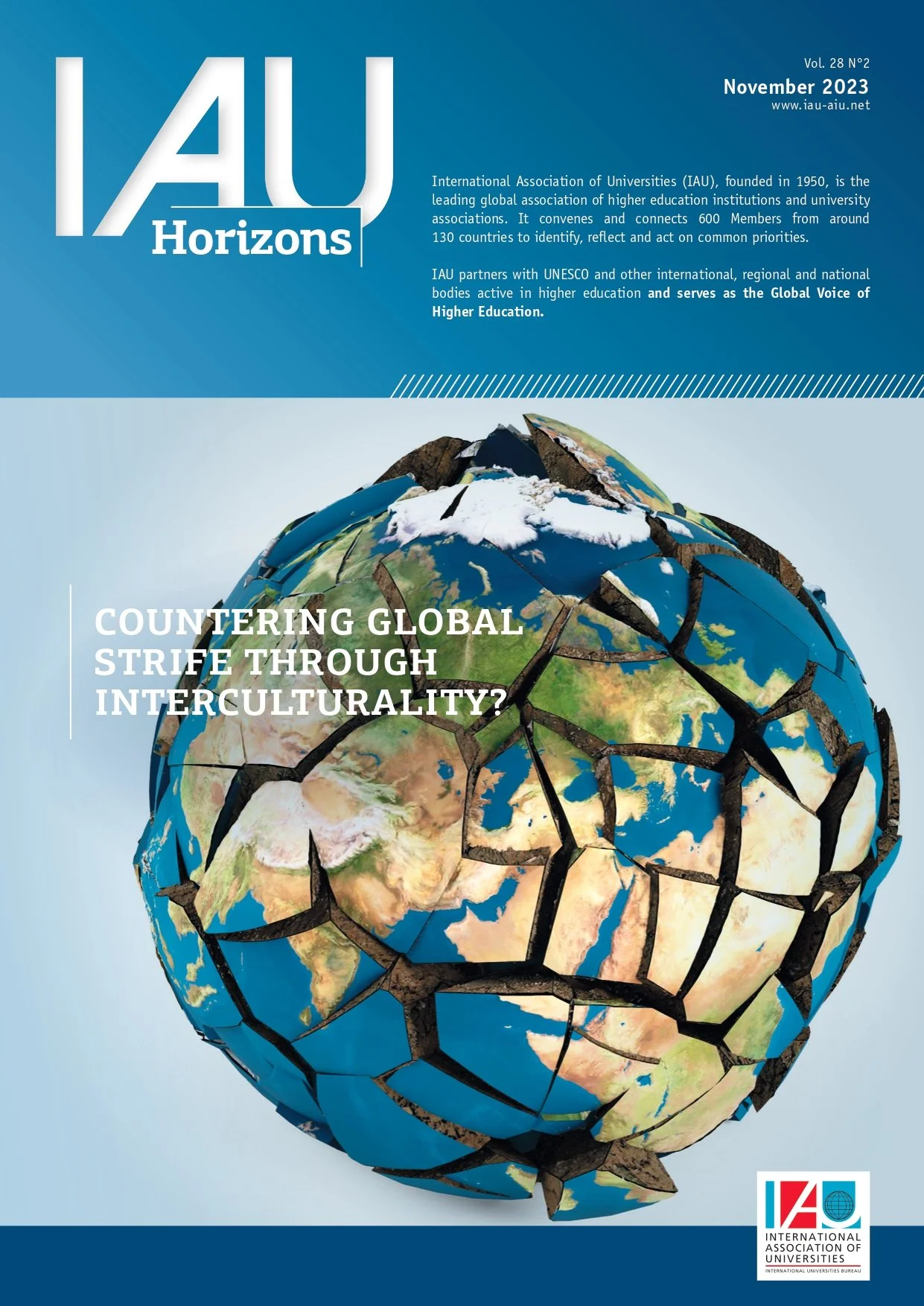
The In Focus section of this volume is dedicated to the theme Countering Global Strife Through Interculturality. In his keynote address at the IAU International Conference in 1990, the UNESCO Director-General Federico Mayor Zaragoza declared that "universality and diversity are not to be construed as opposition, but rather a dialect, which has as its synthesis interdependence." More than 30 years later, this message is more important than ever.
The IAU Global Cluster on HESD promotes the role and potential that HEIs globally have in order to achieve the SDGs and the 2030 Agenda. The Cluster encourages collaboration and takes a holistic approach to the SDGs, focusing specifically on the whole-institution approach. The IAU Global Cluster on HESD brings HEIs from all continents together and encourages them to develop joint initiatives and synergies.
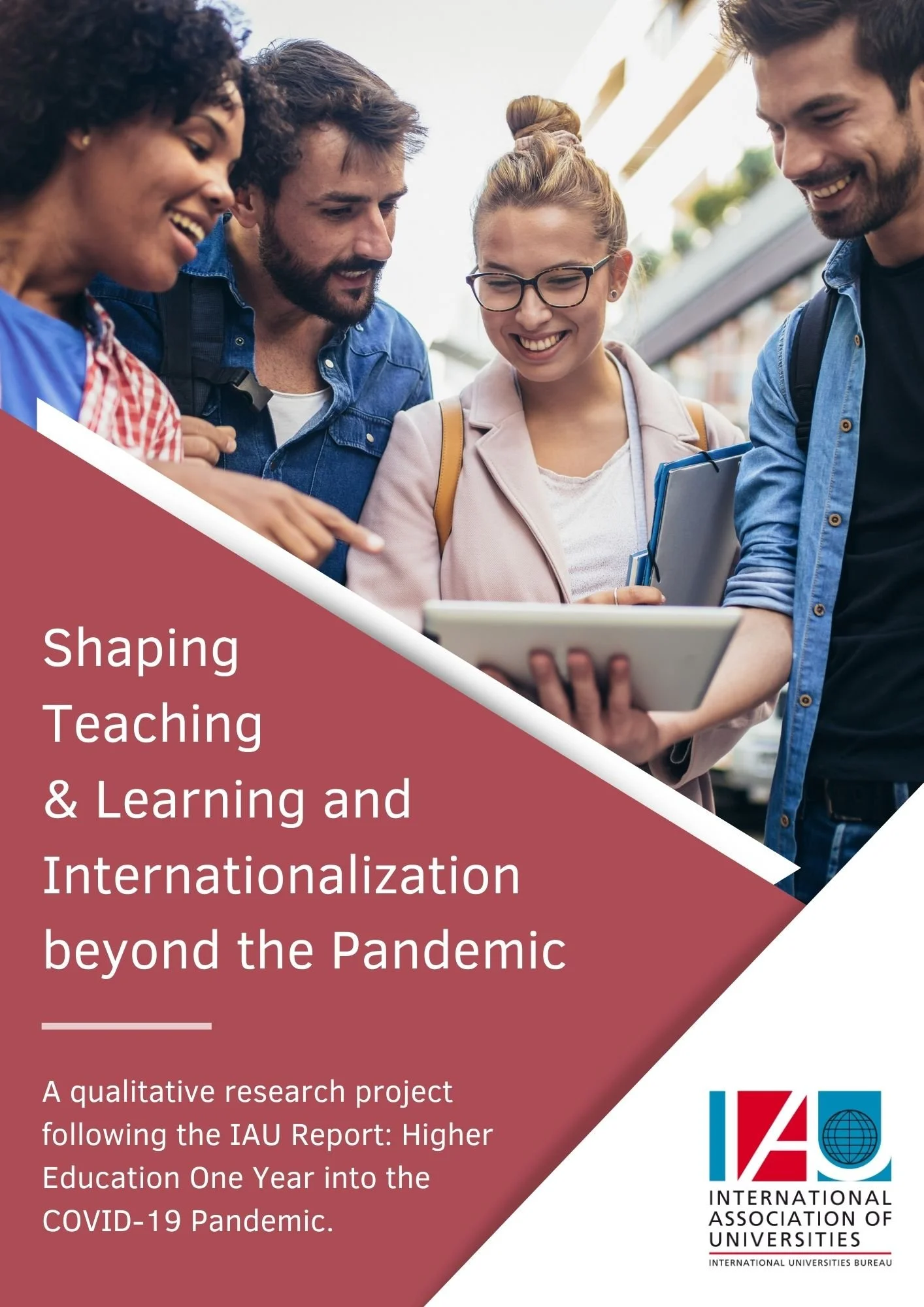
The first and second IAU Global Surveys on the Covid-19 Pandemic identified significant interruptions to both Teaching & Learning(T&L) and internationalization activities. The innovative responses from Higher Education Institutions (HEIs) around the world noted in the Global Survey reports generated interest in investigating the particular reasons behind these changes. This qualitative research project focusing on specific aspects of transformations in T&L and internationalization was developed as a result.
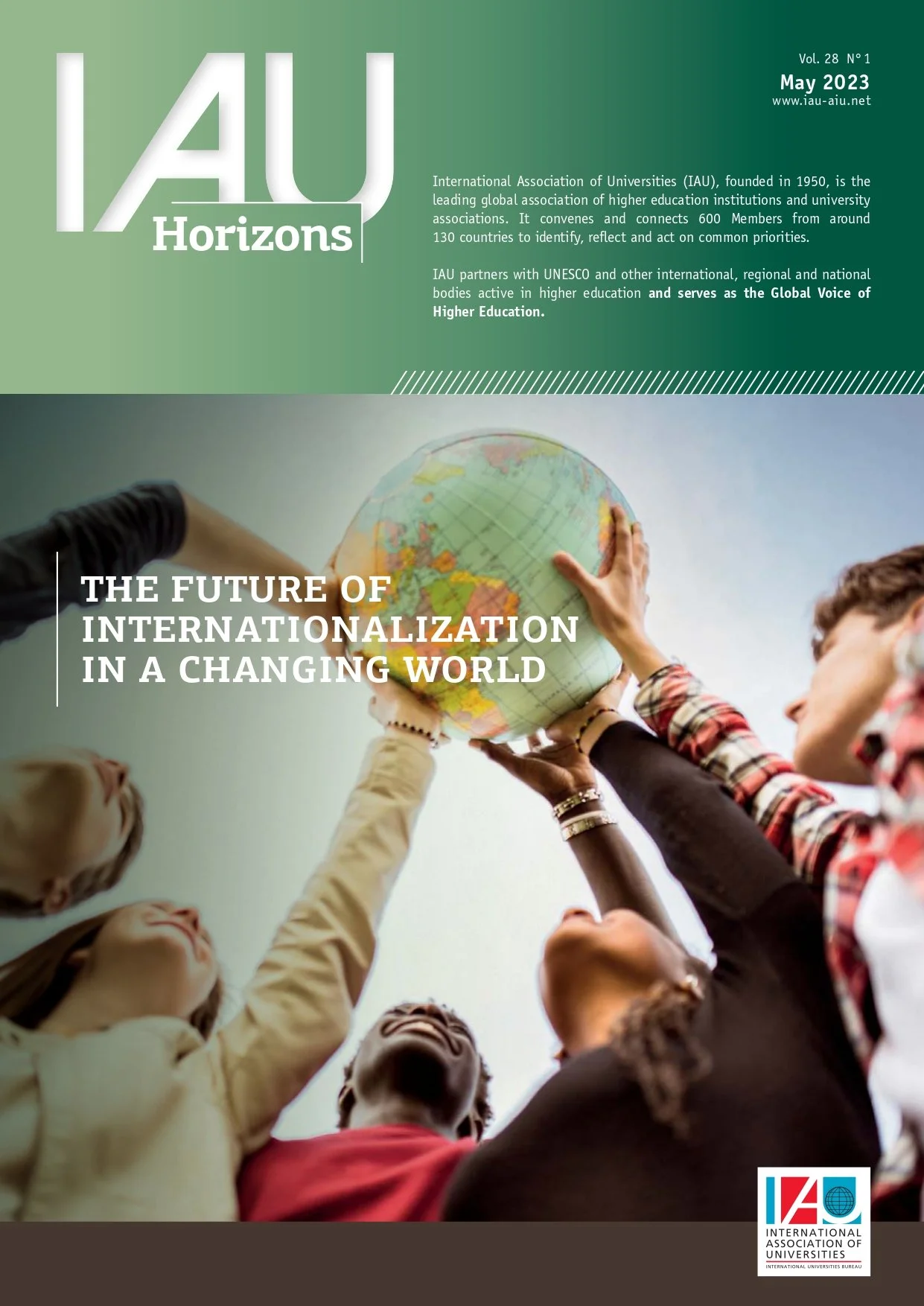
The In Focus section of this volume is dedicated to the theme The Future of Internationalization in a Changing World. Authors from all regions of the world, representing different institutions and organizations, share their insights on the internationalization of higher education given ongoing global transformations. This edition of IAU Horizons also presents key outcomes from the IAU 16th General Conference.
This descriptive analysis reveals that the evolutionary trends of technological progress for administrative services increased significantly during the emergency. On the other hand, the forecasts for the future digital evolution of this kind of services follow two different paths: for what concerns the specific software and dedicated apps their usage level is expected to carry on their improvement also in the near future after the pandemic, even if at a lower rate if compared to the emergency period.
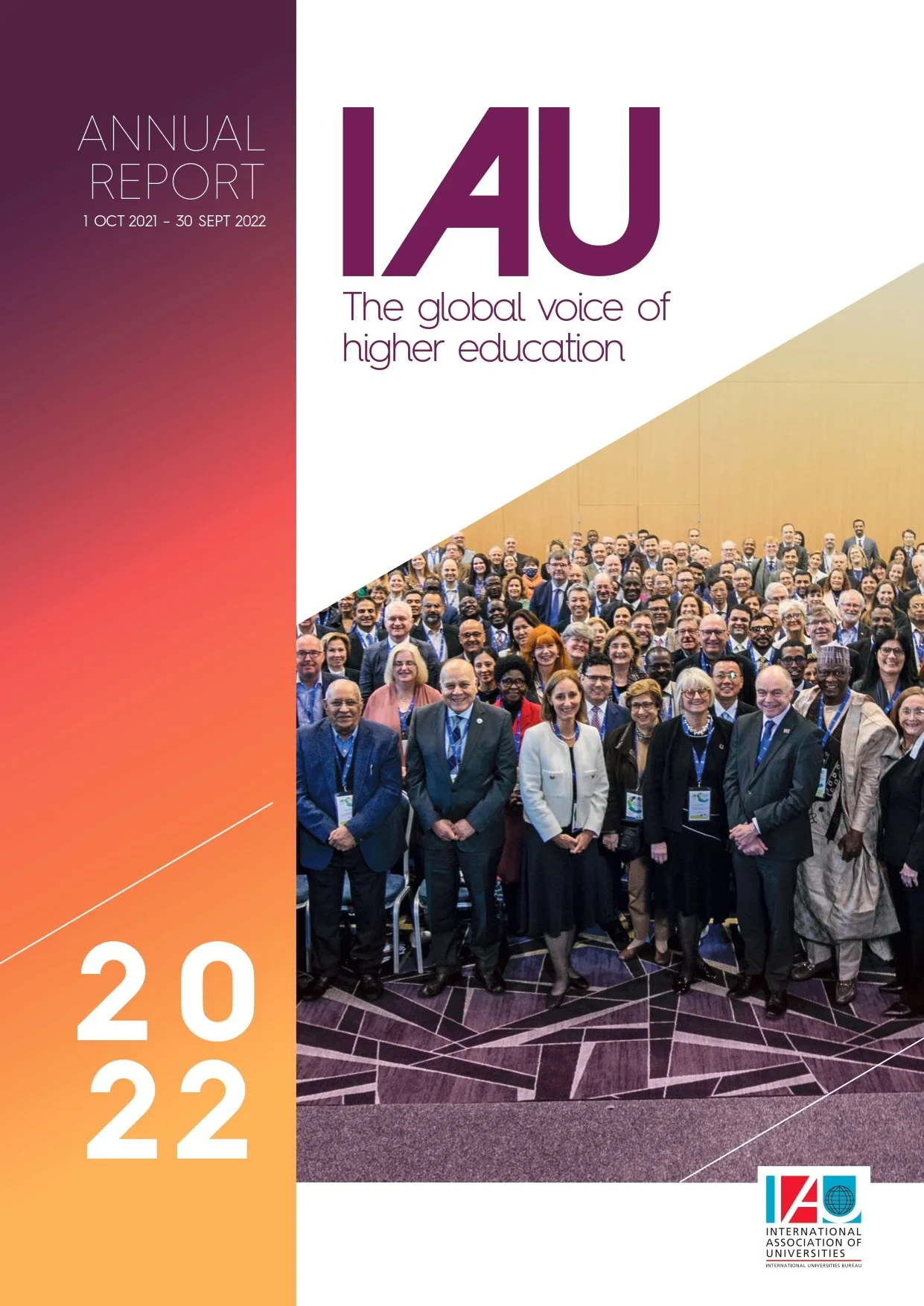
The International Association of Universities (IAU) released its Annual Report for 2022, highlighting significant achievements and activities.
The report, published in January 2023, presents the findings and analyses trends from the third global survey on Higher Education and Research for Sustainable Development (HESD). IAU conducted the survey in 2022 and received 464 valid responses from higher education institutions in 120 countries were collected. The findings show that higher education and partnerships are essential to address the global challenges identified in the UN Agenda 2030 and the Sustainable Development Goals (SDGs) and to build a more sustainable future together.
Digital transformation is one of the four strategic priorities of the International Association of Universities (IAU). The COVID19 pandemic has - as never before - accelerated digital transformation of higher education and it is an opportune moment to reflect how we wish to shape the future of higher education in an increasingly digital world. This IAU Policy Statement was developed to outline essential values and principles that must underpin the digital transformation.
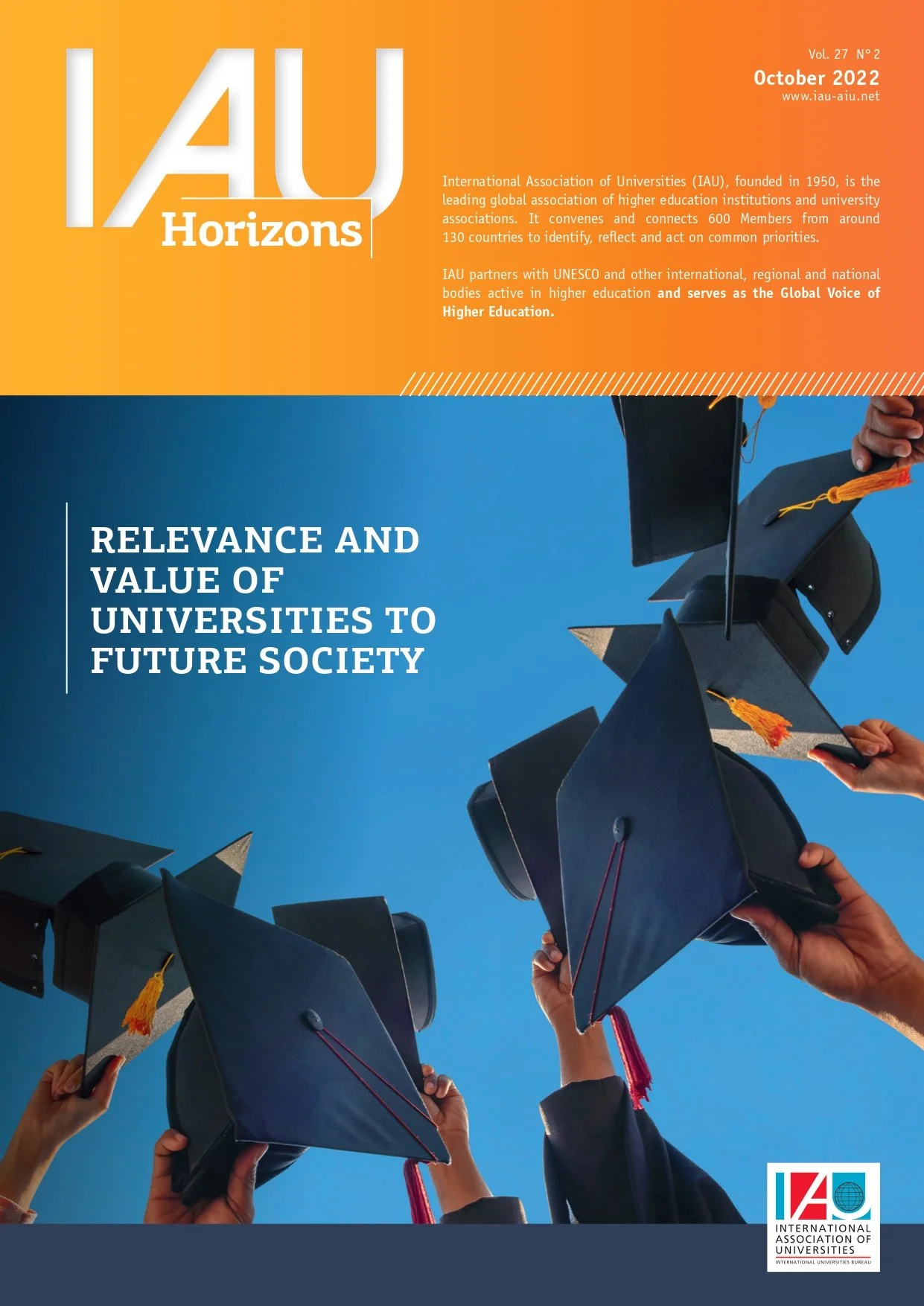
The In Focus section of this volume is dedicated to the theme of the IAU 16th General Conference: Relevance and Value of Universities to Future Society. Authors from all regions of the world, representing different institutions and organizations, have accepted to share what they believe is essential for the future of universities. The collection of articles brings together a variety of different perspectives, ideas and challenges. It presents priorities and solutions from multiple angles, yet what they all share is the unwavering belief that universities constitute an essential pillar in society.
This report is published as part of the Future of Internationalization Partnerships Project, a collaboration between the IAU, the Center for International Higher Education (CIHE) at Boston College, and the Ontario Institute for Studies in Education (OISE) at the University of Toronto. This report, produced at the end of the first year of the project, was published as a part of the CIHE Perspectives Series.

In complement to the IAU-UOC Innovative Education for Unshaped Futures (IE4UF) Series, IAU is happy to announce the publication of Improving Online Teaching: Practical Guide for Quality Online Education. After two years of pandemic related educational disruption, the need for strong and sustainable digital solutions for higher education is critically clear.
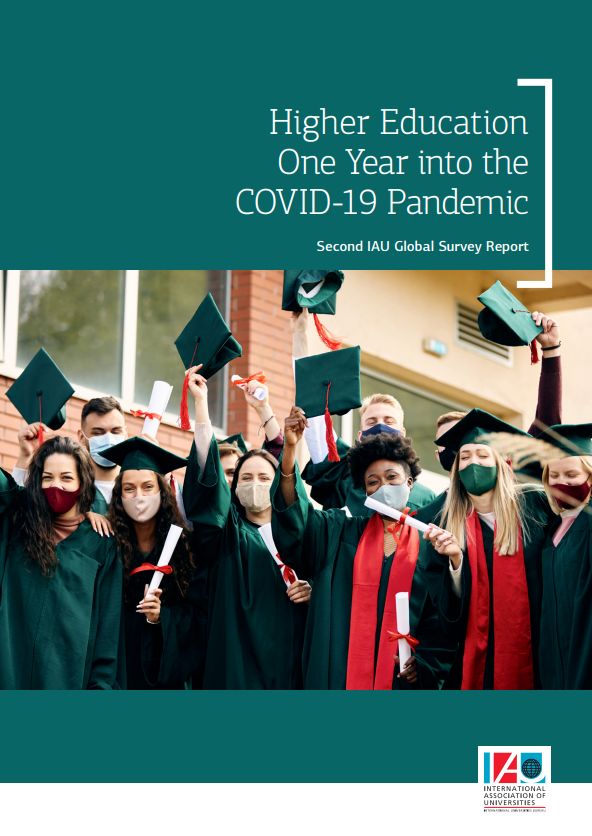
In February 2021, the International Association of Universities launched the second edition of the global survey on the impact of COVID-19 on higher education to monitor the situation one year into the pandemic. The survey gathered replies from 496 HEIs in 112 countries and worldwide.