Navigating Student Mobility in an Era of Geopolitical Shifts
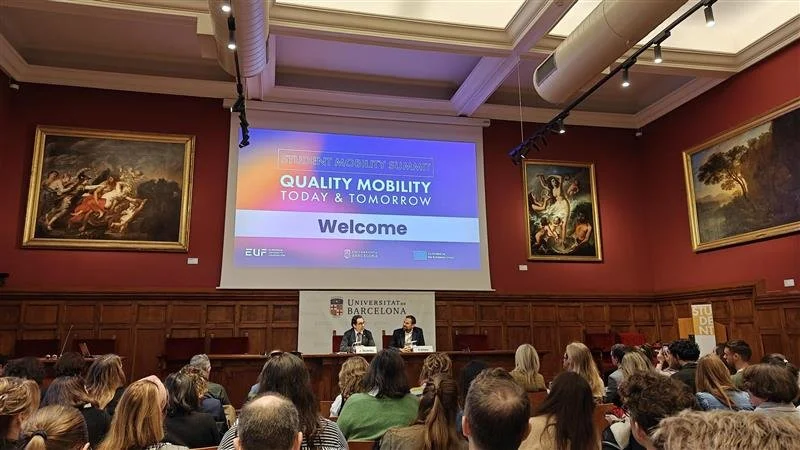
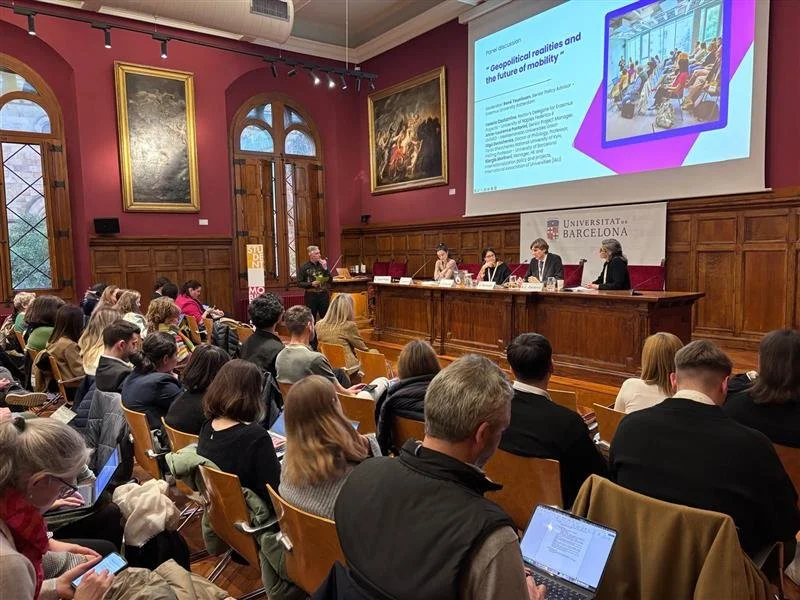
The Student Mobility Summit 2025, hosted by the University of Barcelona, brought together higher education leaders , adminstrators, and stakeholders from across Europe to examine the evolving landscape of international student mobility. At a time when global politics are increasingly fragmented, the summit provided a forum to reflect critically on the future of mobility and the role of higher education institutions (HEIs) in shaping it.
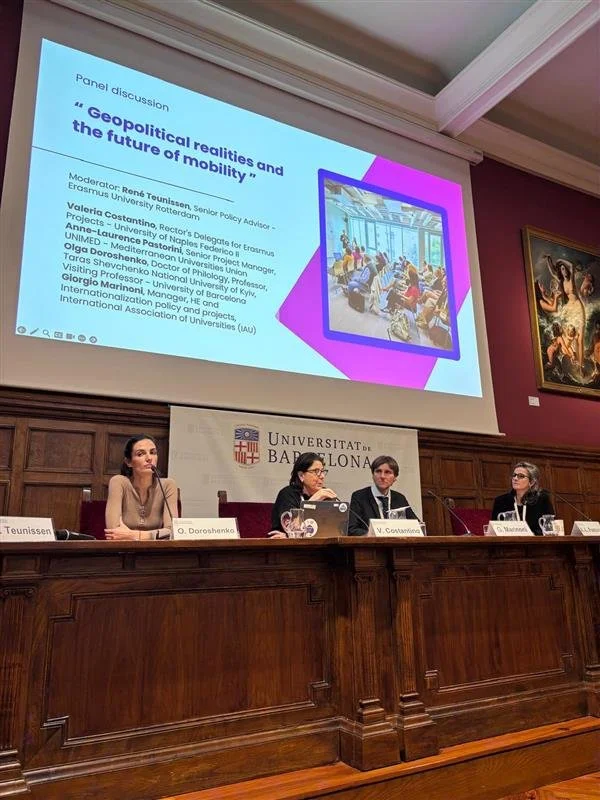
Giorgio Marinoni, IAU Manager for Internationalization, represented the IAU at the summit. He participated in a panel on geopolitical realities and the future of mobility, highlighting the challenges and opportunities for higher education in a shifting international landscape.
“We are living in times of fundamental geopolitical shifts where internationalization and international collaboration are no longer assumed to be positive ”
The rise of nationalism and nativism in many regions challenges long-standing assumptions about the benefits of internationalisation. Policy environments are shifting, visa regimes are tightening, and public debates increasingly frame cross-border education in terms of risk and national interest. These trends underscore the need for HEIs to navigate a more complex global context.
Yet, higher education has a unique role to play. International mobility is not only about exchanging knowledge—it is a transformative experience that fosters mutual understanding, critical thinking, and self-reflection.
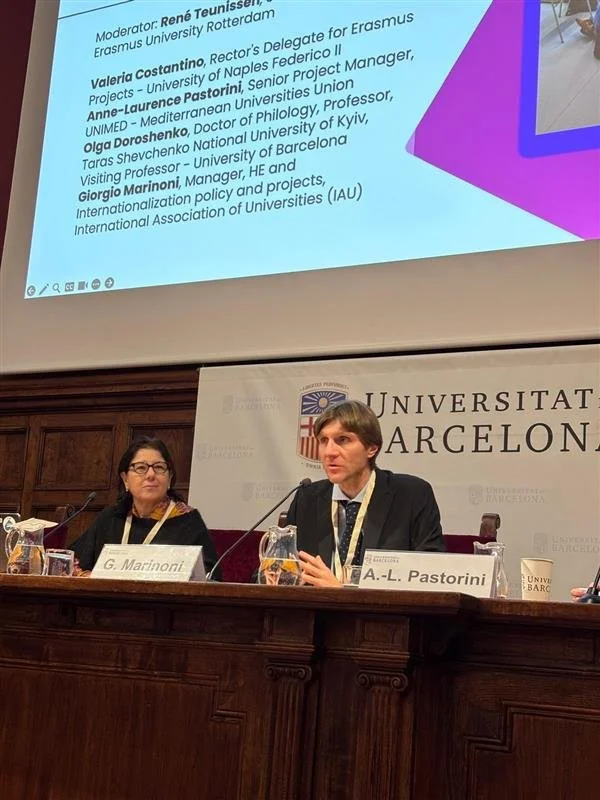
“Through mobility, we not only expose ourselves to the other, but we also understand the other and, in the process, question our own assumptions,” Marinoni emphasized.”
HEIs, therefore, are not passive actors. They have the capacity—and responsibility—to shape the policies and practices that determine the future of international education. In the panel, Giorgio noted that
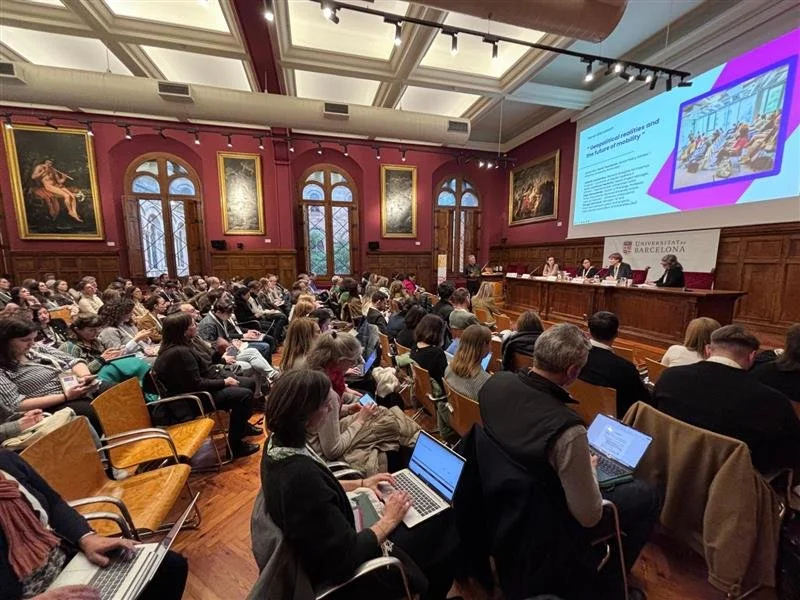
“Institutions should not underestimate their agency in shaping the future. They must not follow passively what is decided by their governments but help shape policies, being both critical and constructive.”
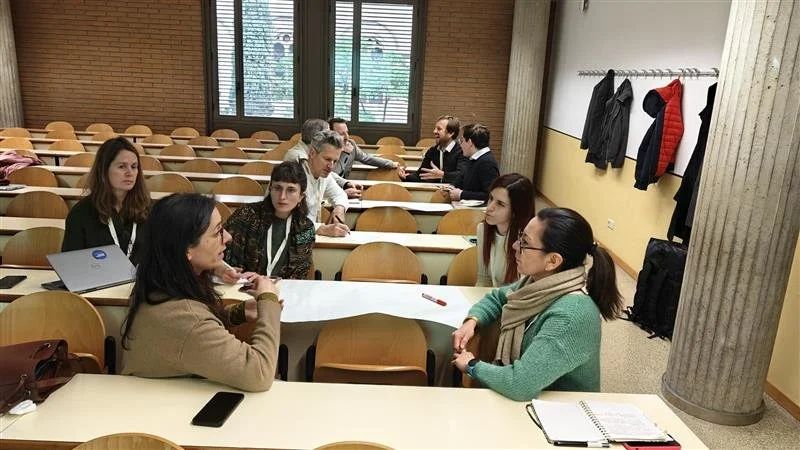
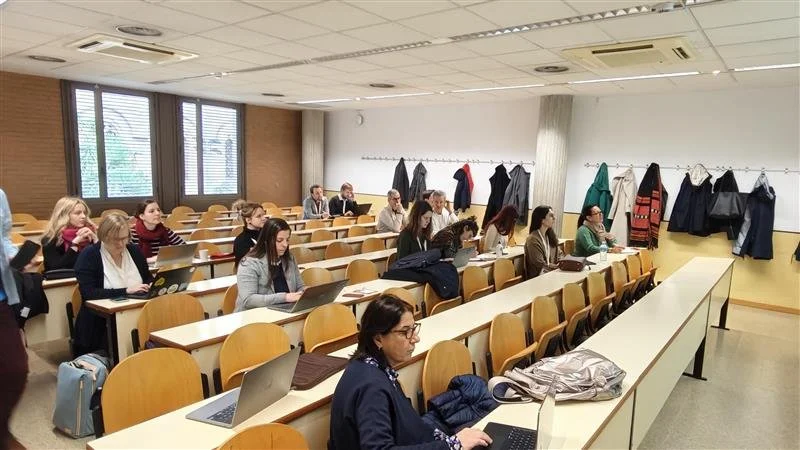
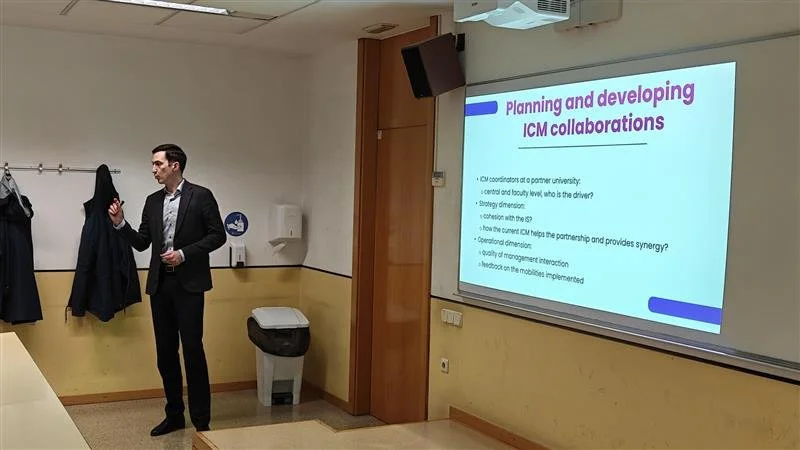
In addition to his panel participation, he co-led a workshop with Roman Petyur, Head of International Relations Office at the Taras Shevchenko National University of Kyivr, on planning and developing International Credit Mobility (ICM) collaborations, supporting institutions in designing sustainable and impactful student mobility programmes. The workshop examined global student mobility flows within the framework of Erasmus+ KA171 ICM, with a particular focus on developing strong proposals and ensuring the long-term sustainability of partnerships. Key takeaways highlighted the importance of aligning ICM projects with the institutional strategies of both partners, fostering effective communication between international relations offices and faculty coordinators, and actively involving academics to strengthen proposal quality. Discussions also emphasized sustainability measures such as integrating staff mobility, sharing organizational and promotional responsibilities, jointly reflecting on proposal resubmission, and exploring synergies between ICM and other funding opportunities, including Erasmus+ KA2 and Horizon Europe.
The summit underscored that sustainable internationalisation requires more than administrative frameworks; it demands strategic engagement, ethical reflection, and active leadership. In this context, HEIs can become key actors in preserving openness, fostering global dialogue, and reinforcing the societal value of cross-border mobility, even in times of geopolitical uncertainty.
For more on the Student Mobility Summit 2025, visit https://summit.uni-foundation.eu/.