On 18 February 2026, IAU Secretary General Hilligje van’t Land represented the Association and contributed to the UNESCO symposium convened as part of the RUNES/AFIRSE 2026 International Conference on “The Renewal of the Scientific Contract of Education” and the UNESCO Futures of Education Initiative.
A Call for Transformative Action: Interdisciplinarity and Equity
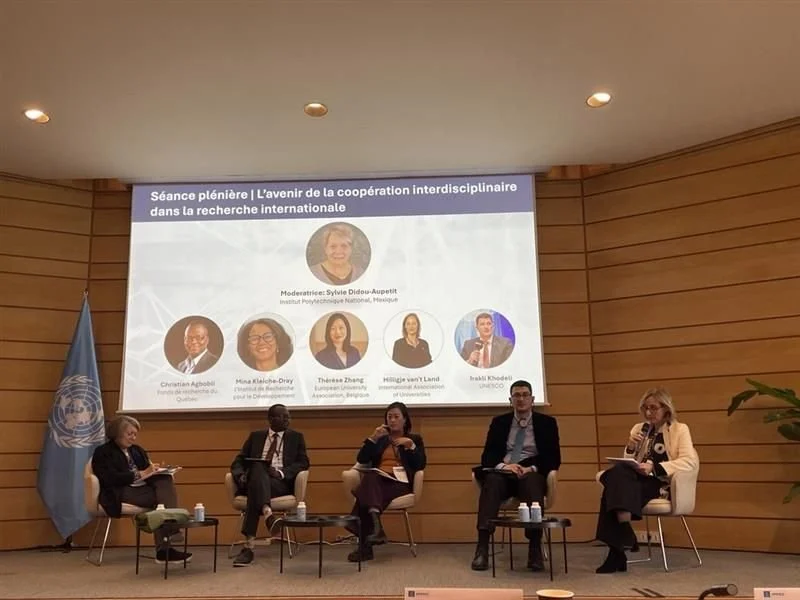
Against a backdrop of rapid technological change, persistent inequalities, and societal transitions, the symposium underscored the urgency of fostering interdisciplinary collaboration, robust scientific dialogue, and innovative policy frameworks. Aligned with the UNESCO International Commission on the Futures of Education and its 2021 report, “Reimagining Our Futures Together: A New Social Contract for Education,” the event served as a platform for delegations to UNESCO, national commissions, and experts from higher education and research communities to collectively reflect on the transformations needed to build inclusive, adaptive, and equitable education systems worldwide. The symposium considered on the implications of artificial intelligence (AI) for educational research, as well as the future of interdisciplinary teaching and learning, research and cooperation in international education, and evolving public education policies and educational action.
In her contribution, Dr. van't Land considered the future of interdisciplinary cooperation, emphasizing the importance of critically examining the underlying motives and objectives behind interdisciplinarity. She noted that such reflections can lead to meaningful transformation of higher education systems and to full mobilisation of interdisciplinary approaches to address persistent asymmetries within the scientific ecosystems — including epistemic hierarchies, funding imbalances, and (often postcolonial) power dynamics that shape participation and often reproduce inequalities. She stressed that, when pursued as a genuinely transformative process, interdisciplinarity can help reduce these asymmetries and foster more equitable, fair, and inclusive T&L and Research systems grounded in co-creation and international collaboration.
The Future of Public Education Policies and Educational Action
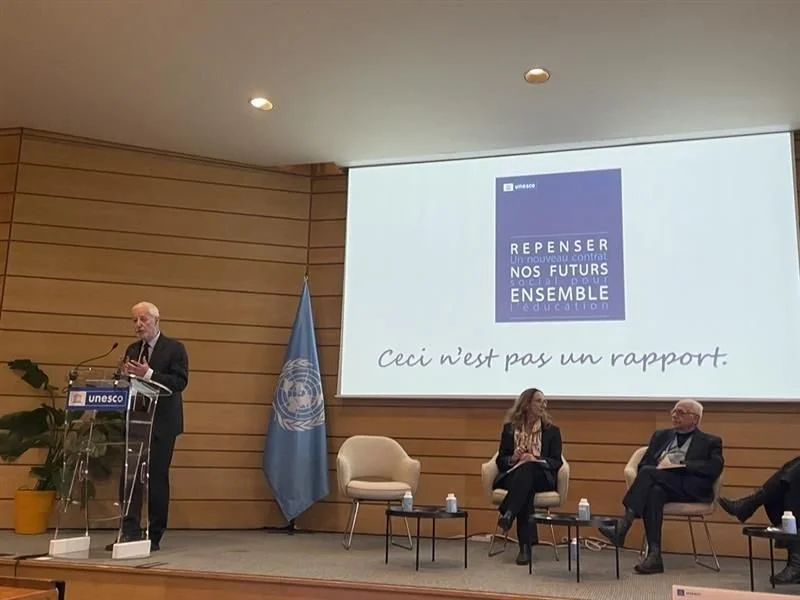
Also onsite was Prof. Antonio Novoa, former Rector of IAU Member the University of Lisbon and UNESCO Chair in Futures of Education. In his keynote address, “The Future of Public Education Policies and Educational Action,” Nóvoa built upon the “Reimagining our Future Together” report and urged policymakers to remain attentive to what he described as current “policy excesses” — latent trends increasingly shaping education policies through the use of descriptive indicators, measurements, and rankings that evaluate education primarily in pursuit of ‘narrow’ excellence and standardisation. He also cautioned against the growing reductionist narrative that technological developments will provide the necessary solutions to complex social and cultural challenges.
Rather than allowing these dominant trends to dictate policy, Novoa encouraged policymakers to embrace uncertainty and to create conditions that enable schools and educators to explore diverse responses adapted to their specific contexts. He advocated for a plurality of approaches instead of prescriptive, standardized solutions and for valuing knowledge emerging from grassroots practice rather than relying on top-down models developed in isolation from the sector’s diverse and lived experiences. The key challenge for policymakers, he argued, is to foster national education systems that create space for experimentation and adaptation, allowing solutions to emerge in response to different challenges and local needs grounded in a humanist understanding of education.
A Shared Vision for Equitable and Open Knowledge
The IAU strongly aligns with Prof. Nóvoa’s vision. We champion diversity and believe that plurality strengthens education systems by embracing differences and fostering mutual learning. Through initiatives like the Global Cluster on Higher Education and Research for Sustainable Development (HESD), the IAU promotes interdisciplinary collaboration as a cornerstone for addressing global challenges. We are committed to dismantling epistemic hierarchies and fostering inclusive research ecosystems that ensure equitable and open access to knowledge. Additionally, the IAU upholds the democratic role of higher education, creating spaces for dialogue, advocacy, and collective action. By advancing these principles, the IAU continues to work toward education systems that are not only adaptive and equitable but also deeply rooted in democratic values, empowering communities worldwide to meet the challenges of an ever-changing world.