Reflections from the 2nd IAU-EAIE Internationalization Leadership Dialogue
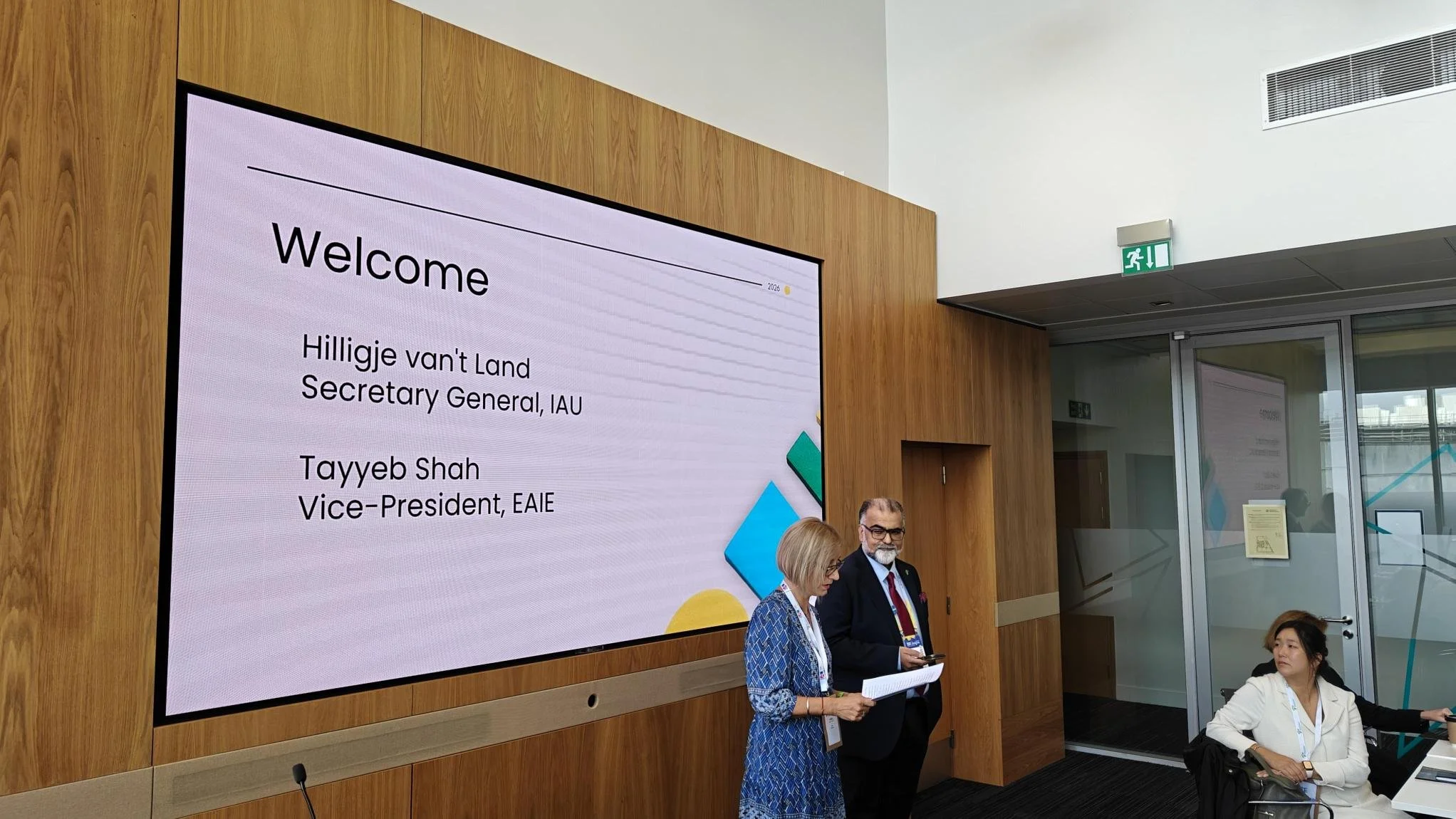
On 8 September 2026, Scotland, the IAU and the European Association for International Education (EAIE) co-orangised the second edition of the high-level IAU-EAIE International Leadership Dialogue, hosted at the University of Strathclyde in Glasgow, Scotland immeidately prior to the 36th EAIE Annual Conference. The closed-door roundtable welcomed 25 Vice-Rectors and senior executive leaders in internationalization from around the world.
Designed as an executive peer-exchange platform, the dialogue examined the complex pressures confronting modern university leadership, including rising geopolitical volatility, shifting national visa and research security regulations, and the imperative to balance institutional autonomy with local civic responsibility. Participants shared strategic approaches to navigating cross-border partnerships while preserving academic freedom and equitable institutional collaboration.
The dialogue began with a keynote presentation from Anton Muscatelli, Distinguished Honorary Professor at the Adam Smith Business School, former Vice-Chancellor of the University of Glasgow, and President of the Royal Society of Edinburgh, on the topic of the Dialogue: Leading Internationalization in Turbulent Times. In his presentation, Professor Muscatelli highlighted the difficulties institutions face, including polycrisis and geopolitical turmoil, intensified global talent competition, and economic challenges.
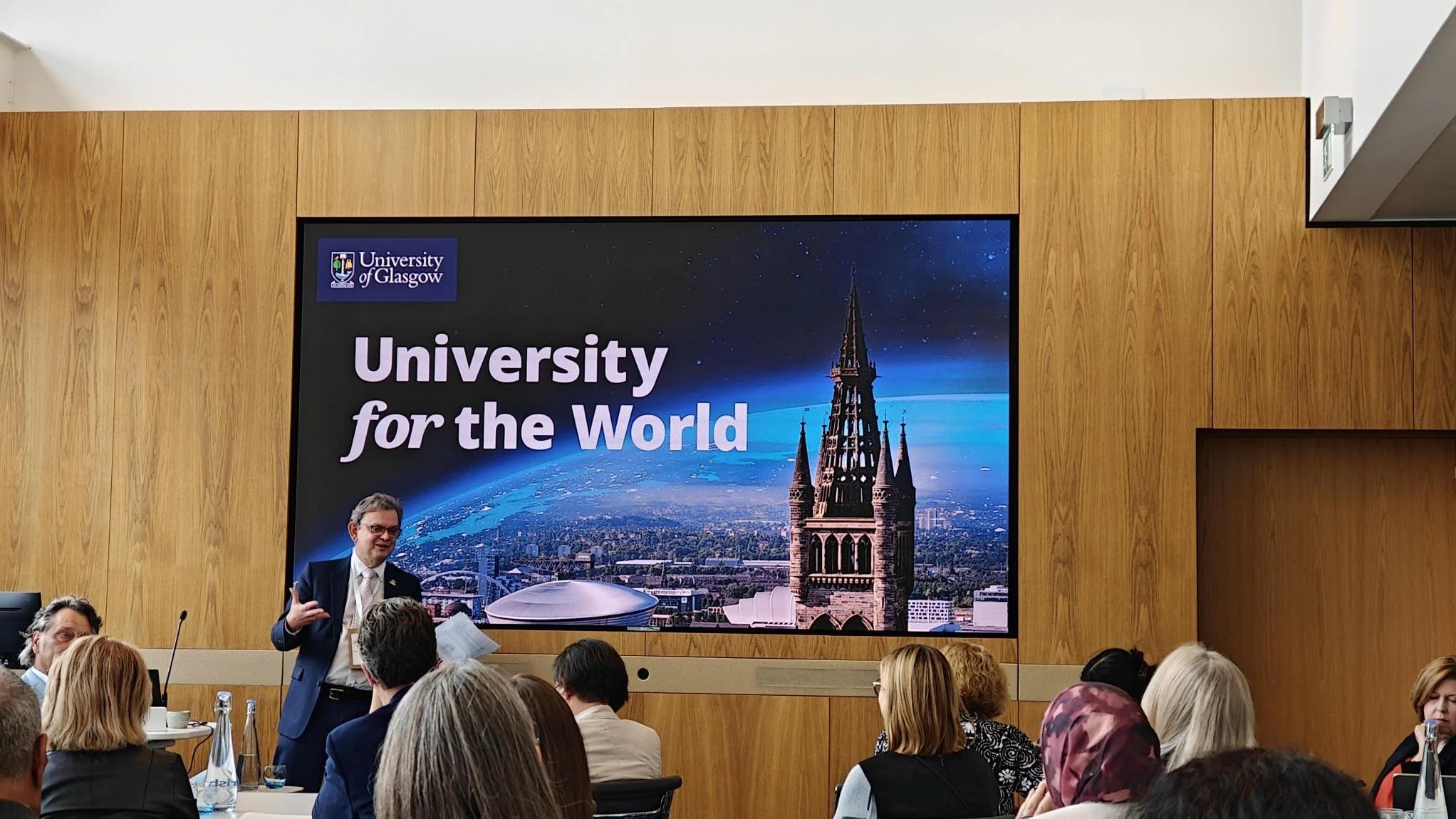
The presentation reinforced the necessity and role of internationalization in higher education, stating that it cannot be limited to student recruitment. Instead, it must be embedded in universities’ vision and strategies. This requires universities to understand the environment in which they operate much more clearly. Professor Muscatelli reminded the audience that strategic partnerships can aid universities during periods of instability and are essential to institutional strategies.
“Moving forward, cross-border partnership must serve as institutional shock absorbers that defend academic freedom and institutional autonomy amid geopolitical instability. ”
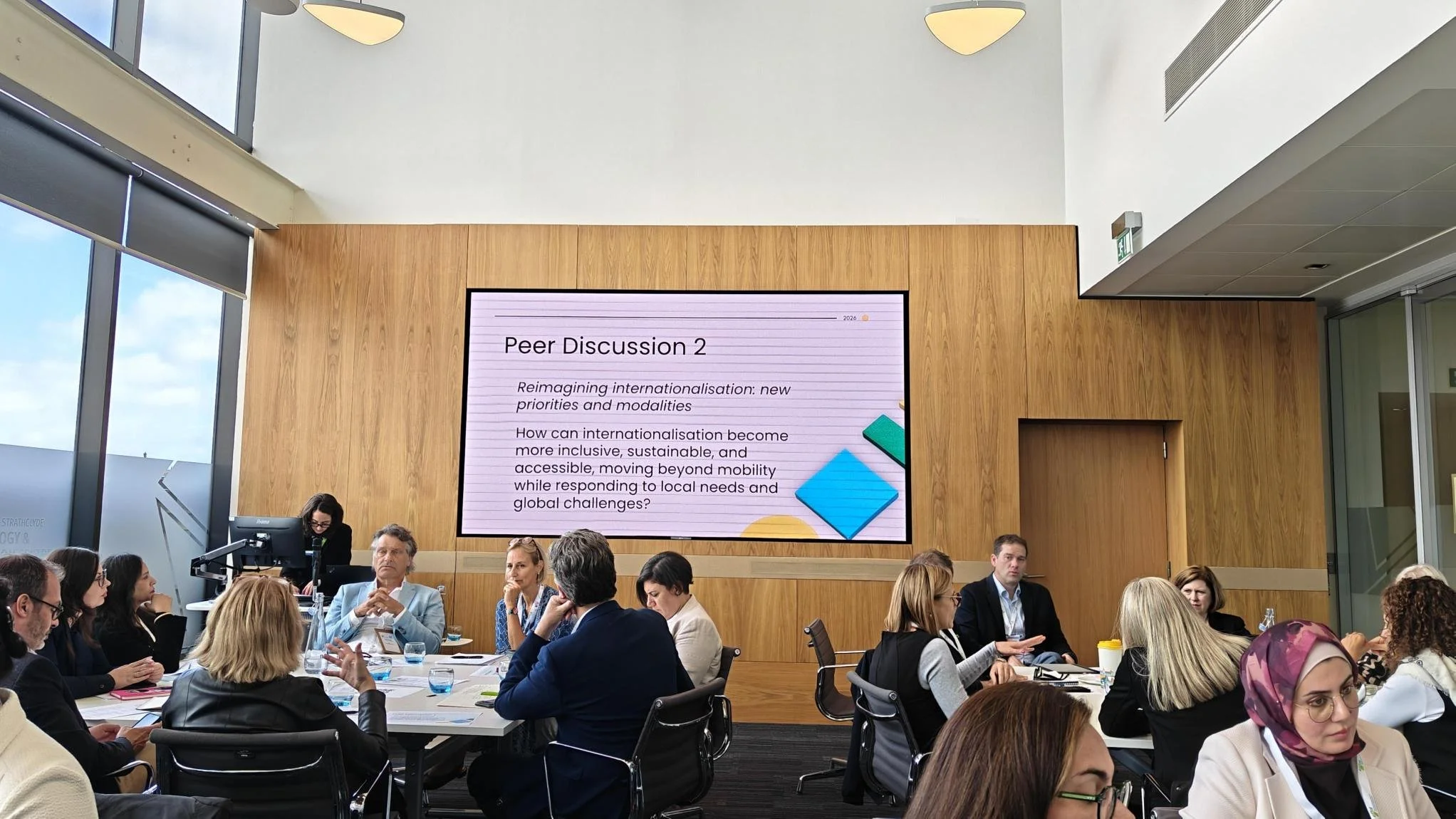
Following Professor Muscatelli's keynote presentation, participants were divided into four groups to discuss two topics in two sessions. The first session focused on the future of international partnerships while the second focused on reimagining internationalization: new priorities and modalities.
The Leadership Dialogue also actively supported academic solidarity, specifically addressing the needs of higher education communities impacted by conflict in Ukraine and Gaza. Representatives from the Islamic University of Gaza and V. N. Karazin Kharkiv National University shared their experiences with the participants and provided food for thoughts for the second peer discussion.
The discussion at the University of Strathclyde made it clear that navigating today’s era of polycrisis requires higher education leaders to shift from an internationalization focused on student recruitment to a value-based, strategic one. Moving forward, cross-border partnership must serve as institutional shock absorbers that defend academic freedom and institutional autonomy amid geopolitical instability.
As exemplified by the powerful testimonies from institutional leaders in Gaza and Kharkiv, the Dialogue above all reaffirmed that global academic solidarity is an essential lifeline during conflict. As the IAU and EAIE continue their collaboration, the insights from the Dialogue provide a clear call to action: to ground future internationalization efforts in equity, mutual resilience, and an unwavering commitment to protecting higher education communities worldwide.
Learn more abou the 1st IAU-EAIE Internationalization Leadership Dialogue.