
Focus on Higher Education at UNESCO Digital Learning Week 2026
Paris, France – September 2026
From 8-11 September 2026, the IAU attended the UNESCO Digital Learning Week 2026 in its Headquarters in Paris. Under the theme Education in the age of AI: Facts | Frictions | Frontiers, this year’s programme focused on three key dimensions of the impact of this revolutionary technology on the education sector. It examined what counts as fact in an age of synthetic knowledge, how to navigate the friction that AI is generating across education systems, and, finally, what new frontiers are emerging.
Opening the UNESCO Digital Learning Week 2026
During the official opening, Qun Chen (Assistant Director-General for Education, UNESCO) introduced the interventions by Khaled El-Enany (Director-General, UNESCO), Doreen Bogdan-Martin (Secretary-General, ITU), and Amandeep Singh Gill (UN Under-Secretary-General and Special Envoy for Digital and Emerging Technologies). They agreed that AI in the realm of education can boost our ability to learn, teach and communicate, but should not weaken it. They also recognised that the benefits of artificial intelligence cannot be enjoyed by all equally. They warned that the lack of infrastructure, institutional capacity, skills, and technical capacities, especially in developing countries, risk transforming the current digital divide into an even worse AI divide. More data on this gap can be found in the first UNESCO Higher education global trends report 2026. To avoid this fate, however, they highlighted the significance of global governance for AI, mentioning the Global Dialogue on AI Governance, which took place in Geneva this July, and the Global Fund for AI Capacity-Building, proposed by UN Secretary-General António Guterres.
“AI too consequential to be shaped by a few actors alone.”
Transforming higher education in the age of AI: Mapping the issues
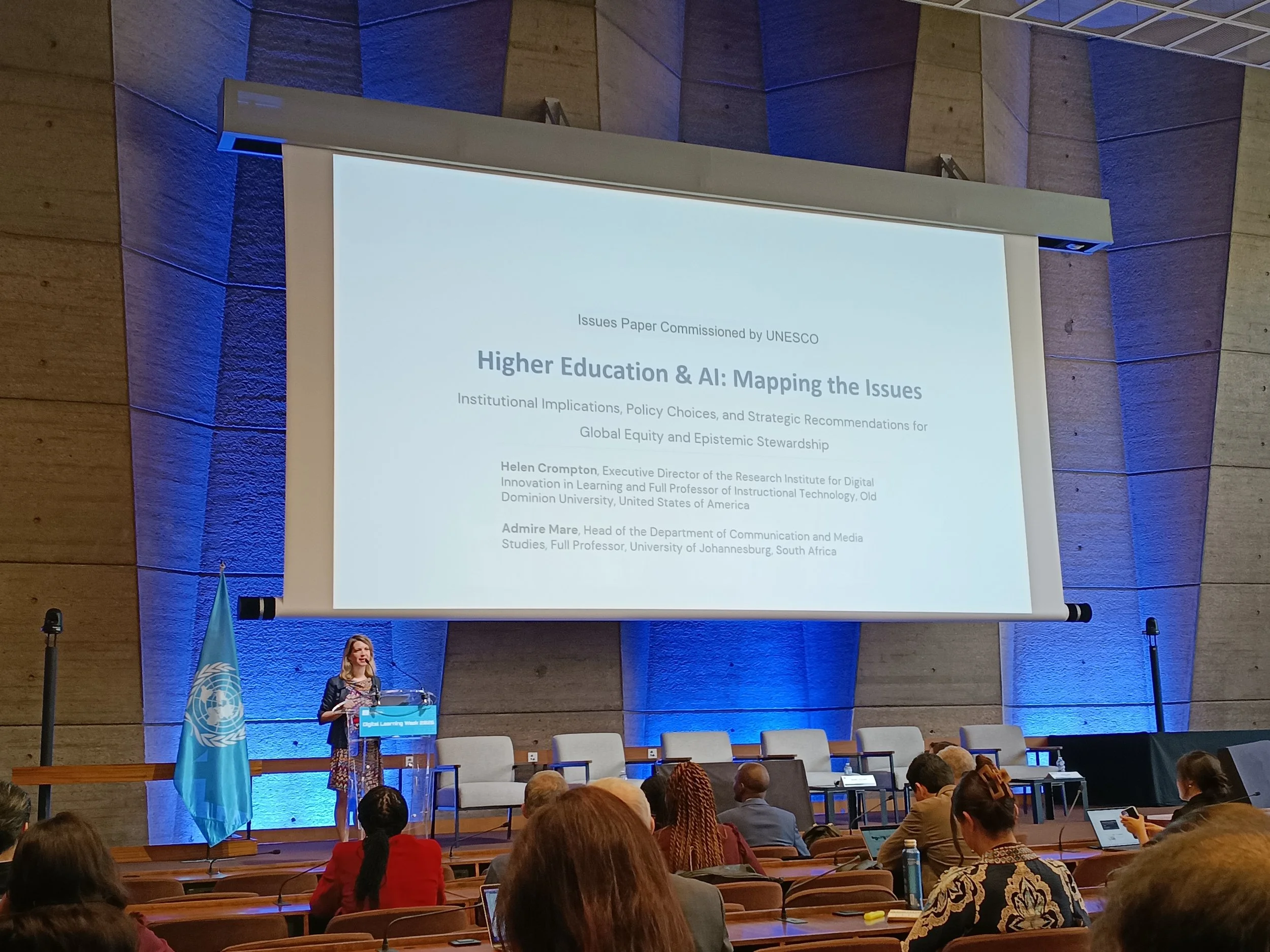
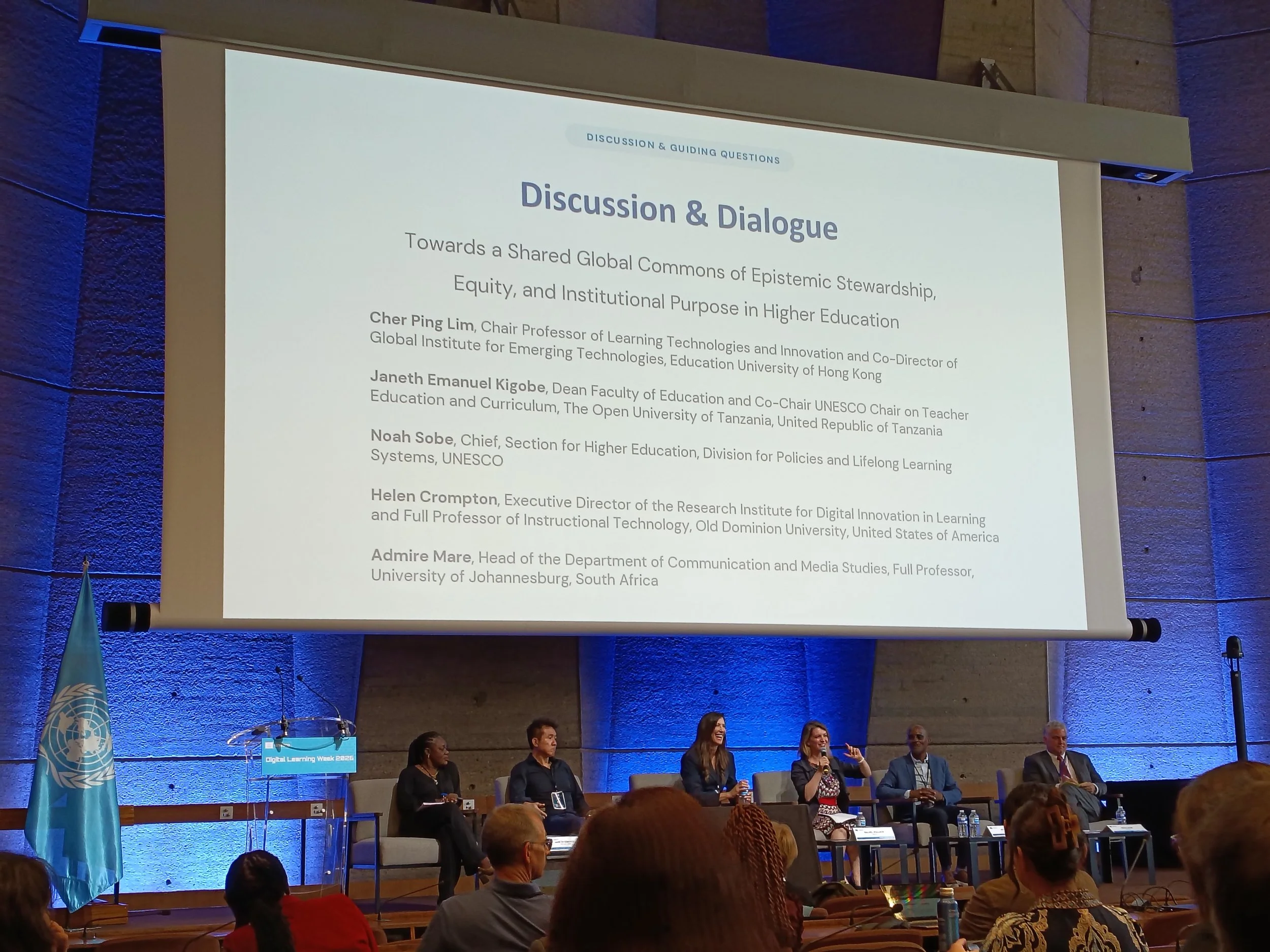
On the second day, Helen Crompton (Executive Director of the Research Institute for Digital Innovation in Learning) and Admire Mare (Head of the Department of Communication and Media Studies, University of Johannesburg) presented their paper commissioned by UNESCO “Transforming higher education in the age of AI: Mapping the issues,” in which they offer an overview of the risks and challenges brought by AI in the higher education space.
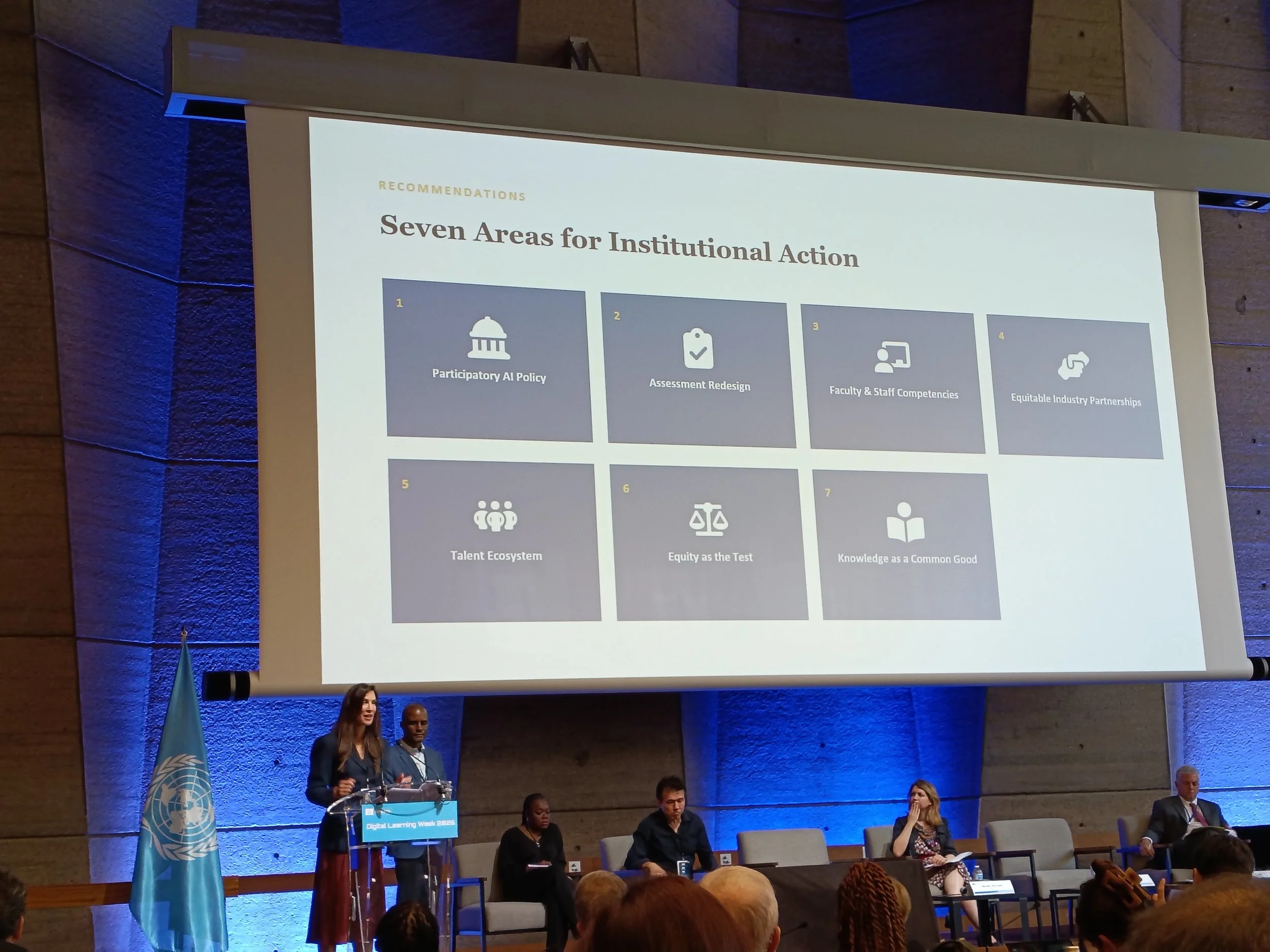
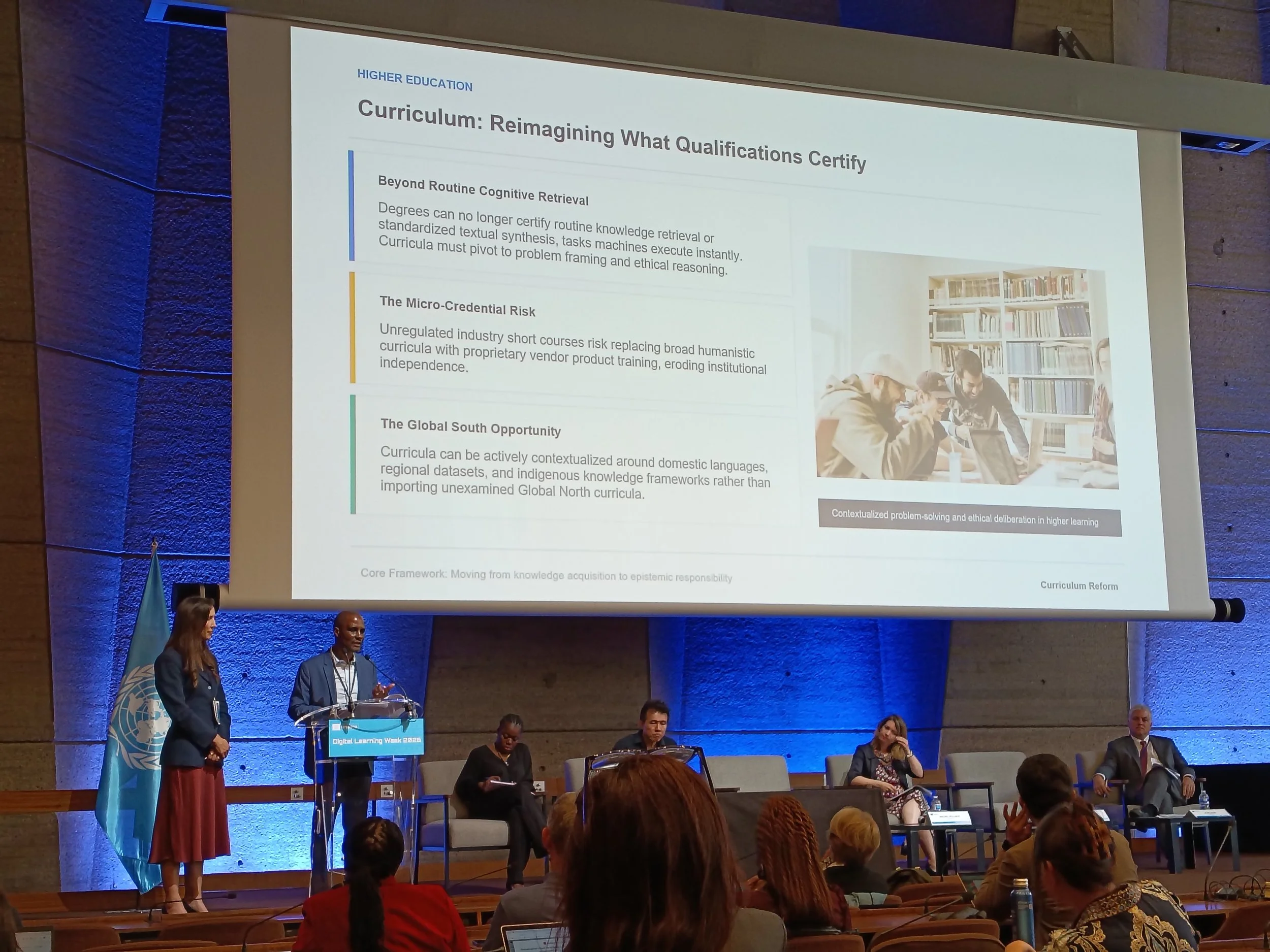
AI is now able to carry out tasks that students find tedious to complete such as editing essays, writing references, or doing readings. But the authors warn that the intellectual struggle needed to execute these tasks is necessary for learning and improvement. As AI detectors are still unreliable, it is also difficult for faculty to address the issue. In addition, this creates a problem for the signalling function of universities because degrees can no longer confidently certify capabilities such as knowledge retrieval and writing skills. A deeper issue stemming from students using AI to research and form their own opinions on a topic is the tendency of chatbots to agree with their users and confirm their existing biases, on top of pushing the biases coming from the data they were trained on. The presenters described this phenomenon as ‘cognitive steering’. On the side of faculty, they warn about the trend of scholars migrating from academia to industry for better opportunities and benefits. Structural inequalities, legal and moral responsibly are other risks they illustrated.
Among the recommendations proposed to address these challenges, the authors propose transitioning from a model of ‘assessment as verification’ to ‘assessment as exploration’ through oral defences and fieldwork, for instance. They also suggest allowing scholars to work both in academia and industry, while retaining their academic freedom. They advocate for the use of institutional subsidies over individual subscriptions to address inequality within institutions. At the same time, they encourage the creation of regional hubs between universities and multilateral policy participation to reduce the gaps between institutions and regions around the world.
Takeaways from other sessions attended by the IAU
Shingai Manjengwa (Head of AI Education and Development, Mila: Quebec AI Institute, Canada) addressed the theme of AI safety and sovereignty by emphasising the importance of countries of the Global South developing their own localised and decolonised machine learning models to safeguard local needs and autonomy.
Sal Khan (CEO, Khan Academy) explained how AI can be used by students, teachers, and families to advance personalised education at all levels. He challenged the idea that using AI will only lead to cognitive offloading and isolated learning. Instead, he explained that AI can allow students to dig deeper into a concept based on their needs and free their time for valuable human collaboration and interactions.
Vanessa Andreotti (Professor and former Dean of the Faculty of Education, University of Victoria) reflected on past technological advancements and lessons learned. She stressed the importance of intergenerational accompaniment, collaborative inquiry, and cultivation of discernment to help young people navigate the transformation brought by AI in their lives. Creating protected spaces for experimentation, refusal and redirection is crucial for the education sector.
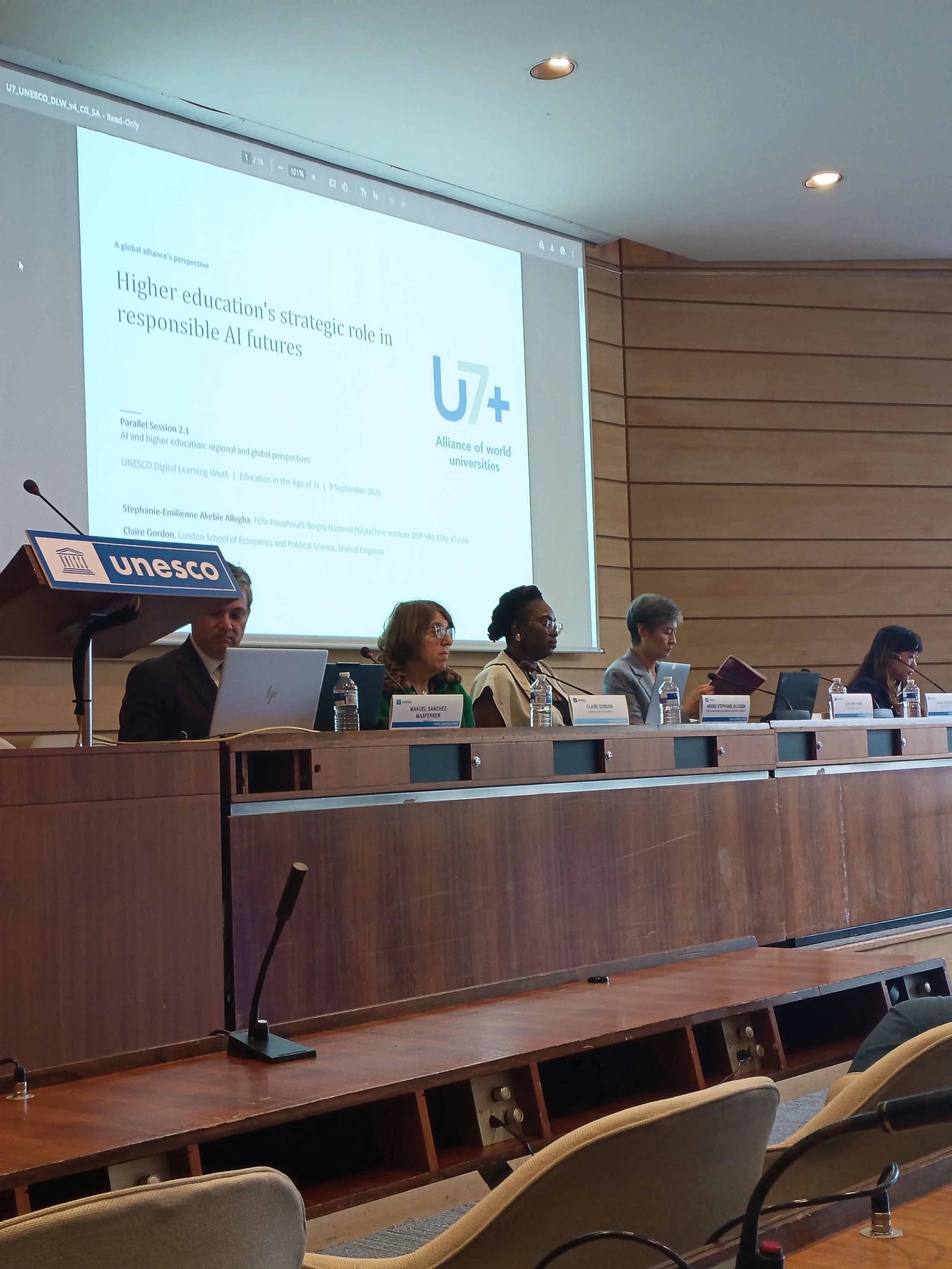
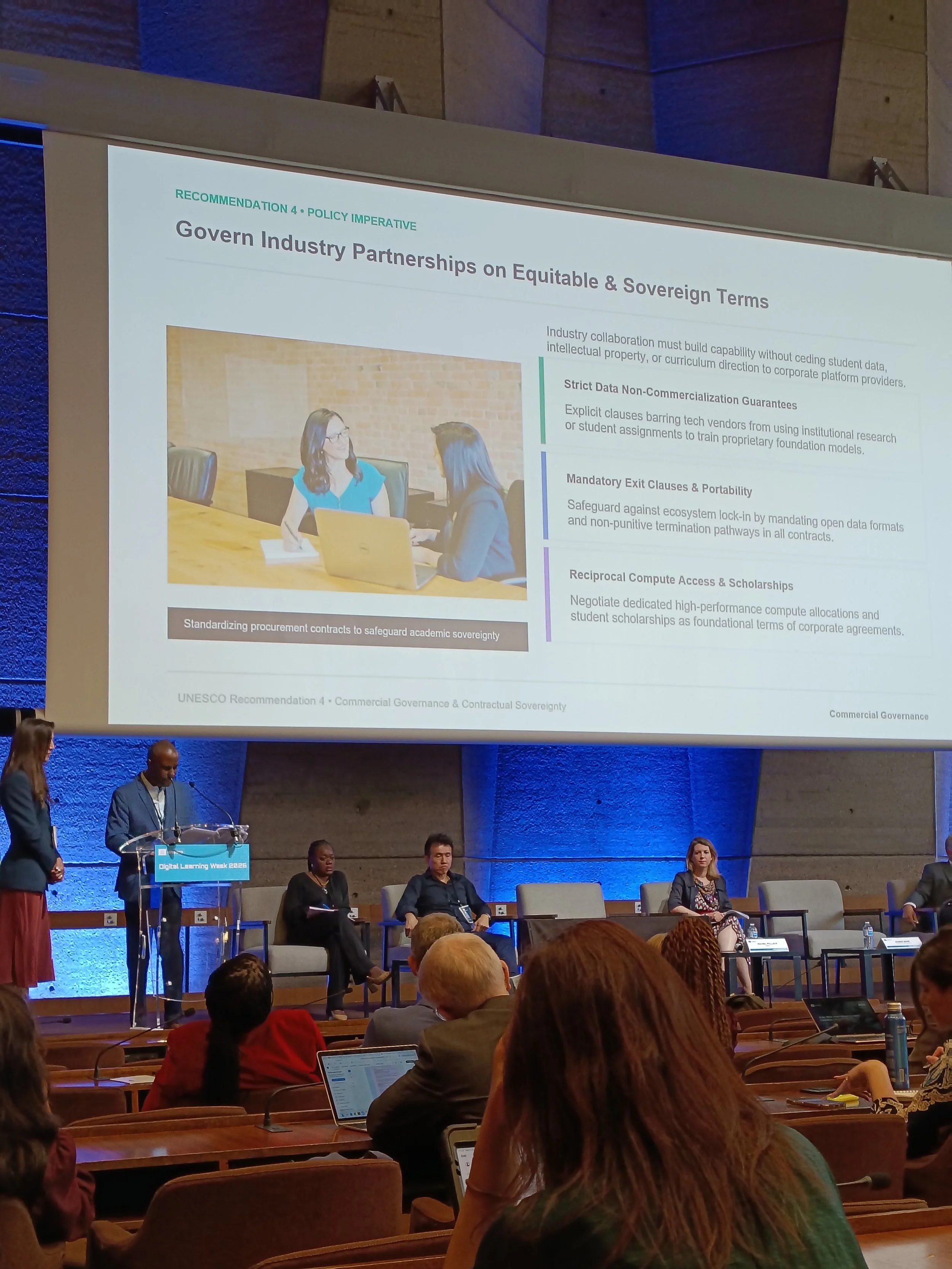
Digital Learning Week 2026 was a valuable forum of reflection on the impact of artificial intelligence on the education sector. We congratulate UNESCO on the increasing number of sessions dedicated to Higher Education in this year’s edition. The IAU 17th General Conference on November 3-6 in Perth, Australia, will be an opportunity to continue the discussion by exploring the theme of The Value of Universities in the Era of Artificial Intelligence with around 400 university leaders from more than 80 countries.
Register for the IAU 17th General Conference.
Watch the webcast of the UNESCO DLW2026.