IAU Advances Global Collaboration for Equitable Higher Education at the Global Education Coalition Meeting 2026
Global Education Coalition Sixth Annual Meeting
On 23-24 March, IAU Secretary General Hilligje van’t Land attended the sixth annual Global Education Coalition meeting. This year, the meeting convened under the theme “Turning vision into value: Transforming education together’’ and explored how increased investment in digital transformation and AI can impact socio-economic factors.
The IAU is an active member of the Global Education Coalition (GEC), contributing to its shared mission of advancing inclusive and equitable digital transformation in education. As part of its engagement, the IAU regularly participates in Coalition meetings, supports ongoing initiatives, and contributes expertise.
During the meeting, the IAU’s presence generated strong interest, particularly around the potential to scale successful digital practices from K–12 education to the higher education sector. This led to several promising exchanges and new connections with stakeholders from institutions and organizations in the United Kingdom, Spain, Belgium, and India.
The meeting provided an opportunity for meaningful conversations with key partners, opening avenues for further collaboration and joint initiatives.
Launch of the 2026 Global Education Monitoring Report
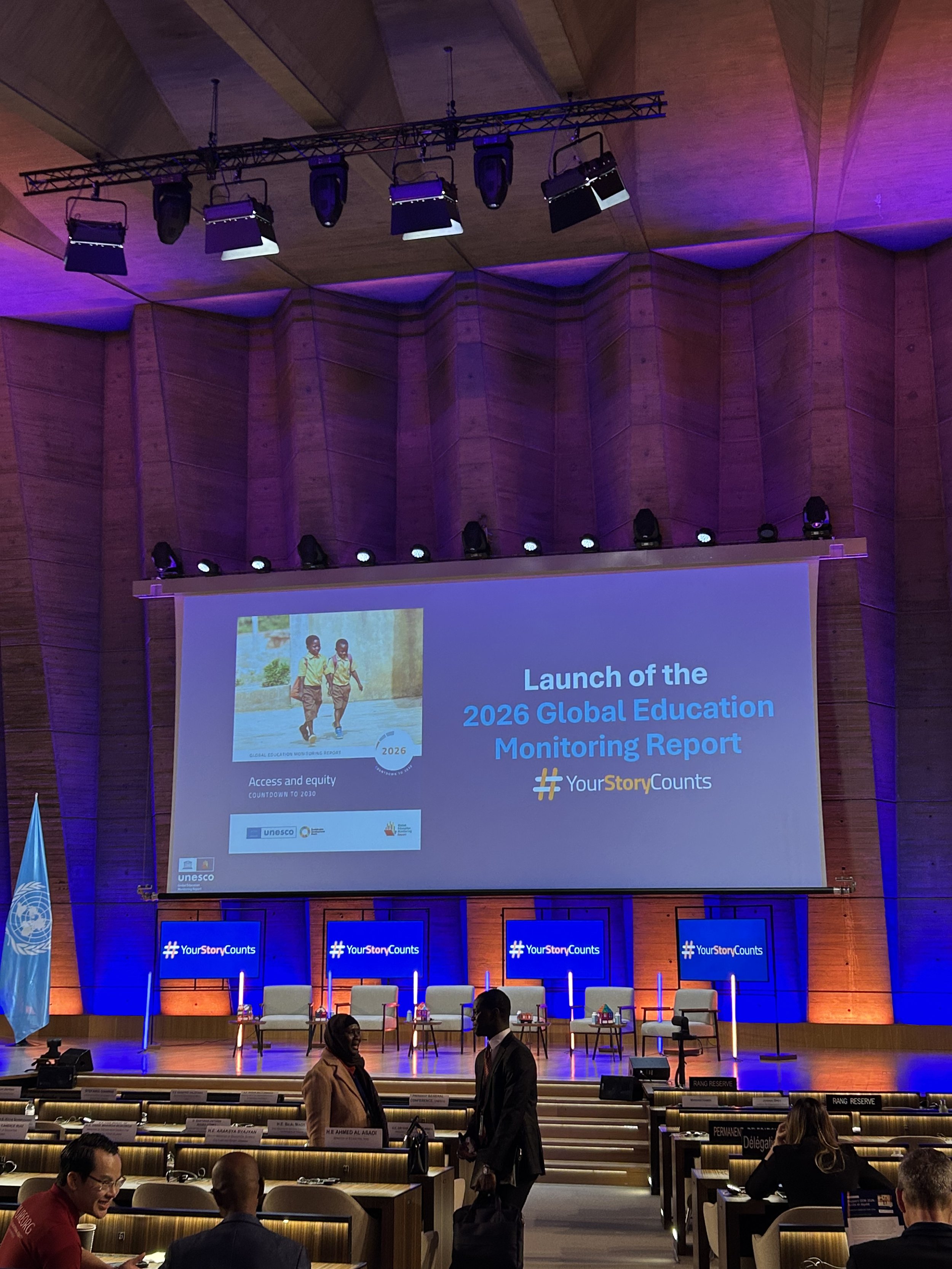
Following the annual GEC meeting, the IAU was pleased to also attend the High-level launch event for the 2026 Global Education Monitoring Report (GEM) titled ‘’Access and Equity: Countdown to 2030’’ on 25 March. The IAU was represented at this event by Secretary Genal Hilligje van’t Land and HESD and Communications Intern Therese Edrud.
Published annually, the GEM report identifies success and areas of improvement in countries based on educational and non-educational factors alike. Combining case-studies and findings from broader research initiatives, the report facilitates an increased understanding of current education conditions on the global scale.
The launch event gathered experts and policymakers to discuss progress and persistent challenges in all stages of education, including post-secondary education.
In the panel on higher education, GEM Report Chief of Education Monitoring Pablo Fraser presented key findings, noting that while participation in tertiary education is increasing globally, systemic barriers continue to hinder equitable access and success.
Similarly, UNESCO Chief of Section on Higher Education Noah Sobe mentioned rising education costs, unequal opportunities, and limited student engagement as pressing concerns. To address these concerns, he highlighted UNESCO’s newly released roadmap for transforming higher education, structured around three pillars: access, success, and global transformation.
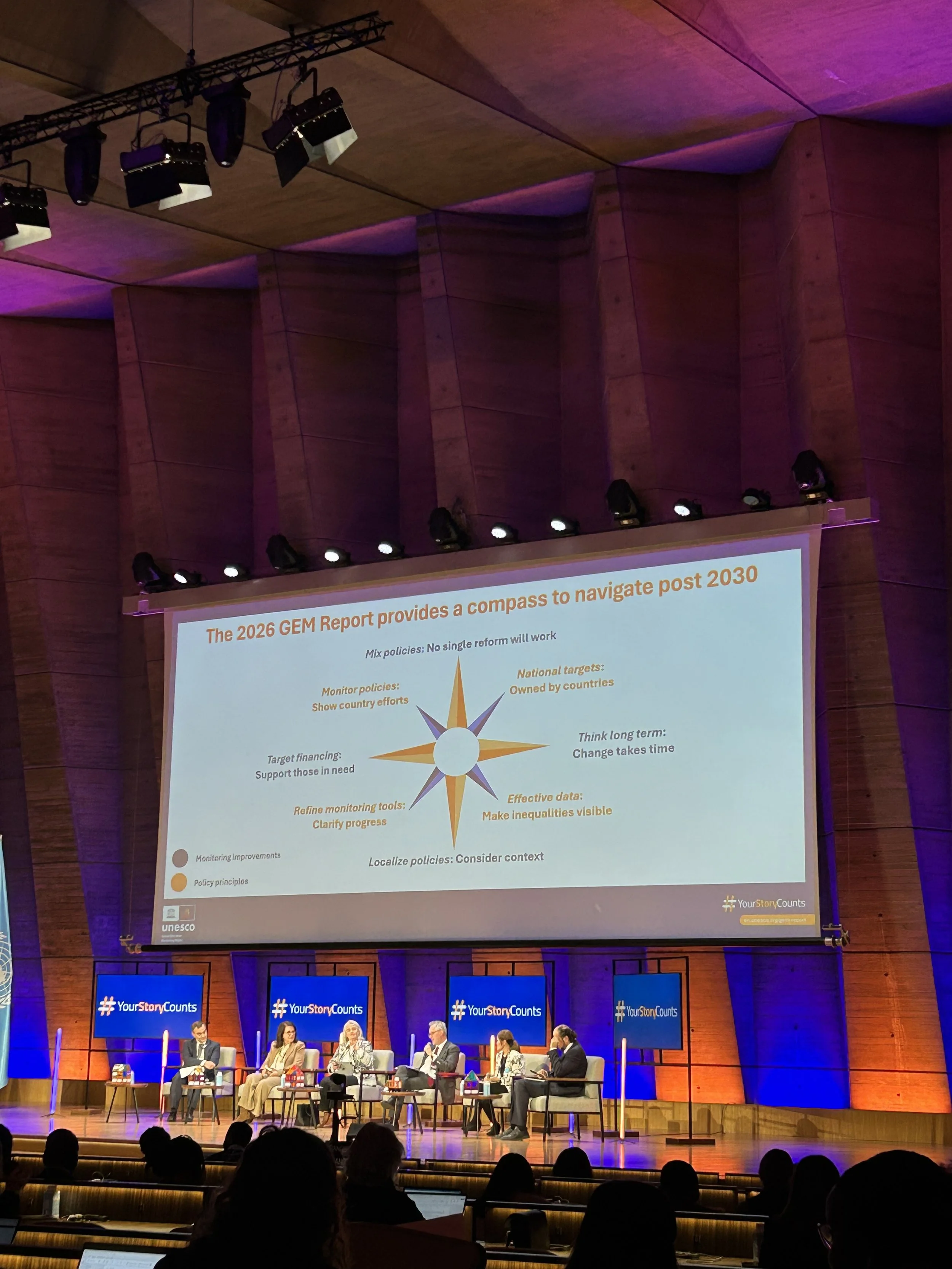
Minister of Education in Albania, H.E. Mirela Kumbaro Furxhi, emphasized the responsibility of universities to act as bridges, ensuring access while strengthening international collaboration and recognition of qualifications. It was moreover stressed by Basque Country Counsellor of Education Begoña Pedrosa that access alone is insufficient, advocating for diverse educational pathways and lifelong learning policies to reduce dropout rates.
Adding to the discussion, European Commission Deputy Head of Unit - Evidence-Based Policy and Evaluation Ulrike Pisiotis underscored inequalities within Europe, pointing to gender imbalances and the strong influence of parental education on educational participation, calling for improved and additional data to inform inclusive policies.
Meanwhile, speaking on the systematic de-prioritisation of education, the Executive Comittee Leader of the Norwegian Students' and Academics' International Assistance Fund (SAIH), Henriette Reierson Johnstone, highlighted the need to center education as a human right to develop access to education, while ensuring students are seen as an equal voice in policymaking.
The discussions reinforced a shared message: expanding access must be matched by inclusive systems that support student success and involvement. This aligns closely with the IAU Mission, which promotes equity, inclusion, and collaboration in higher education worldwide. Moving forward, equity will depend not only on participation rates, but on the quality, relevance, and inclusiveness of learning experiences for all.