
Global Engagement and Internationalisation of Higher Education
Master of Public Administration (MPA) and
IAU Certificate co-designed with and offered by Mykolas Romeris University (MRU), Lithuania
Introduction to the Programme
The Global Engagement and Internationalisation of Higher Education Master of Public Administration (MPA) programme is designed for higher education professionals seeking to strategically lead internationalisation, partnerships, innovation, and institutional development processes in a global higher education environment. The programme focuses on integrating higher education policy, internationalisation, digital transformation, and sustainability into evidence-informed and values-based decision-making.
Students may enroll in the full MPA, complete five courses online to earn the IAU Global Engagement and Internationalization Certificate, or take individual courses.

Master of Public Administration
IAU Certificate
Individual Courses
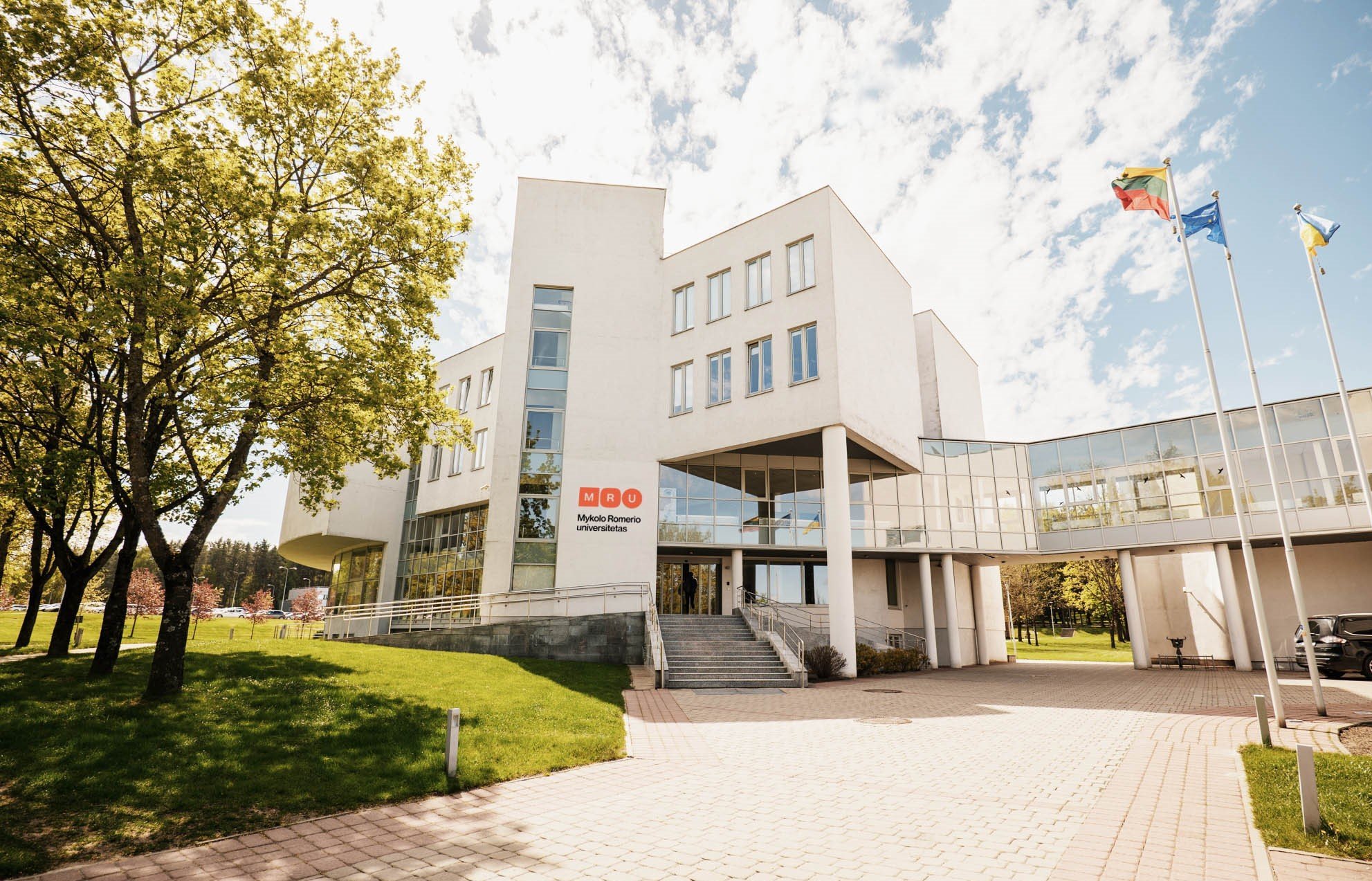
The Global Engagement and Internationalisation of Higher Education Master of Public Administration (MPA) programme was co-developed and is co-delivered by the IAU and Mykolas Romeris University. The first of its kind, this programme has created a space for the IAU to share its global expertise and international academic network with key stakeholders in a structured and accredited degree-awarding format.
This one-year flexible programme—starting in February 2027—combines primarily online learning with international in-person sessions, allowing professionals to study alongside their careers. It focuses on practical solutions to real institutional challenges and includes an applied research project aimed at creating sustainable organisational change and impact.
The programme places strong emphasis on international collaboration, evidence-based decision-making, intercultural competence, and the ability to develop resilient and globally engaged higher education institutions. The courses are taught by international experts, and include 2-3 guest lectures from policy, practice, and research experts around the world.
Programme Value: for Students and their Institutions
The programme prepares a new generation of higher education leaders capable of navigating complex, multicultural, and rapidly changing global environments. Students develop competencies in strategic internationalisation, partnership management, innovation leadership, and sustainable institutional development.
For institutions, the programme creates direct value through applied student projects addressing real organisational challenges such as internationalisation strategies, digital transformation, quality assurance, and partnership development.
Admissions are open from 15 October 2026 to 17 December 2026. Studies will begin in February 2027.
Course Content
Semester 1
Global Trends and Dimensions in Higher Education (6 ECTS) - Hans de Wit
Internationalisation of HE: Meanings, Rationales, Strategies and Trends (6 ECTS) - Elspeth Jones
Innovation, Change and Partnerships in Higher Education Research (6 ECTS) - Tessa DeLaquil
External Actors in Internationalisation of Higher Education (6 ECTS) - Laura Rumbley
Technology, Digitalisation and AI in Higher Education (6 ECTS) - Marius Laurinaitis
Semester 2
Regional Development in Higher Education: European and Comparative Perspective (6 ECTS) - Ligia Deca
Global Mobility of Students, Staff and Programmes (4 ECTS) - Hans de Wit
Internationalisation of the Curriculum at Home (4 ECTS) - Luciane Stallivieri
Internationalisation for Sustainable Development and Society (4 ECTS) - Rita Locatelli
Applied Research Thesis for Sustainable Institutional Change (12 ECTS) - Inga Juknytė-Petreikienė
Master of Public Administration (MPA)
Higher Education internationalization professionals may take the full course and complete a traditional master degree, alongside their professional life thanks to the hybrid nature of the programme.
-
Admission Requirements:
Bachelor degree or equivalent first university diploma with a minimum study duration of 3 years is required
For graduates from Indian or Bangladeshi education systems, a degree with a minimum study duration of 4 years is required.
Academic transcripts of each study year
Document proving English language level
Proof of at least 3-years work experience in a higher-education position
Letter of recommendation
Passport copy
Curriculum Vitae (CV)
Certificate of Employment
Provided documents must be in color, have no cut corners (high quality scan).
See the full MRU application requirements and details here.
Admission Steps:
Fill in the application form
Please note: Applications open on 15 October 2026
Pay the non-refundable application fee (for non-EU citizens – 100 euros, for EU-citizens, MRU alumni, and Ukrainians – 50 euros)
Receive your application evaluation results
Confirm your acceptance by paying the first-year tuition fee and 50 euros registration fee (non-refundable)
Sign the study contract
Start Temporary Residence Permit application procedure
Register to studies
IAU Certificate
The IAU Certificate programme consists of five courses from the full Master’s programme and is delivered entirely online. It runs over one academic year, following the same schedule as the full Master’s programme, with certificate participants attending classes alongside Master’s students. Participants enrol as non-degree learners, without student status. IAU Certificate students accrue ECTS which may be transfered to complete the full MPA at a later date.
The five courses of the IAU Certificate are:
Global Trends and Dimensions in Higher Education (6 ECTS) - Professor Hans de Wit
Internationalization of HE: Meanings, Rationales, Strategies and Trends (6 ECTS) - Professor Elspeth Jones
Global Mobility of Students, Staff and Programmes (4 ECTS) - Professor Hans de Wit
Internationalisation of the Curriculum at Home: Inclusive Pedagogy and Digital Innovation (4 ECTS) - Professor Luciane Stallivieri
Internationalisation for Sustainable Development and Society (4 ECTS) - Professor Rita Locatelli
-
Admission Requirements:
Bachelor degree or equivalent first university diploma with a minimum study duration of 3 years is required
For graduates from Indian or Bangladeshi education systems, a degree with a minimum study duration of 4 years is required.
Academic transcripts of each study year
Document proving English language level
Proof of at least 3-years work experience in a higher-education position
Letter of recommendation
Passport copy
Curriculum Vitae (CV)
Certificate of Employment
Provided documents must be in color, have no cut corners (high quality scan).
See the full MRU application requirements and details here.
Admission Steps:
Fill in the application form
Please note: Applications open on 15 October 2026
Pay the non-refundable application fee (for non-EU citizens – 100 euros, for EU-citizens, MRU alumni, and Ukrainians – 50 euros)
Receive your application evaluation results
Confirm your acceptance by paying the first-year tuition fee and 50 euros registration fee (non-refundable)
Sign the study contract
Register to studies
Individual Courses
Higher Education internationalization professionals may take any individual course for professional development. Participants enrol as non-degree learners, without student status. Participants accrue ECTS which may be transfered to complete the full MPA at a later date.
-
More information to be added soon.
FAQs
-
The programme is intended for professionals with at least three years of managerial experience in higher education.
It is particularly relevant for:
international relations and partnership coordinators,
strategy, quality assurance, research and study administration professionals,
higher education policy and project experts,
leaders and professionals aiming to strengthen competencies in global engagement and international cooperation.
As the programme is designed for experienced higher education professionals, the learning process is built not only on academic knowledge, but also on the exchange of professional experience, peer learning, and collaborative reflection on real institutional challenges. Participants bring diverse perspectives from different countries, higher education systems, and organisational contexts, creating an international learning environment where knowledge is co-created through dialogue, critical discussion, and practice-based problem-solving.
This approach enables participants not only to deepen their understanding of internationalisation processes, but also to critically reflect on their own institutional realities, compare global practices, and develop sustainable and context-sensitive solutions applicable to their professional environments.
-
Semester 1
Global Trends and Dimensions in Higher Education (6 ECTS) - Hans de Wit
Internationalisation of HE: Meanings, Rationales, Strategies and Trends (6 ECTS) - Elspeth Jones
Innovation, Change and Partnerships in Higher Education Research (6 ECTS) - Tessa DeLaquil
External Actors in Internationalisation of Higher Education (6 ECTS) - Laura Rumbley
Technology, Digitalisation and AI in Higher Education (6 ECTS) - Marius Laurinaitis
Semester 2
Regional Development in Higher Education: European and Comparative Perspective (6 ECTS) - Ligia Deca
Global Mobility of Students, Staff and Programmes (4 ECTS) - Hans de Wit
Internationalisation of the Curriculum at Home (4 ECTS) - Luciane Stallivieri
Internationalisation for Sustainable Development and Society (4 ECTS) - Rita Locatelli
Applied Research Thesis for Sustainable Institutional Change (12 ECTS) - Inga Juknytė-Petreikienė
-
Programme Leaders:
Hans de Wit, Professor Emeritus and former Director, Center for International Higher Education (CIHE), Boston College; Senior Fellow, IAU; founding editor, Journal of Studies in International Education; founding member and past President, EAIE.
Courses: Global Trends and Dimensions in Higher Education and Global Mobility of Students, Staff and ProgrammesJolanta Urbanovič, Professor at Mykolas Romeris University; former Vice-Dean; former Vice-Minister of Education, Science and Sport and former Adviser to the President of Lithuania on education, science and higher education policy.
Course Leaders
Elspeth Jones, Emerita Professor of Internationalization of Higher Education, Leeds Beckett University; founding editor of Routledge’s Internationalization in Higher Education series.
Course: Internationalisation of HE: Meanings, Rationales, Strategies and TrendsTessa DeLaquil, Associate Professor, Norwegian University of Science and Technology; co-editor of Springer’s Debating Higher Education: Philosophical Perspectives; Associate Editor, Policy Reviews in Higher Education.
Course: Innovation, Change and Partnerships in Higher Education ResearchLaura Rumbley, Director for Knowledge Development and Research, EAIE; former Associate Director, Center for International Higher Education (CIHE), Boston College; former Deputy Director, Academic Cooperation Association (ACA).
Course: External Actors in Internationalisation of Higher EducationMarius Laurinaitis, Professor, Mykolas Romeris University; Director of the Bachelor’s programme in Law, Financial Innovation and Artificial Intelligence; consultant to the United Nations Office on Drugs and Crime (UNODC).
Course: Technology, Digitalisation and AI in Higher EducationLigia Deca, Secretary-General, Romania’s National Commission to UNESCO; Vice-Rector, National University of Political Studies and Public Administration; former Minister of Education and former Head of the Bologna Secretariat.
Course: Regional Development in Higher Education: European and Comparative PerspectiveLuciane Stallivieri, Professor and researcher, Federal University of Santa Catarina; coordinator of research on internationalization of education; consultant to the Brazilian Ministry of Education, OEA (Organization of American States) and UNESCO.
Course: Internationalisation of the Curriculum at HomeRita Locatelli, Researcher, Università Cattolica del Sacro Cuore; Academic Board member, Centre for Higher Education Internationalization (CHEI); Scientific Committee member of the UNESCO Chair in Education for Human Development and Solidarity among Peoples.
Course: Internationalisation for Sustainable Development and SocietyInga Juknytė-Petreikienė, Associate Professor, Head of the Centre of Academic Affairs, Mykolas Romeris University; extensive experience (more than 25 years) in international higher education projects, joint degree programmes, programme evaluation and quality assurance across Europe and beyond.
Course: Applied Research Thesis for Sustainable Institutional ChangeIAU Coordinator:
Giorgio Marinoni, Manager for Internationalization of Higher Education, International Association of Universities
-
Master Degree:
Application fee (non-refundable):
for Non-EU citizens – €100
for EU citizens, MRU Alumni, and Ukrainians – €50
Registration fee (non-refundable):
€50
Tuition fee (EU/Non-EU citizens) per 1 academic year:
€5500 per one academic year (2026-2027).
Payment information will be provided in the invoices issued in your online application form.
IAU Certificate:
Application fee (non-refundable):
for Non-EU citizens – €100
for EU citizens, MRU Alumni, and Ukrainians – €50
Registration fee (non-refundable):
€50
Tuition fee:
€3200 for IAU Members
€3500 for Non IAU Members
Payment information will be provided in the invoices issued in your online application form.
Individual Course:
Tuition fee:
€700 for 4 ECTS courses
€800 for 6 ECTS courses
-
List of scholarships can be found here.
-
For conceptual questions regarding the study programme, please contact the Programme Leader, Professor Hans de Wit, via email at dewitj@bc.edu
For organisational and administrative matters, please contact the Co-leader, Professor Jolanta Urbanovič of Mykolas Romeris University, via email at jolanta@mruni.eu
For information about the IAU certificate and individual courses, please contact the IAU Coordinator, Giorgio Marinoni, via email at g.marinoni@iau.global
General Inquiries
International Admissions Office
Mykolas Romeris University
Ateities str. 20, LT-08303, Vilnius, LithuaniaE-mail: study@mruni.eu
Phone: +370 5 271 4700
WhatsApp: +370 6 564 6682
Office: I-122