
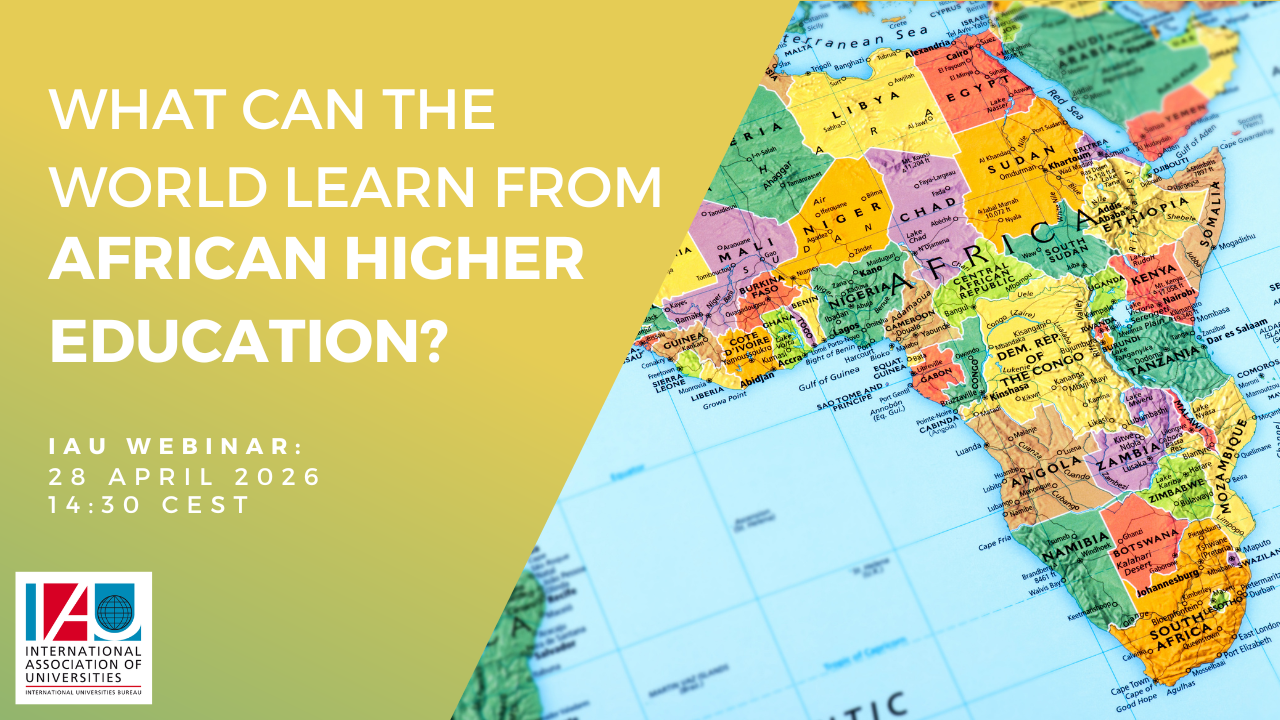
Between 2000 and 2021, higher education enrolment in sub-Saharan Africa has more than doubled, from 4% to 9%. Continuing this growth, continental enrolment in higher secondary and tertiary education is projected to double over the next two decades: from 103 million continental enrolments to 240 million. This rapid expansion is a leadership challenge unfolding alongside competing pressures to achieve national, regional, and global agendas. Leaders are tasked with navigating intensified competition for funding and sustainably futureproofing their institutions, all the while conceptualizing the best form of higher education in and for Africa.
Herein lie unique opportunities. The African higher education sector has long championed epistemologies and pedagogies that are both embedded in local societies and globally engaged. As UNESCO’s 2026 Global Roadmap for Higher Education Transformation calls for greater interdisciplinarity and innovative pedagogical models, the African approach stands out as a source of inspiration. In other words: what can the world learn from African higher education? How can tested strategies for crisis management, scaling enrolment, and epistemic innovation in tense geopolitical and financial situations inform the global higher education community?
Speakers:
Noah W. Sobe, Chief Of Section for Higher Education, UNESCO
Paul Tiyambe Zeleza, Professor of African Studies, and former Senior Advisor to the President, Howard University, USA and Former Vice Chancellor, United States International University–Africa (USIU–Africa), Kenya
Nana Aba Appiah Amfo, Vice-Chancellor, University of Ghana, Ghana and Vice-Chair of the African Research Universities Alliance (ARUA)
Chris Brink, Former Vice Chancellor, Stellenbosch University, South Africa and Former Vice Chancellor, Newcastle University, United Kingdom
Resources:
African HE is Not Peripheral. It is Shaping Global Change., Paul Zeleza, University World News 2026
What can the World Learn from African Higher Education?, Chris Brink, University World News 2026
Transforming Higher Education: a Global Roadmap for the Future, UNESCO 2026
Learning from Africa to Reimagine the University Globally, Paul Zeleza 2026
University Leadership in Context: Reflections from the IAU–UNESCO Campus Africa Leadership Lab, IAU 2025