The Role of Universities in Advancing AI for Good
IAU Contributes to ASEFInnoLab7 and the University of Nottingham Conference
In 2026, the 7th ASEF Higher Education Innovation Laboratory (ASEFInnoLab7) brought together university leaders, policy researchers, and innovators from across Asia and Europe under the banner of “The Role of Universities in Advancing AI for Good.” Co-implemented by the Asia-Europe Foundation (ASEF) and Fudan University, with the institutional support of the International Association of Universities (IAU) as a supporting partner, alongside the University of Nottingham and UNESCO, this edition linked a preparatory online dialogue directly with a flagship in-person conference hosted with the University of Nottingham.
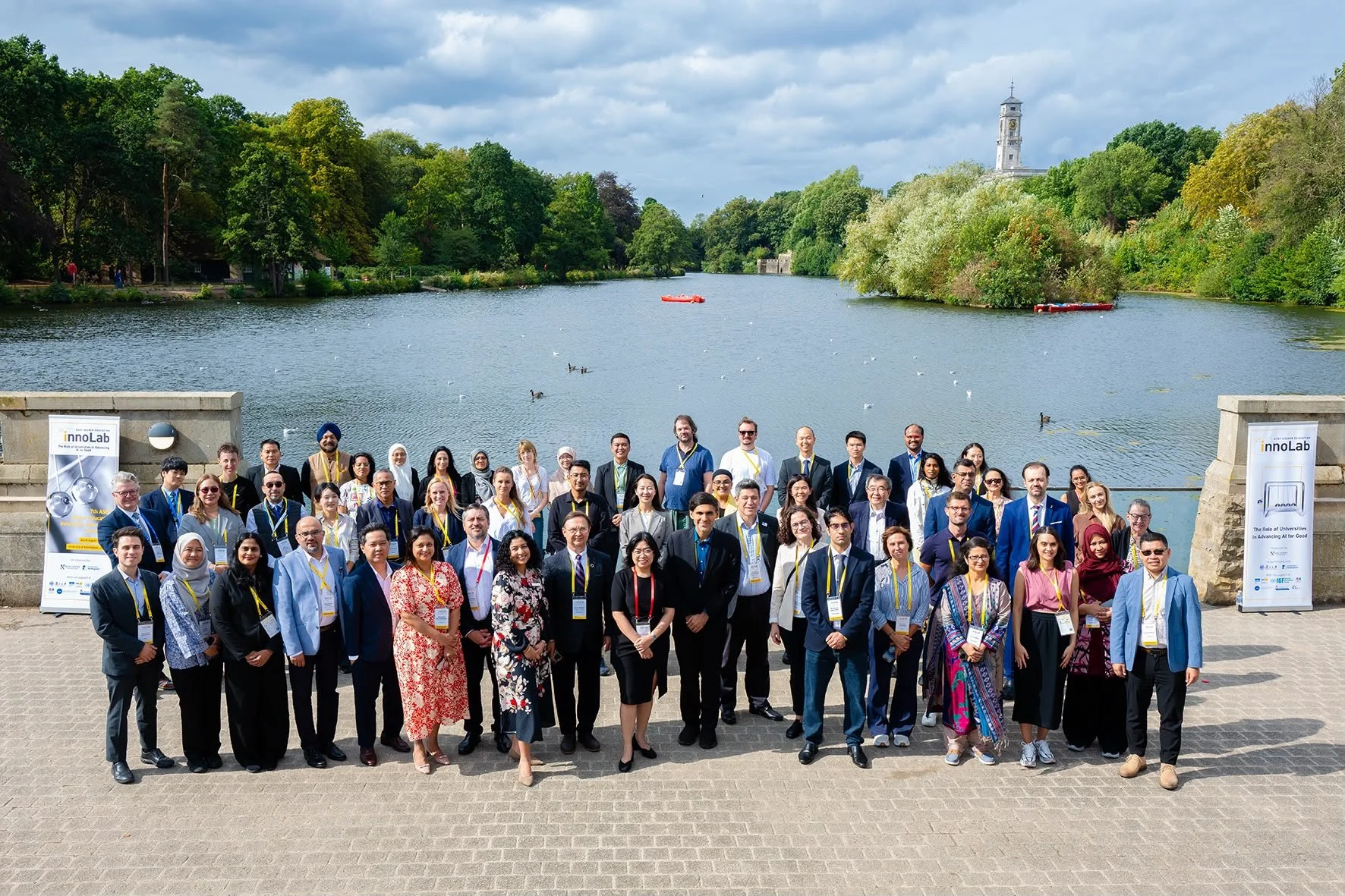
The multi-week Trailblazers Webinar Series (conducted from 3 to 24 June) established the intellectual foundation for this bilateral exchange. Designed to examine how generative AI is reshaping higher education ecosystems, the online sessions explored equitable access, algorithmic bias, and ethical governance in research and teaching. At the Opening session on 3 June, Trine Jensen, Manager of Higher Education and Digital Transformation at the IAU, contributed to the plenary panel alongside Prof. Simon Chesterman (Vice Provost, National University of Singapore) and Ms. Anja Gengo (Programme Expert, UN Internet Governance Forum), moderated by Dr. Claudio Rivera (Academic Director, RTU Riga Business School).
Building directly upon these online exchanges, the on-site conference convened participants from 24 to 28 August at the University of Nottingham to transition from policy debate into actionable institutional frameworks. Trine played a central role across the programme, delivering a keynote presentation on the results of the 2nd IAU Global Survey on Digital Transformation and contributing to expert roundtable discussions on effective policies and university-industry collaboration.
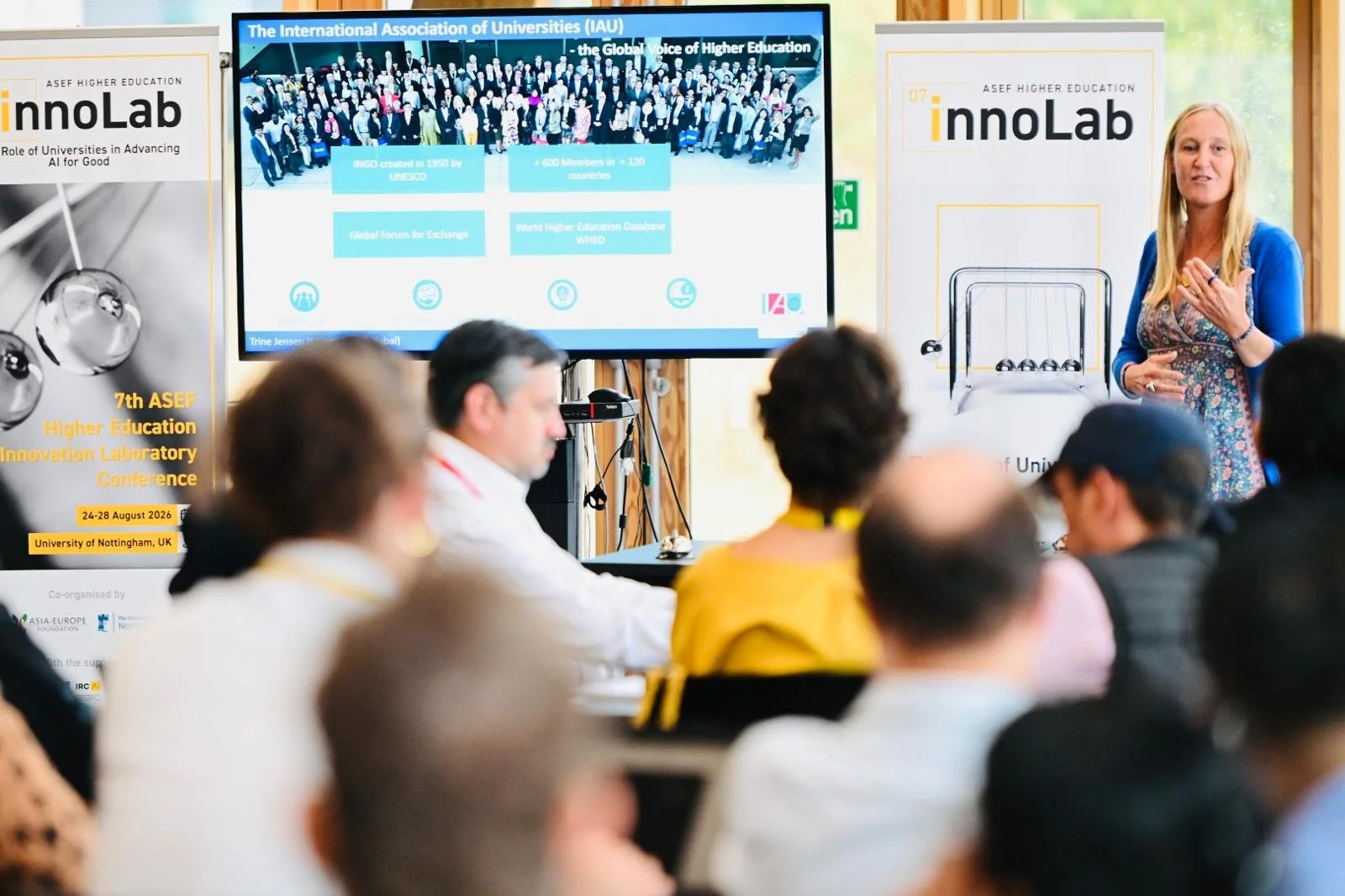
Drawing on empirical evidence from 430 higher education institutions across 125 countries and territories, Trine outlined critical data benchmarks highlighting the tension between rapid technology adoption and institutional readiness:
Governance Gaps: While 57% of surveyed institutions permit students to use generative AI in their learning and 66% inform them about acceptable use, only 40% have established formal institutional guidelines.
Classroom vs. Evaluation Realities: Over half (51%) of respondents report faculty using generative AI to create teaching materials and syllabi, and 44% note direct impacts on exams; however, 59% strictly exclude AI from grading.
Representational Integrity: Crucially, 42% of global institutions cited biased datasets and unequal geographic representation in AI models as primary concerns, and 39% view unmanaged AI as an ongoing threat to academic integrity.
In her keynote and roundtable sessions, Trine stressed that university transformation must remain steered by purpose, not simply by technological possibilities. Rather than treating AI as a shortcut for efficiency, academic leadership must protect the social contract of higher education as an autonomous producer of knowledge. She argued that oversight, critical thinking, and ethical review must stay anchored in human judgment - even when that requires deliberate time and effort.
Furthermore, Trine called for bridging regional disparities: while well-resourced universities can invest in dedicated AI transformation units, many institutions - particularly across developing regions - rely on internal peer-to-peer capacity building.
During her time in Nottingham, Trine also participated in the hybrid meeting of the ASEM Expert Group on Digitalization and Artificial Intelligence, held on 27 August and hosted by the University of Nottingham. Chaired by the DAAD, the session gathered higher education experts from across Asia and Europe to discuss the implications of evolving regional AI regulations, such as the EU AI Act, China's generative AI measures, and ASEAN guidelines – emphasizing the critical need for institutional capacity building, human-centered governance, and safeguarding fundamental academic values.
ASEFInnoLab7 will conclude its work by publishing 9 white papers on AI for Good in Higher Education, developed collaboratively by the participating working groups. These papers will be officially launched at the upcoming 17th IAU General Conference, to be held from 3 to 6 November 2026 at Murdoch University in Perth, Australia.
The IAU looks forward to continuing its longstanding collaboration with ASEF and to building on our shared commitment to exploring how AI can serve the common good in higher education.