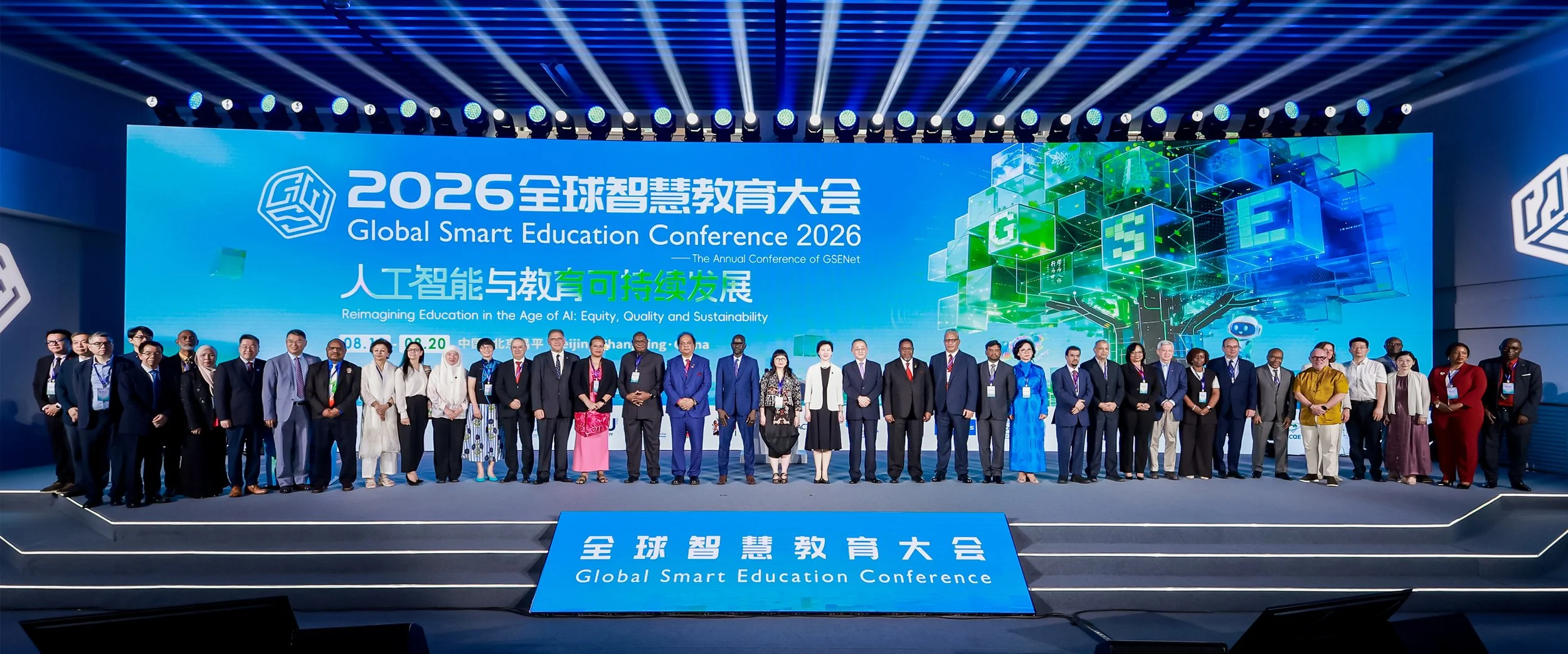
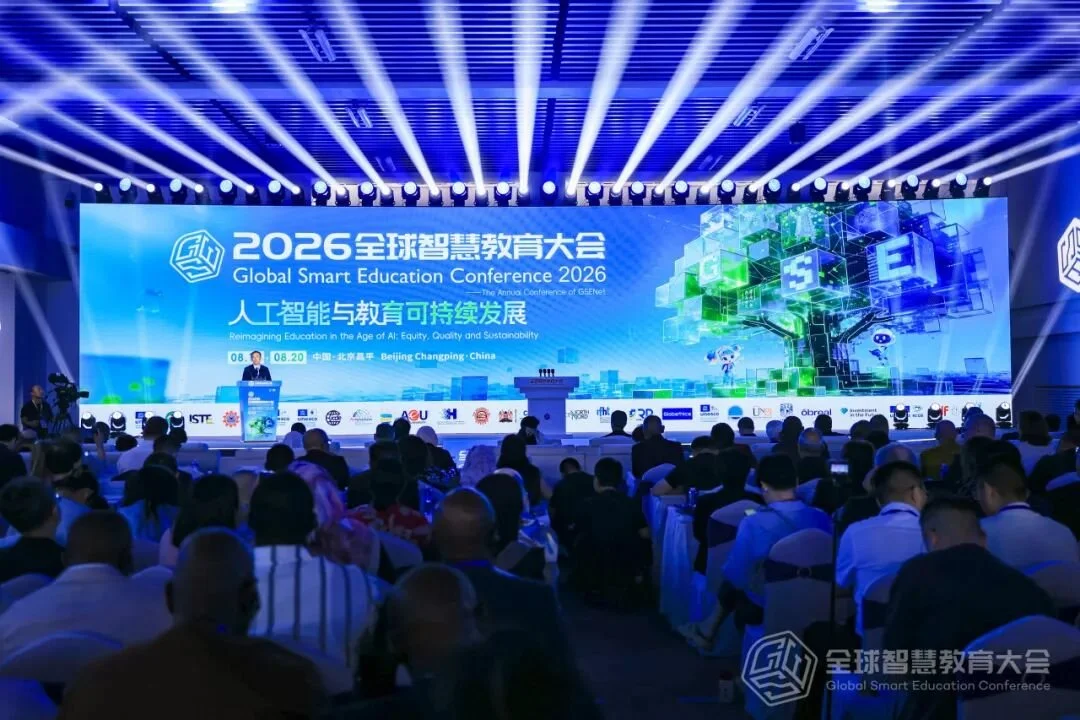
From 18 to 20 August, the International Association of Universities (IAU) participated in the Global Smart Education Conference 2026 (GSE 2026) held at Beijing Normal University (BNU), China. Co-organized by BNU, an active IAU Member, and the UNESCO Institute for Information Technologies in Education (UNESCO IITE), GSE is BNU’s flagship international event on digital transformation and invites policymakers, academic leaders, and educational innovators from around the world.
Representing the IAU, Trine Jensen, Manager of Higher Education and Digital Transformation, presented results of the 2nd IAU Global Survey on Digital Transformation and contributed to a high-level roundtable focused on institutional talent development and research ethics in the age of artificial intelligence.
Empirical Evidence: Findings from the 2nd IAU Global Survey
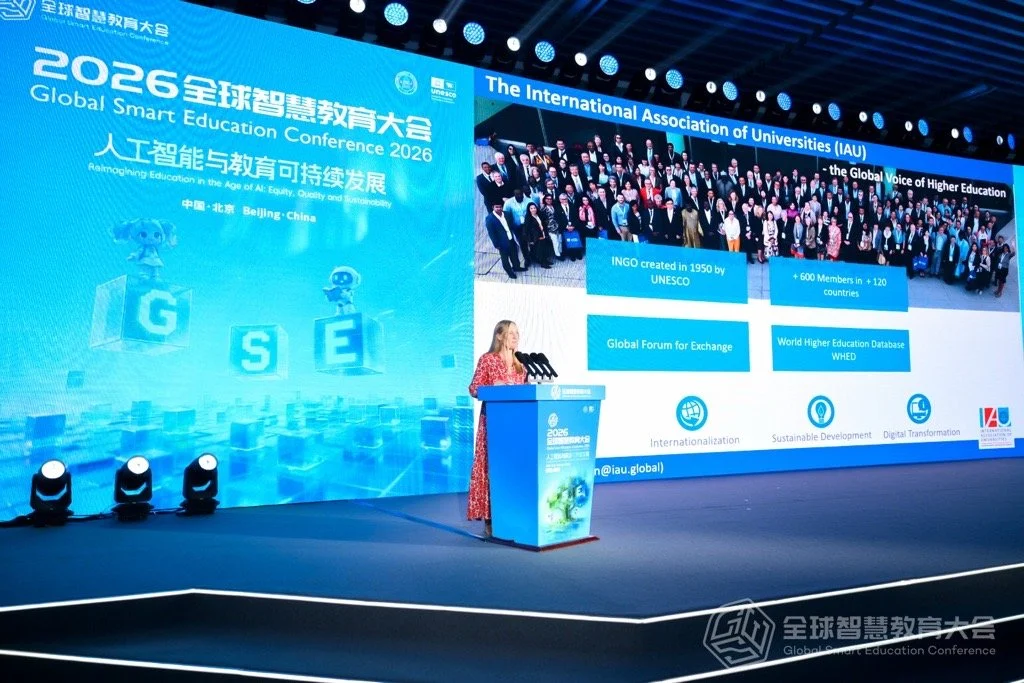
During her presentation, Trine shared findings from the 2nd IAU Global Survey on Digital Transformation, which collected data from 430 institutions across 125 countries and territories. The data revealed that although students actively use generative AI (GenAI), universities’ policies and pedagogical governance remain in transition.
Student Engagement: While the majority of students (57%) are permitted to utilize generative AI in their learning, they were still taught about the limitations of AI usage (54%) as part of the curricula, as well as being informed about the ways they can or cannot use it in their studies (66%).
Institutional Governance: Additionally, the survey revealed that despite active implementation of AI among students, the transition of policies and guidelines regarding new developments requires more time. While some universities have already issued institutional guidelines on the use of GenAI (40%), approximately the same percentage of institutions are still considering it (39%). Similarly, 36% have established specialized committees to examine AI's institutional implications.
Teaching & Assessment: Over half of respondents admitted that they use generative AI to create teaching and learning materials, as well as to develop study plans and syllabi. Artificial Intelligence has also changed how assessments and exams are conducted (44%). On the other hand, staff mostly avoid using GenAI to grade assessments (59%).
Ethics & Academic Integrity: While 53% of universities have reinforced academic integrity principles to guide AI usage, 39% view GenAI as a direct threat to academic integrity, and 42% cite biased data representation and lack of diversity in training datasets as major institutional concerns.
Trine also introduced the key opportunities with regards to AI in higher education as well the main challenges, stressing that addressing these realities requires universities to balance opportunities (such as personalized learning and enhanced learning design) against acute challenges, including infrastructure divides, regulatory vacuums, and cognitive dependency.
Roundtable: Tackling the Three Core Imperatives of the AI Era
Professor Zuoyu Zhou, Former Vice President of BNU and Director of the UNESCO International Research and Training Centre for Rural Education, moderated the expert roundtable. The panel brought together respected international leaders: Dr. Madhura Senevirathna, Deputy Minister of Education and Higher Education, Sri Lanka; Dr. Teng Komhiol Waninga, Vice-Chancellor, University of Goroka, Papua New Guinea; Prof. Li Hongfei, Vice President, Central China Normal University; and, Ms. Trine Jensen, Manager of Higher Education and Digital Transformation, IAU.
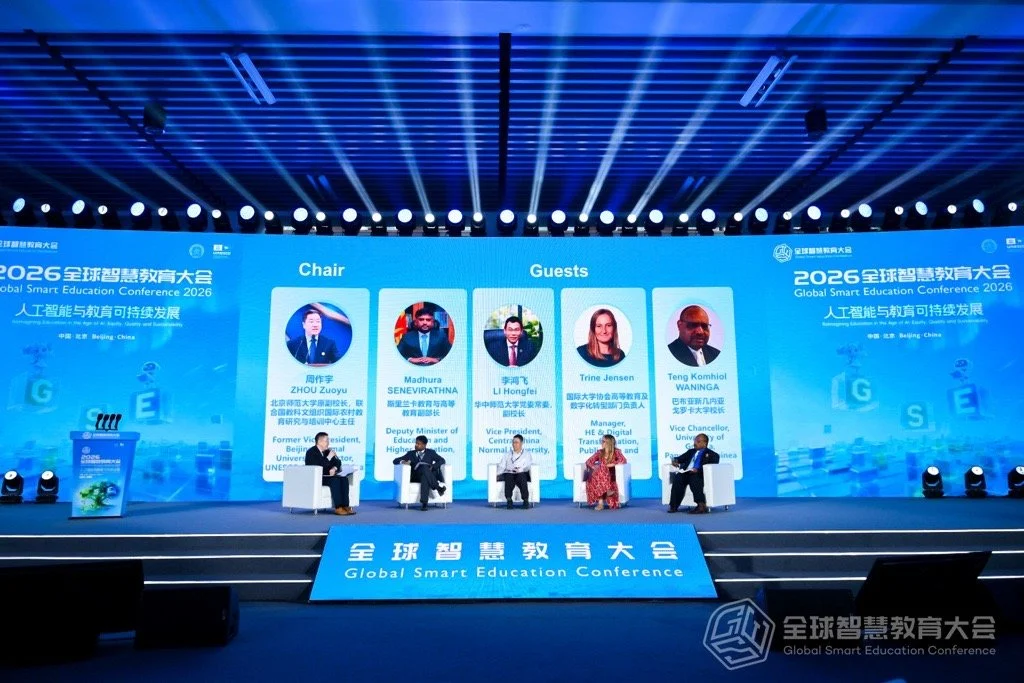
The discussion addressed three central questions framing higher education's future with AI:
1) Student Literacy, Faculty Capacity, and Interdisciplinary Balance
Responding to how universities can build a coherent talent development system while protecting human agency, Trine stressed that student AI literacy cannot simply mean learning to operate software:
“Students and young people are naturally early adopters. The fundamental challenge of AI literacy across disciplines is fostering critical reflection on how these tools support learning, while addressing potential dependency and limitations. If students outsource their own learning to the system, they may be cheating the system – yet more importantly they are cheating themselves and their capacity to learn.”
On faculty capacity building, panelists noted that institutional readiness varies widely across disciplines and generations. In resource-limited institutions where hiring external transformation specialists requires a feasible financial base, Trine advocated for creating internal, peer-to-peer communities of practice. She also highlighted the critical role of interdisciplinary collaboration: while government funding often prioritizes STEM, sustainable dialogue with the humanities is indispensable to understand and guide the societal consequences of technological innovations.
2) Transforming Research Paradigms and Safeguarding Scientific Trust
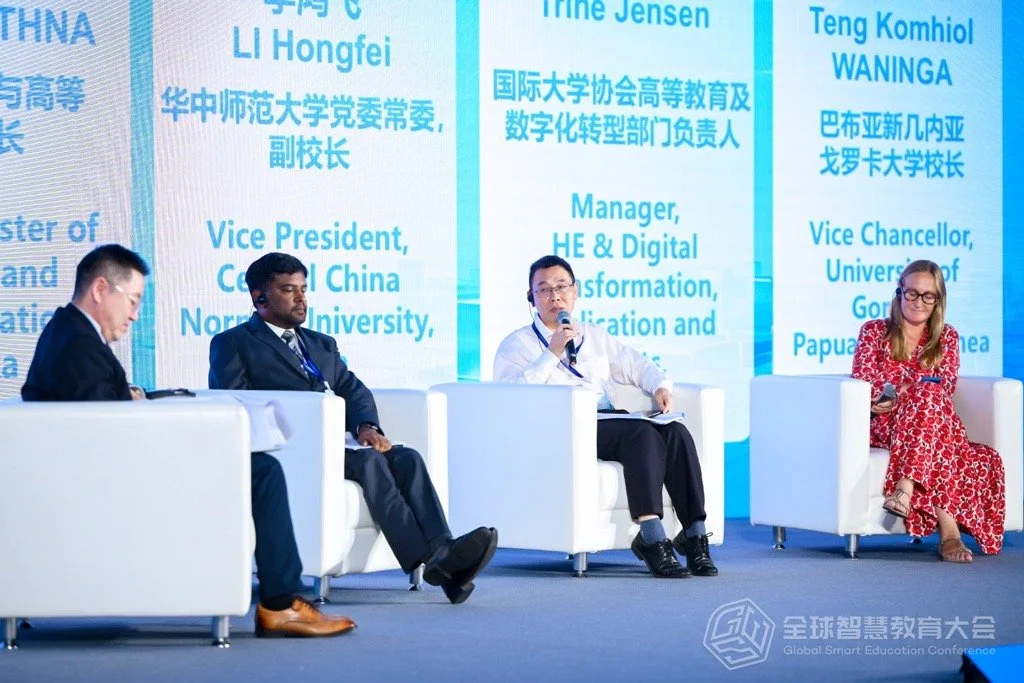
Addressing AI modifying research beyond mere operational speed, Trine cautioned against confusing velocity with scientific progress:
“AI provides undeniable help in research with administrative and editorial aspects, and literature research. Yet, humans should not fall into the trap of losing human thinking and dealing with problems that require judgement, ambiguity, and critical thinking that can help us look at and understand the world from different perspectives. The solution doesn’t involve neglecting AI as a whole, but rather balancing its usage with human oversight and quality control, even if it takes more time and effort.”
She emphasizes that maintaining trust in science requires full transparency about authorship and clear distinctions between human and algorithmic contributions. She cautioned against the misconception that gains in efficiency are, by default, a positive innovation. In the race to adopt AI in higher education, she challenged the audience to ensure that saving “time” does not become the enemy of being ambitious about the future we wish to create for humanity.
3) Collective Action: Fostering Dialogue Across Governments, Universities, and Industry
When asked about the most feasible action that governments, educational institutions and industry can take to advance both AI talent development and AI-driven research, Trine’s answers clearly suggested open communication:
“Dialogue, hearing the concerns and perspectives of each stakeholder, understanding the opportunities but also the challenges that we are facing at different levels in order to generate mutual understanding and collaboration in the pursuit of the solutions that can be negotiated as the best one.”
She also highlighted the fact that no singular advice can be given to all countries, since they all face different issues, and their situations might be completely different from one another, requiring dissimilar resources and approaches to tackle them.
Deepening the IAU-BNU Collaboration
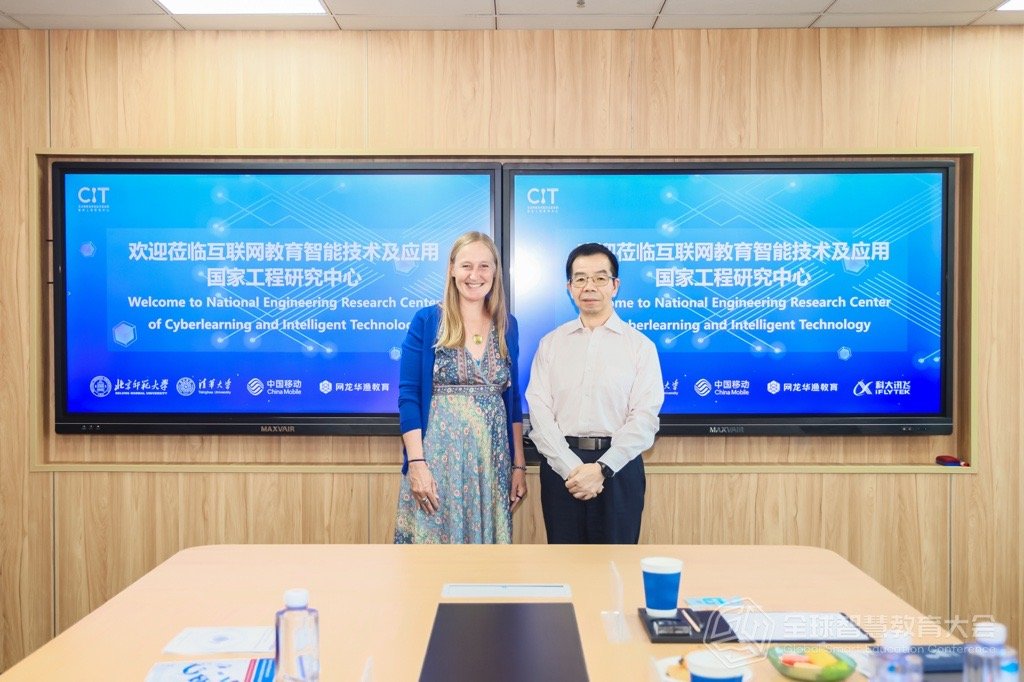
Trine Jensen, IAU Manager for Digital Transformation, and Professor Ronghuai Huang, UNESCO Chair on Artificial Intelligence in Education and Co-Dean of the Smart Learning Institute at BNU
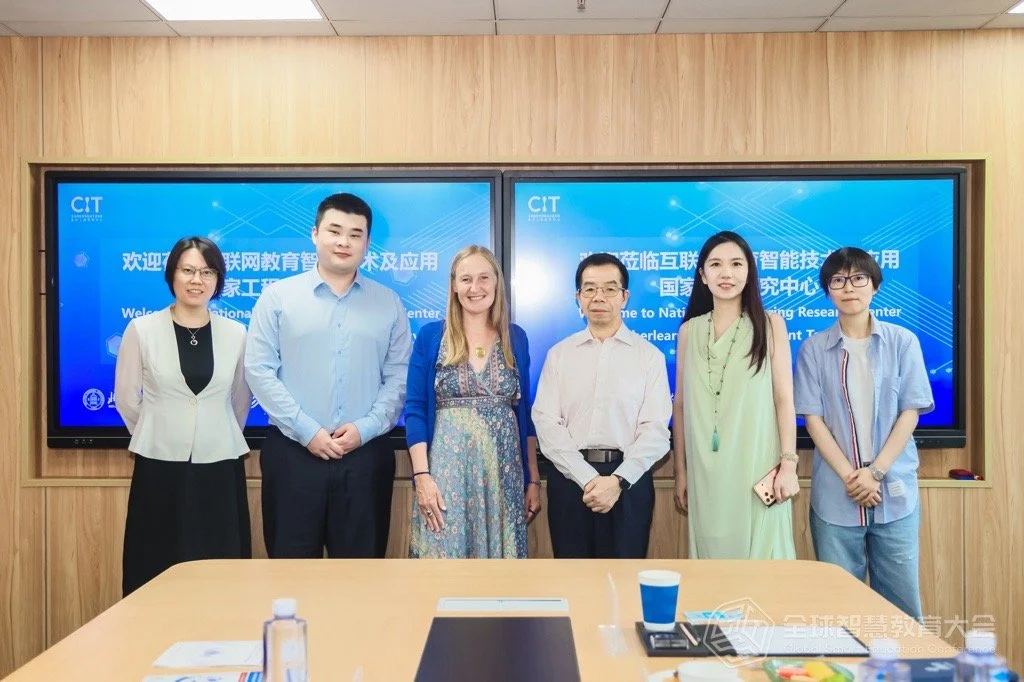
During the GSE 2026, Trine also met with Professor Ronghuai Huang, UNESCO Chair on Artificial Intelligence in Education and Co-Dean of the Smart Learning Institute at BNU, to discuss continued joint efforts to build the institutional potential of AI in higher education institutions worldwide.
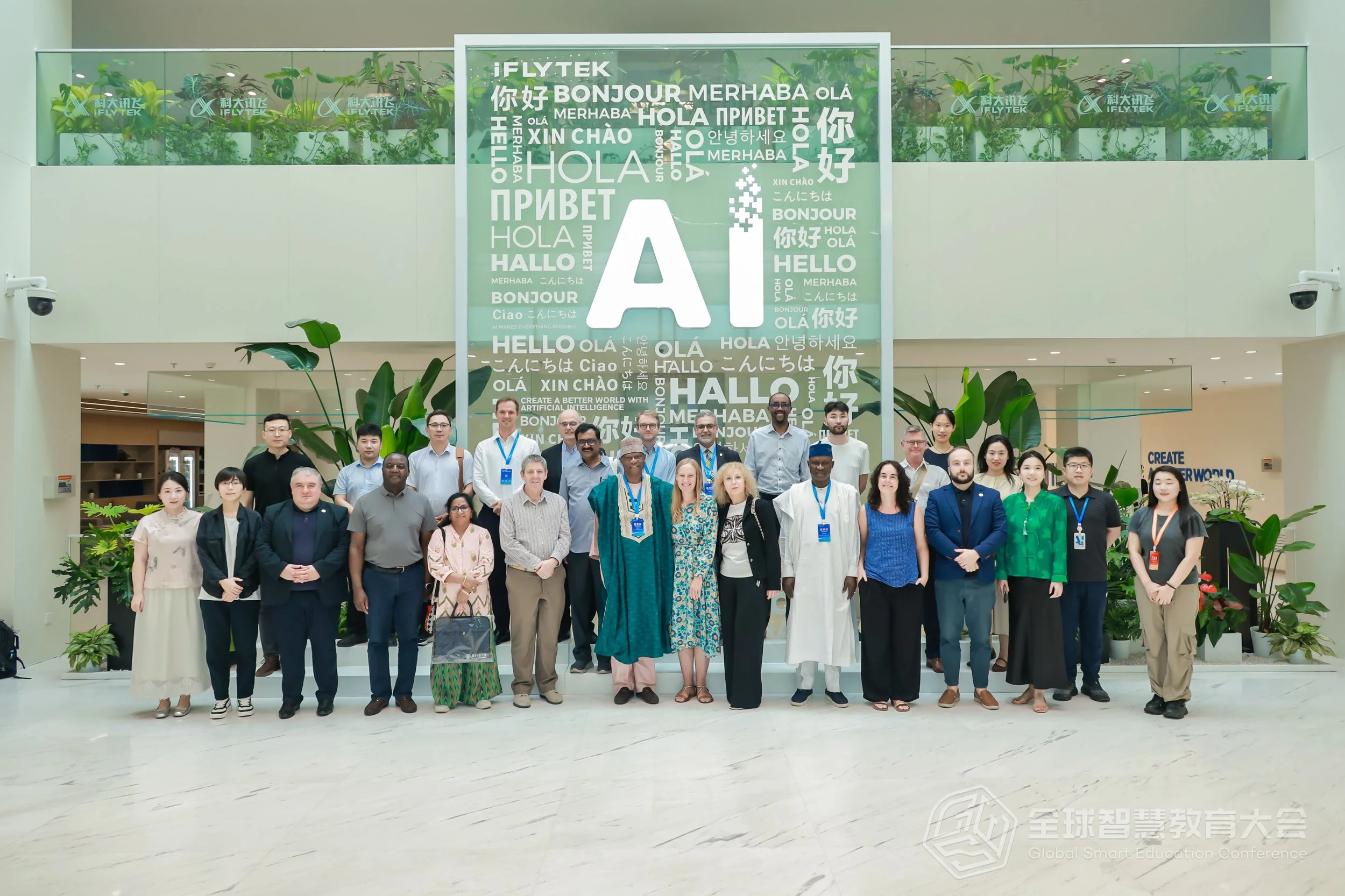
Participants at the IAU Institutional Site Visit to BNU on AI in August 2025
The engagement is built on an established partnership. In 2025, the IAU and BNU organized a study visit, inviting university rectors from various countries to Beijing to observe digital transformation first-hand. These activities align with collective goals and BNU’s landmark reportPacesetting Global Educational Transformation Report: AI-Driven Innovations from 100 Selected Top Universities, which presents empirical evidence on how higher education institutions transition toward human-centered governance.
Looking Forward
Concluding her intervention, Trine reinforced that university strategies should be steered by purpose, not solely by possibilities. She also reminded the audience that such digital developments may increase inequality in education. Therefore, universities should ensure that digital transformation serves equity, quality, and human dignity.
The 2nd IAU Global Survey on Digital Transformation will be launched at the 17th IAU General Conference: “The Value of Universities in the Era of AI,” taking place on 3-6 November 2026 at Murdoch University in Perth, Australia.