Vilnius, Lithuania — 14–16 October 2026
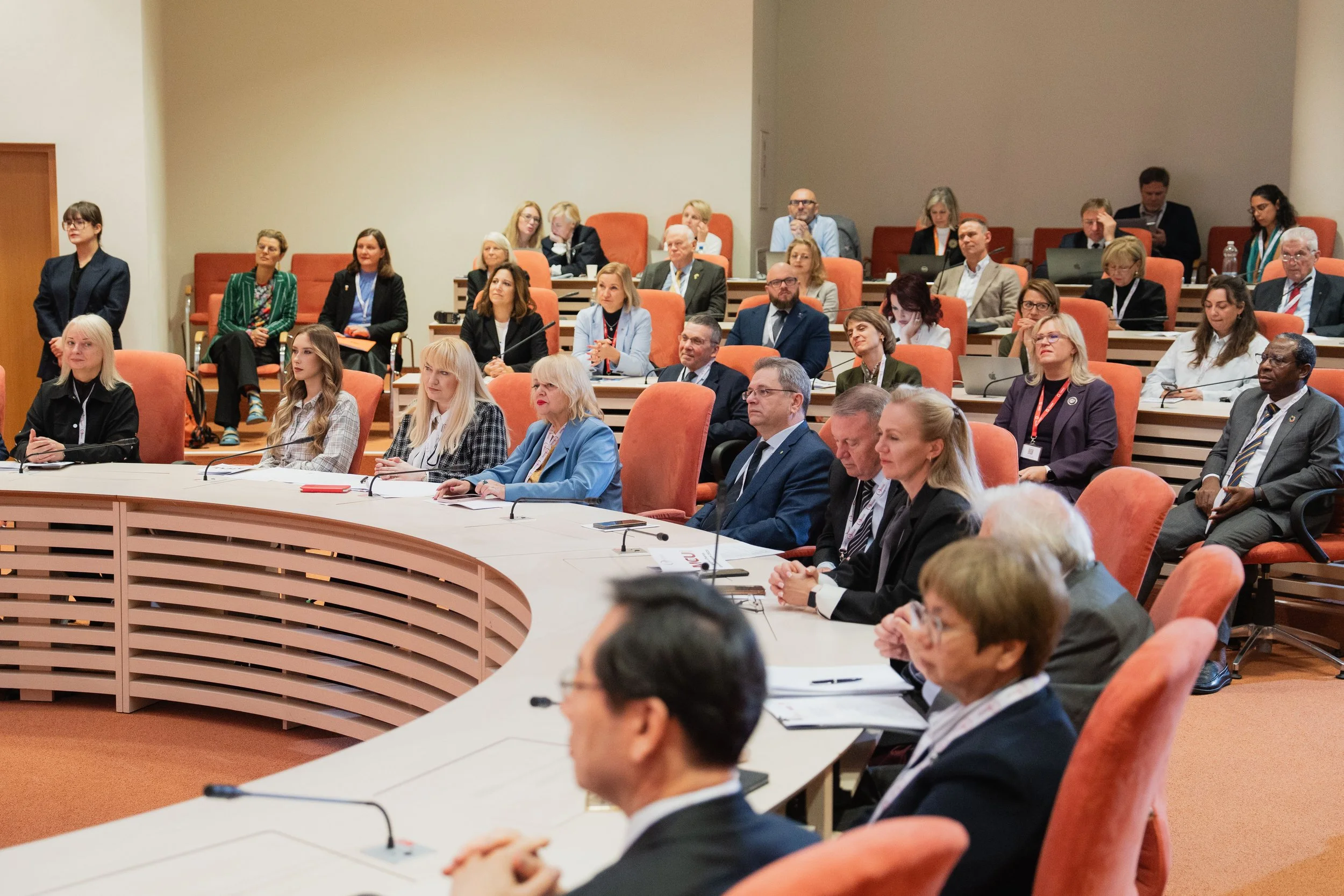
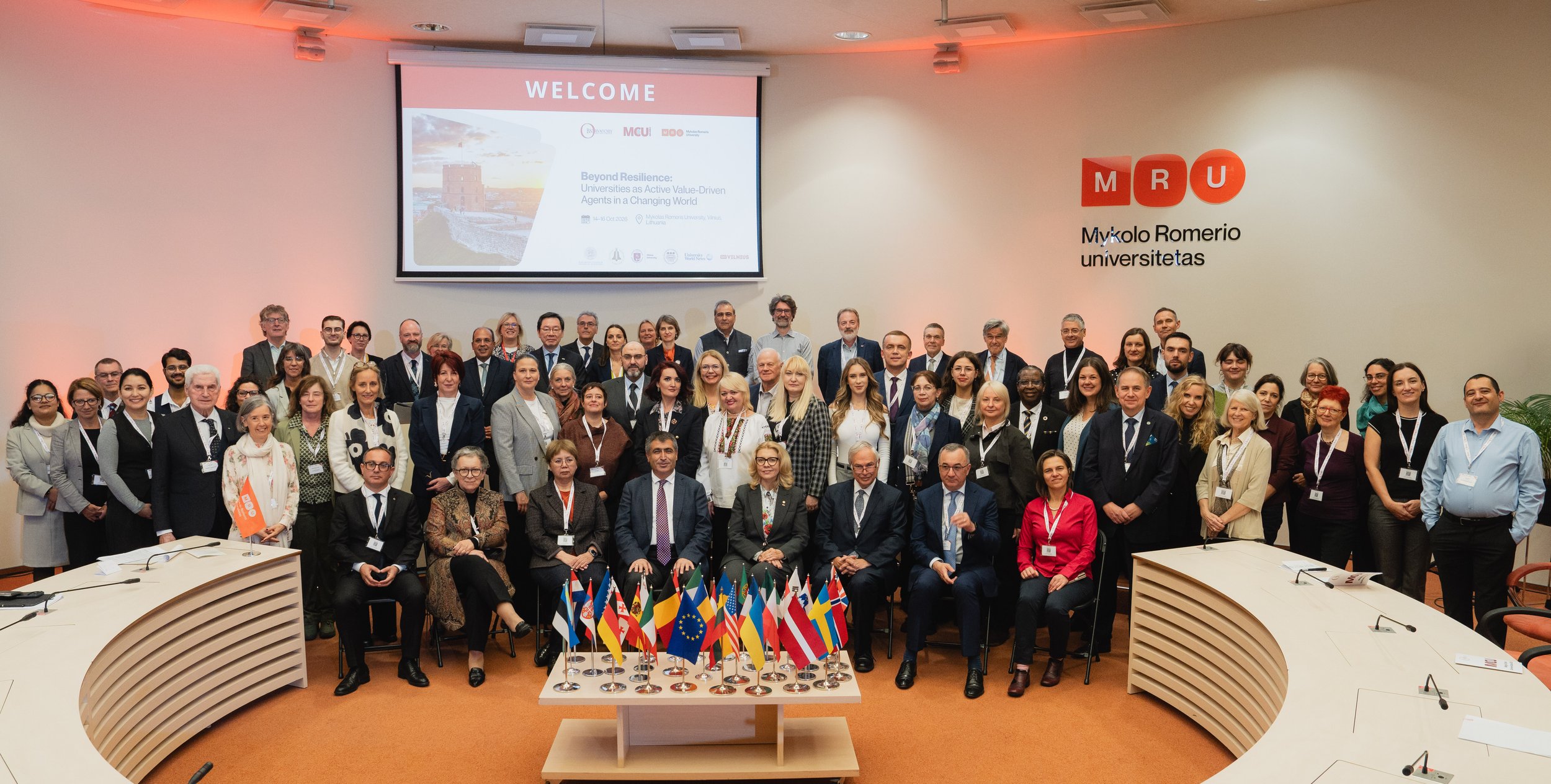
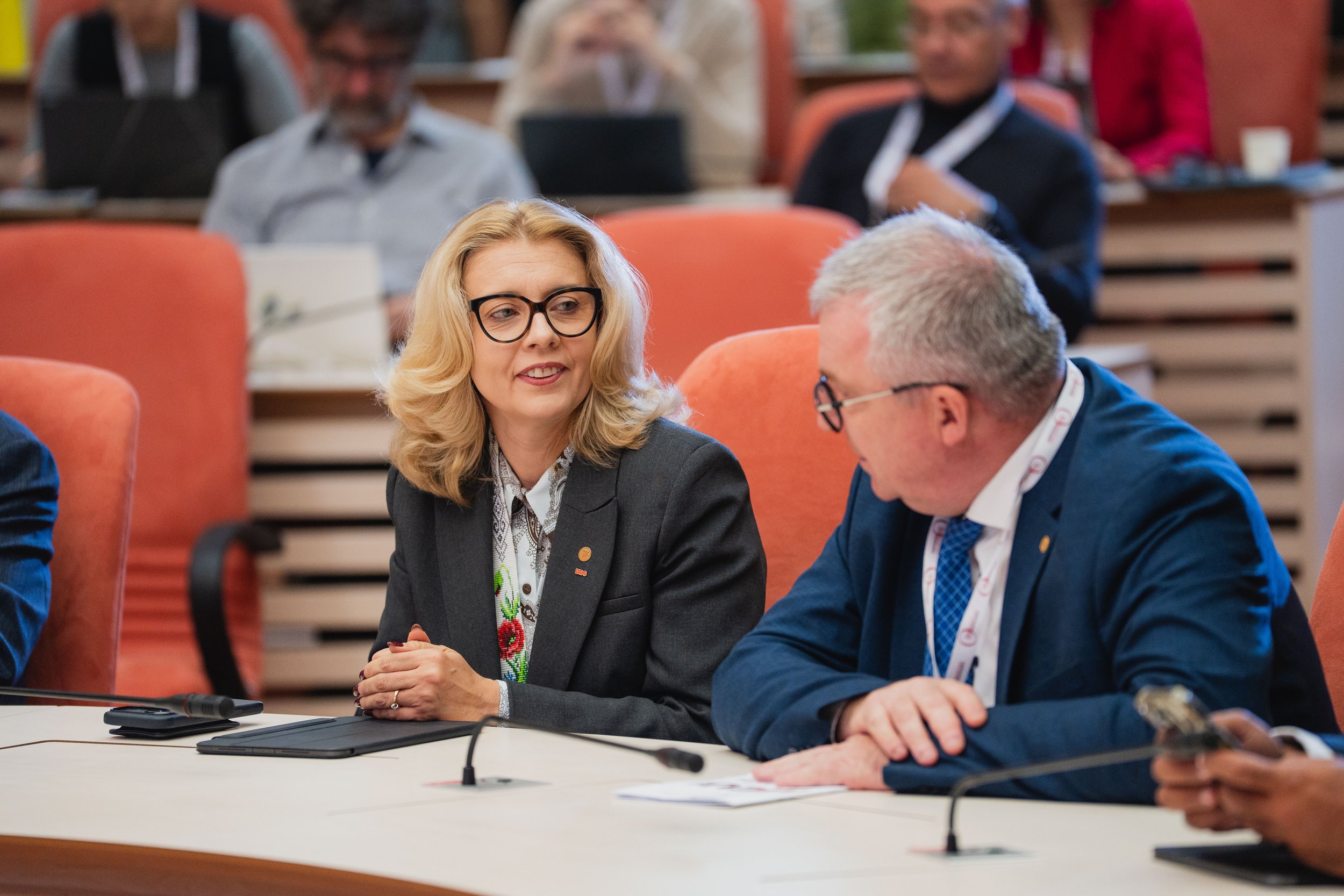
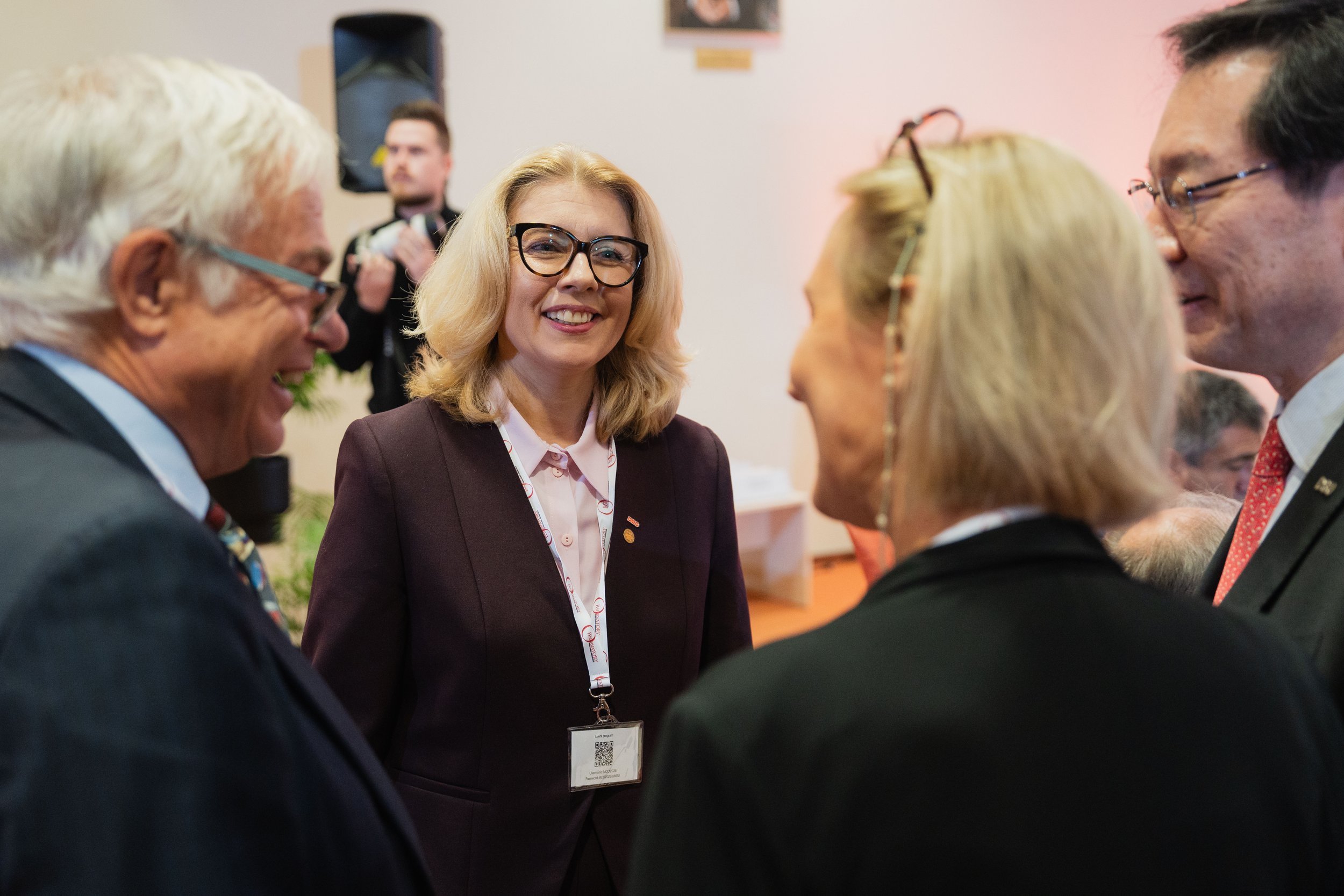
IAU Secretary General Hilligje van’t Land took part in the 2026 Anniversary Conference of the Magna Charta Universitatum (MCU), held from 14 to 16 October 2026 at Mykolas Romeris University (MRU) in Vilnius, Lithuania. The event was hosted by IAU Member MRU and organised by IAU partner the Magna Charta Observatory (MCO).
The conference theme, “Beyond Resilience: Universities as Active Value-Driven Agents in a Changing World,” reflected the challenges universities face today and encouraged participants to reconsider which values need to be preserved, why change and leadership are necessary, and what is needed to address current global challenges. Shaped by the priorities expressed by Magna Charta signatory institutions, it highlighted the importance of strengthening institutional autonomy, safeguarding academic freedom, reinforcing public trust, and promoting democratic engagement. The Anniversary event offered a space for dialogue on how universities can move beyond responding to challenges and instead act as proactive, value-driven actors in their societies.
The 2026 Anniversary brought together university leaders, academics, students, young researchers and institutional partners from across the globe to reflect on the evolving role of universities in a time of geopolitical uncertainty, technological transformation, and societal change. It also provided an opportunity to explore the contribution of universities to cooperation, sustainability, international collaboration, and integrity in higher education.
IAU Presence at the Conference
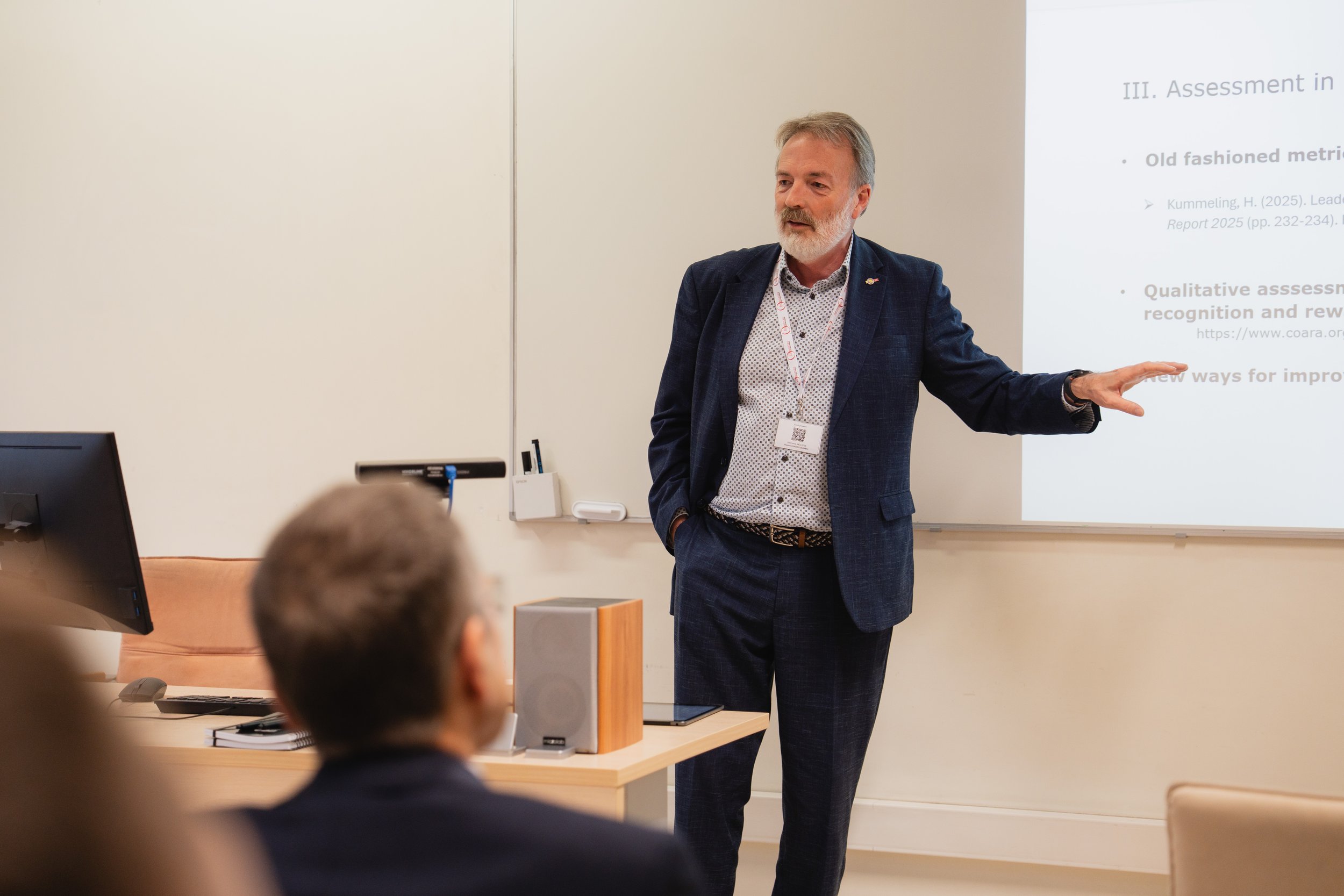
Henk Kummeling presenting during the session “New Definition of Quality: Is Quality Assurance in Higher Education Keeping Pace with a Changing World?“
View his presentation here.
Alongside the Secretary General, the IAU was represented at the conference by IAU Senior Fellow Hans de Wit, IAU Board Member Henk Kummeling, former Rector Magnificus, Utrecht University, The Netherlands, and IAU Vice Presidents Inga Žalėnienė, Rector, Mykolas Romeris University and host of the conference, and Patrick Deane, Vice-Chancellor and Principal, Queen’s University Canada and MCO President (online).
Discussions throughout the conference pointed to a stark picture for higher education worldwide: an alarming fall in the 2026 Academic Freedom Index; eroding public trust in universities; and mounting pressure on institutions to demonstrate their societal impact. Speakers shared examples of the threats universities face and of how they are showing the public the impact of their work.
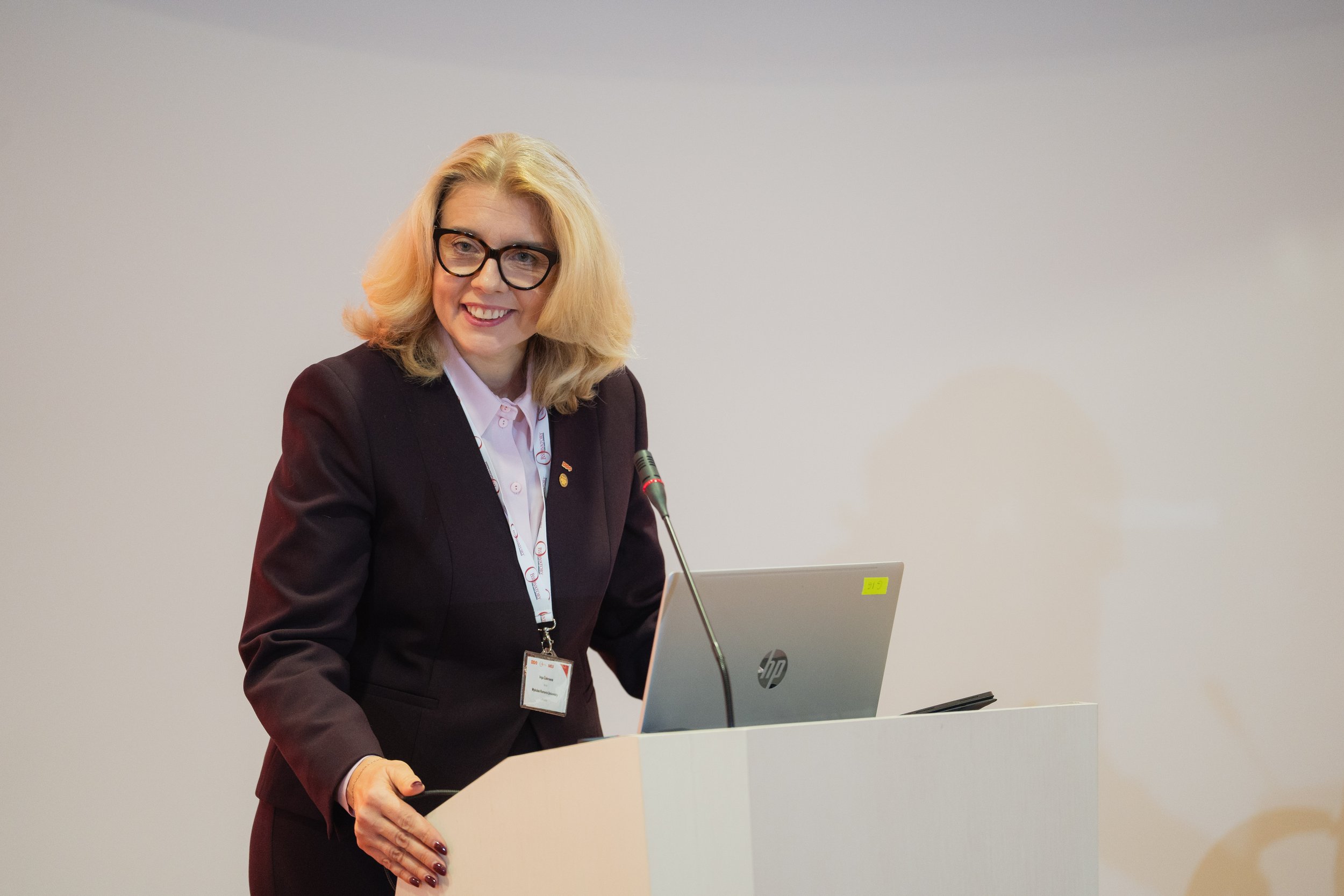
Inga Žalėnienė welcoming guests to Mykolas Romeris University, Lithuania.
In her keynote address, Kathleen Enke (Association of American Colleges and Universities) issued a call to action, noting that US universities are rethinking their economic model to become more inclusive and less elitist: “The public has not risen to defend universities in the US because they no longer see how they benefit from it.” Liviu Matei (Vice-President of the Governing Council, Magna Charta Observatory and Head of the School of Education, Communication & Society (ECS), King's College London) observed that in the UK there is not only a lack of trust but also a lack of faith in higher education—where “higher education is considered a waste of time,” the government has abandoned the 50% enrolment plan and diverts funding from higher education into defence. Hans de Wit called upon universities to wake up: “We live in a multicrisis period and need to react collectively.”
“We need to respond to the current challenges and develop human beings with human judgement,” said Jekuk Chang, stressing that in light of the AI challenge, universities must shape the frameworks around the ethical use of AI—and also define when not to use it. Inga Žalėnienė presented the challenges and opportunities of the higher education sector in the Baltic region and in Lithuania in particular: universities are under pressure, higher education is increasingly instrumentalised, and values enable institutions to respond to these pressures.
Security Challenges, the Role of Universities, and the Relationship with the State and International Strategies
Hilligje van’t Land chaired the session on Security Challenges, the Role of Universities, and the Relationship with the State and International Strategies. In a commentary prepared in advance of the session, drafted with Giorgio Marinoni, Manager for Internationalization at the IAU, she set out an international perspective on how security concerns are reshaping the relationship between universities and the state, and where the balance should lie between legitimate security needs and academic freedom, institutional autonomy, and international cooperation.
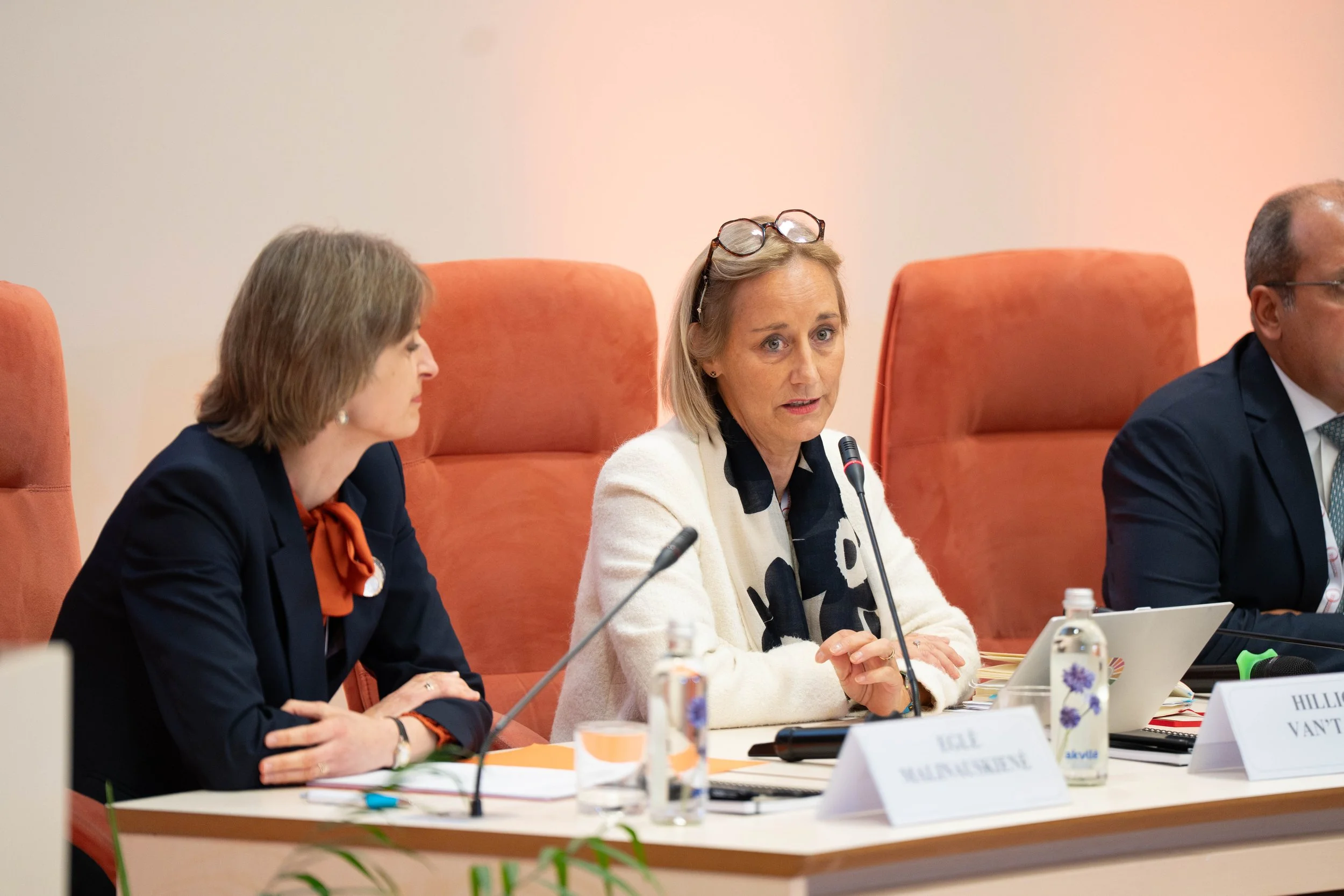
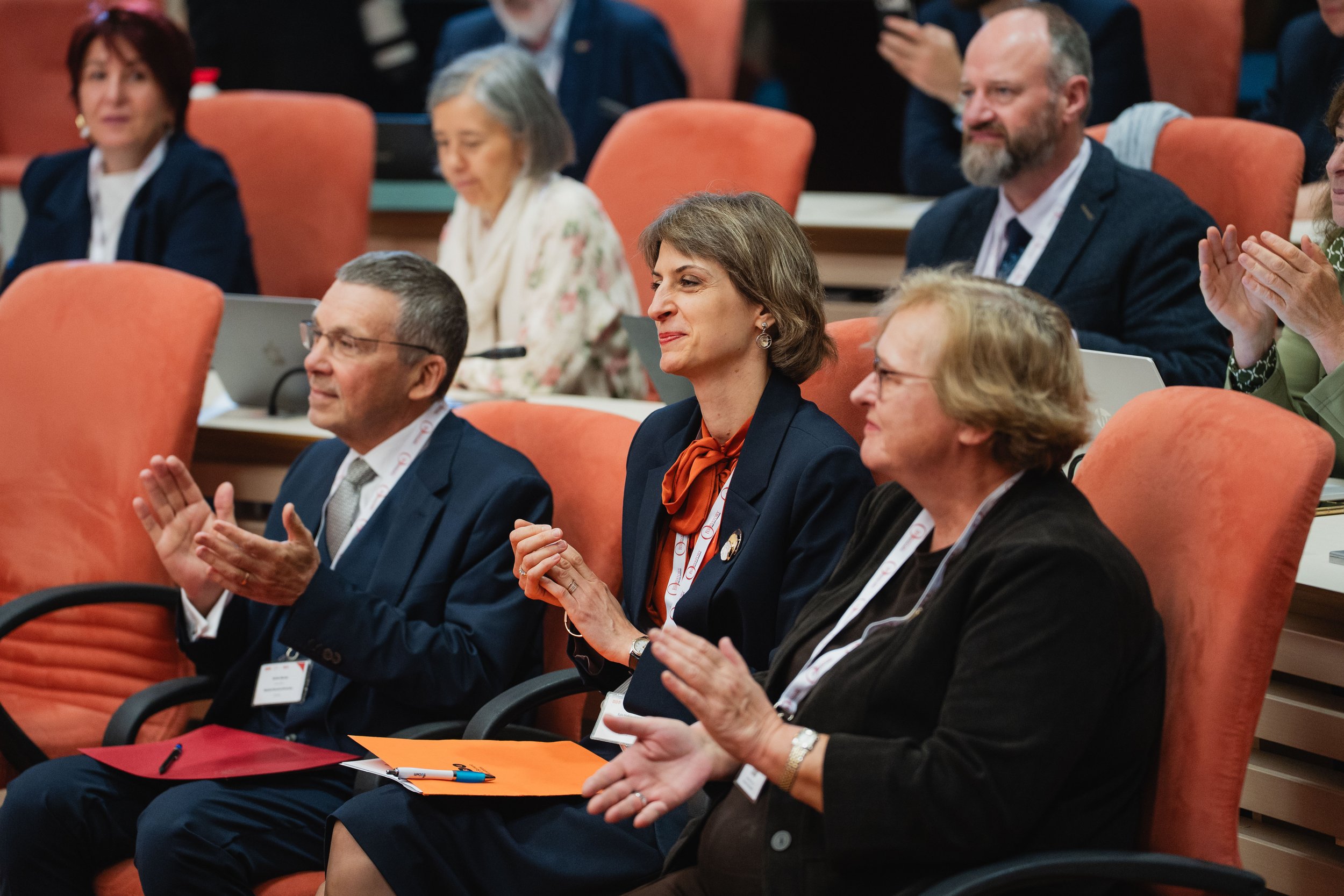
Hilligje van’t Land chairing the session “Security Challenges, the Role of Universities, and the Relationship with the State and International Strategies.”
She noted that geopolitics has moved to the centre of international relations, and higher education—in particular research—is inevitably becoming part of this geopolitical competition. Governments increasingly look to universities not only as institutions of education and knowledge creation, but also as strategic assets for research, innovation, and technological development. International collaboration is increasingly viewed through a security lens, particularly where research may have dual-use potential, and research security, protection of sensitive technologies, foreign interference, and the safeguarding of critical knowledge are becoming more prominent on government agendas—leading to greater state involvement in higher education, whether through legislation and restrictions or through funding and investment priorities.
“Some of these interventions may be legitimate or necessary,” she argued: “institutional autonomy does not mean that universities should operate outside the legal and security frameworks of the societies in which they are embedded.” The challenge is not whether security should be taken into account, but how far the state should intervene, on what grounds, and with what safeguards. The risk is that security concerns—legitimate or perceived as such—gradually become a justification for broader political intervention in academic life, undermining institutional autonomy, academic freedom, open science, and the very international cooperation on which scientific progress depends. Excessive restrictions fragment the global research system precisely when humanity’s greatest challenges—climate change, pandemics, artificial intelligence, biodiversity, and global inequality—require knowledge to cross borders.
In her view, the balance should not be understood as a choice between security and institutional autonomy or academic freedom. Restrictions should be clearly co-defined with universities, proportionate to demonstrable risks, evidence-based, transparent, and subject to appropriate oversight and review, with universities themselves playing a central role in identifying risks and developing responsible research-security frameworks. What is needed is a renewed social contract between the state and higher education: one in which universities accept their responsibility to protect knowledge, people, and society from genuine security risks, while governments recognise that institutional autonomy, academic freedom, and international scientific cooperation are not obstacles to national security but an essential part of the long-term resilience and strength of societies themselves.
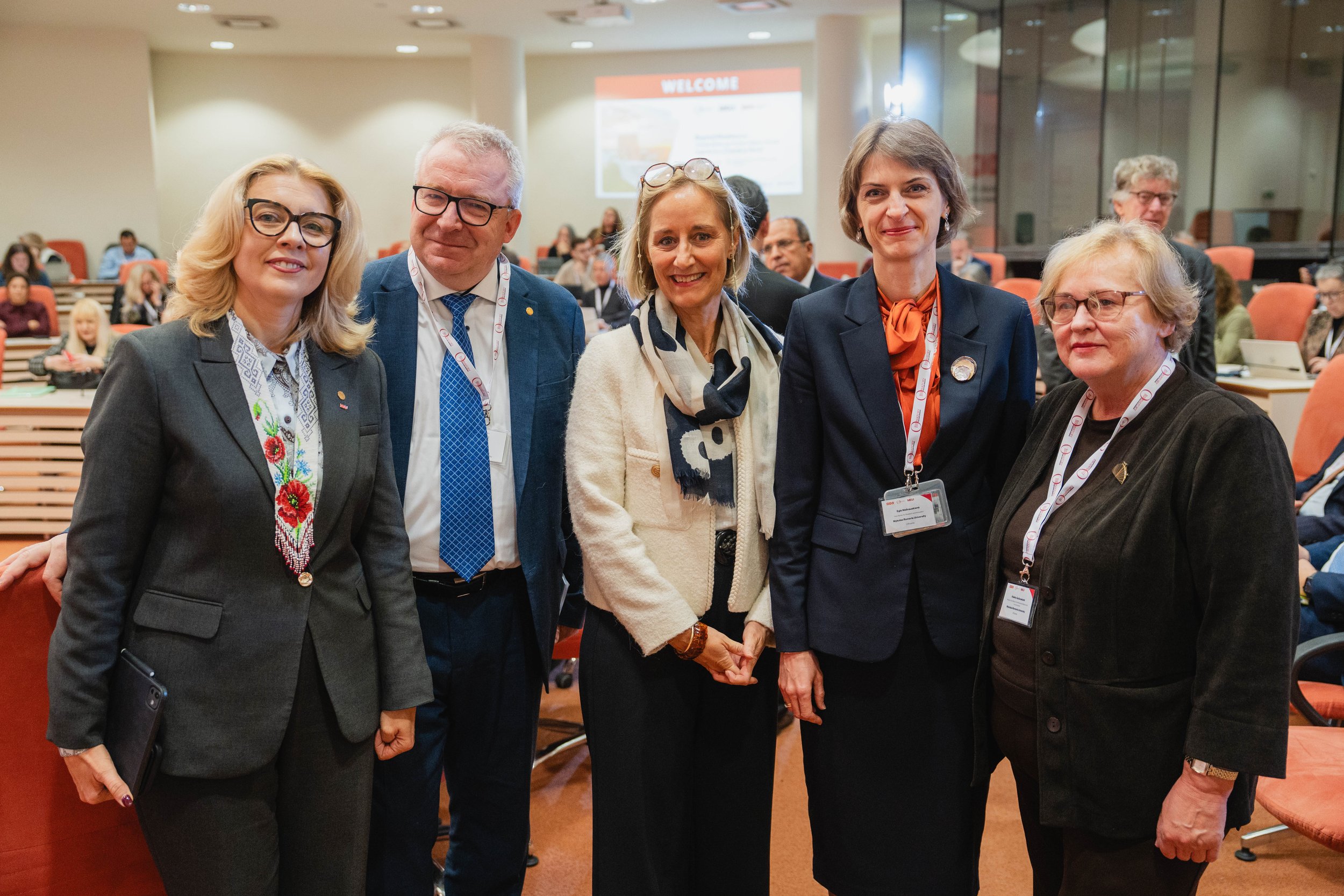
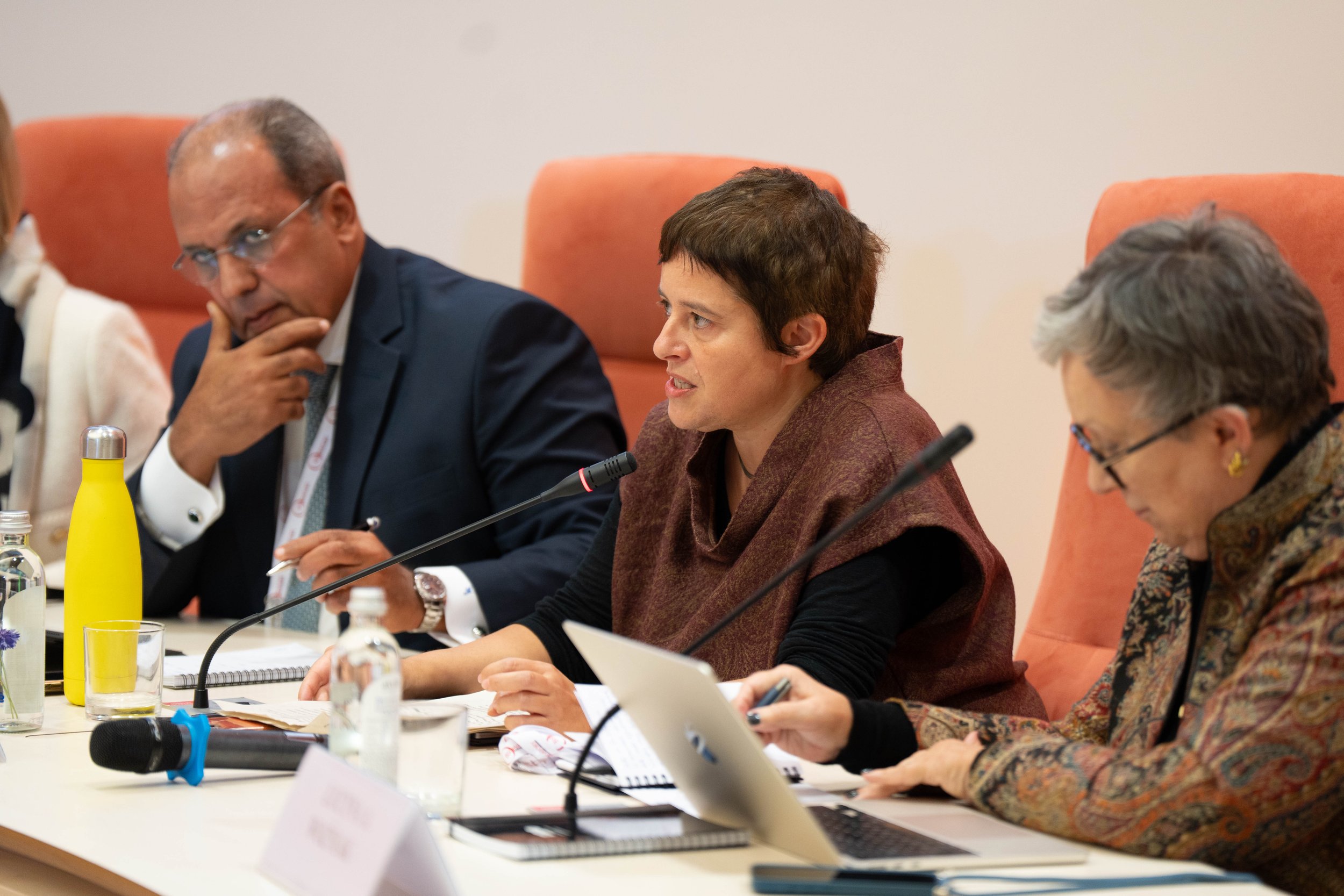
The session, co-chaired with Eglė Malinauskienė, Vice-Rector of Mykolas Romeris University, welcomed excellent contributions from speakers from Roskilde University, the British University in Egypt, the University of Bologna, the Medical University of Lodz, and Roshan Afghanistan Online University, each highlighting the challenges their universities face. Joining virtually from Roskilde University, Hanne Leth Andersen painted a picture of university autonomy at risk, with politicians interfering in higher education with few restrictions, conflicts resulting in silence (most notably that of Israel-Palestine) and an ongoing debate about where the lines lie between academic freedom and activism. What is needed, she stressed, is solidarity. Mohamed Loutfi, President and Vice-Chancellor of the British University in Egypt, emphasised the importance for universities of working with the state to co-define the direction they wish to prioritise.
Alice Mattoni of the Alma Mater Studiorum, Università di Bologna argued that universities should build their own critical understanding of security instead of importing it. Such an act, she argued, is in itself an exercise of autonomy. Lucyna A. Woźniak, Vice Rector for International Relations at the Medical University of Lodz, reminded participants that security is ultimately about people: protecting data, rights and public trust. She argued that rights and innovation are complementary, not competing, and universities must act as trusted stewards of data, with future researchers trained in data governance, ethics, cybersecurity, and AI.
About the Conference
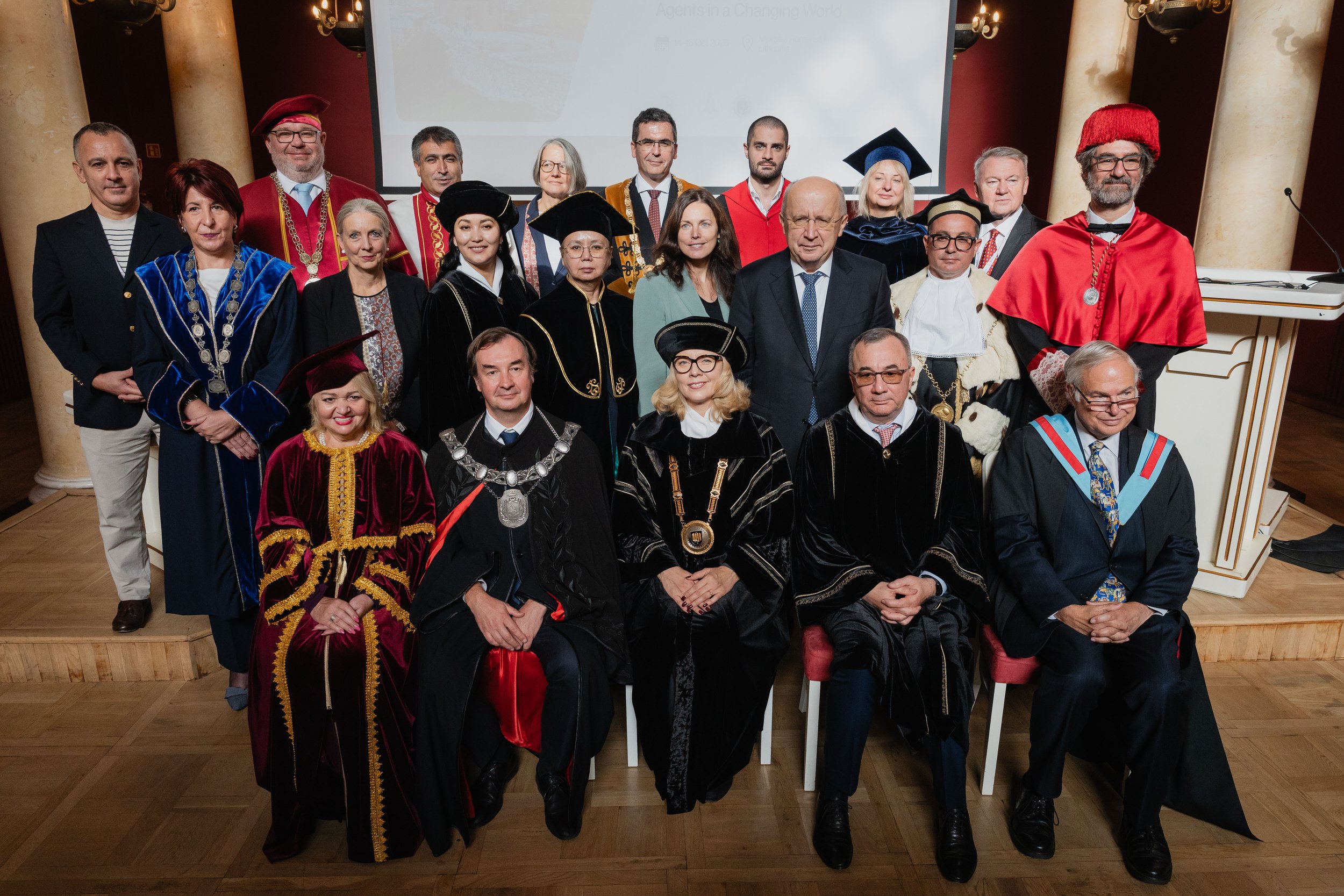
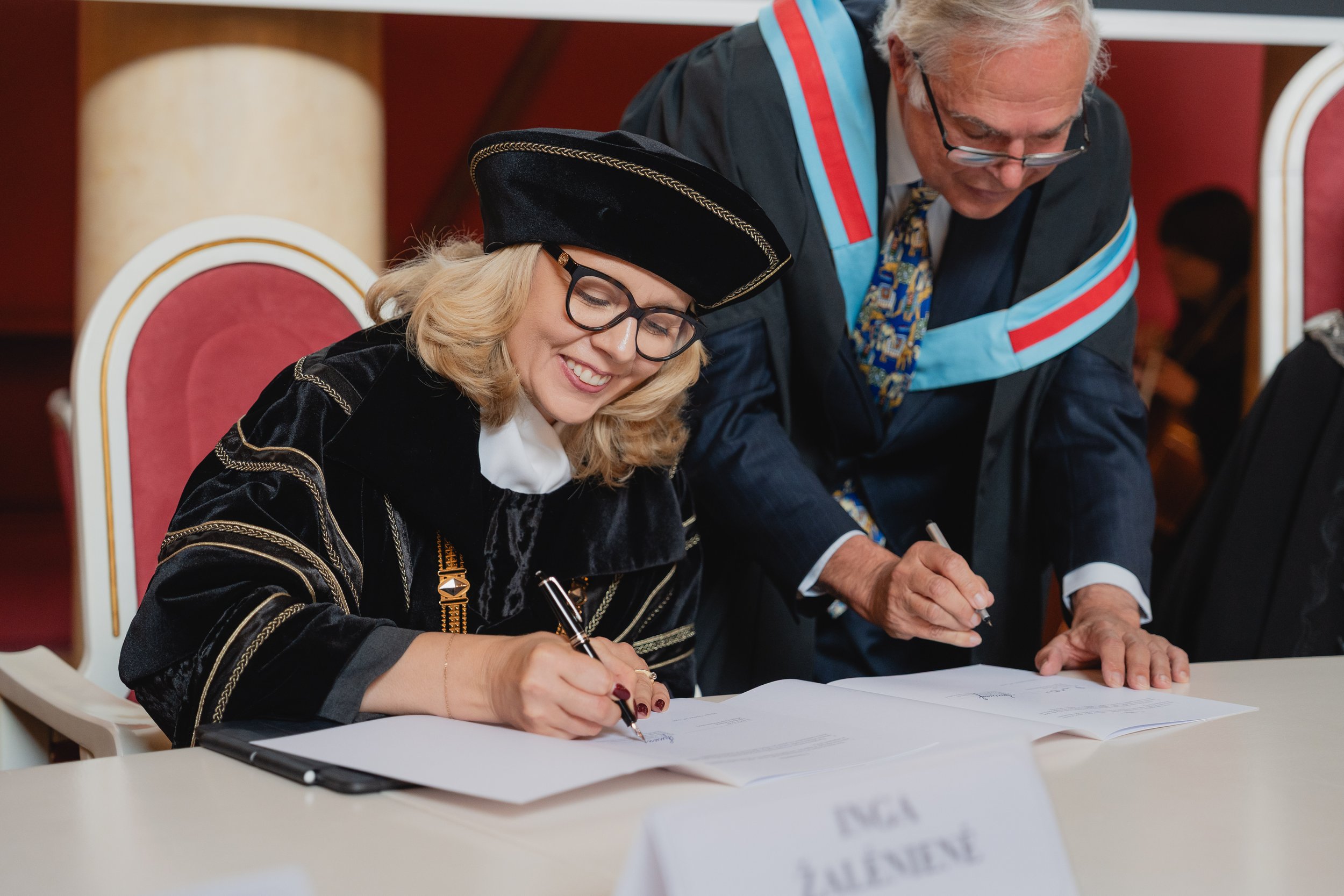
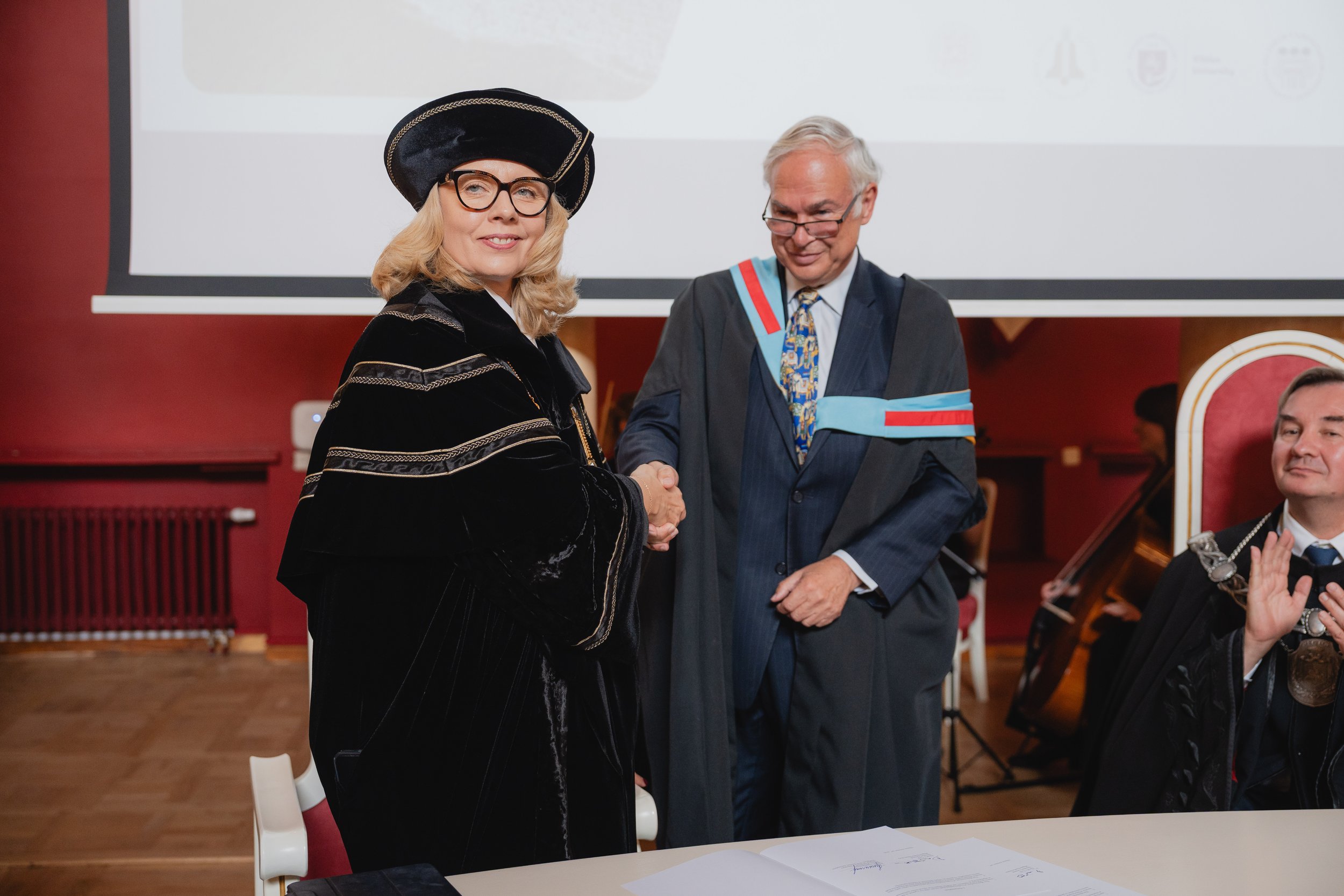
The 2026 Anniversary Conference concluded with the formal signing ceremony of the MCU2020 by new signatory universities.
More information on the conference and its programme is available on the Magna Charta Observatory website.