
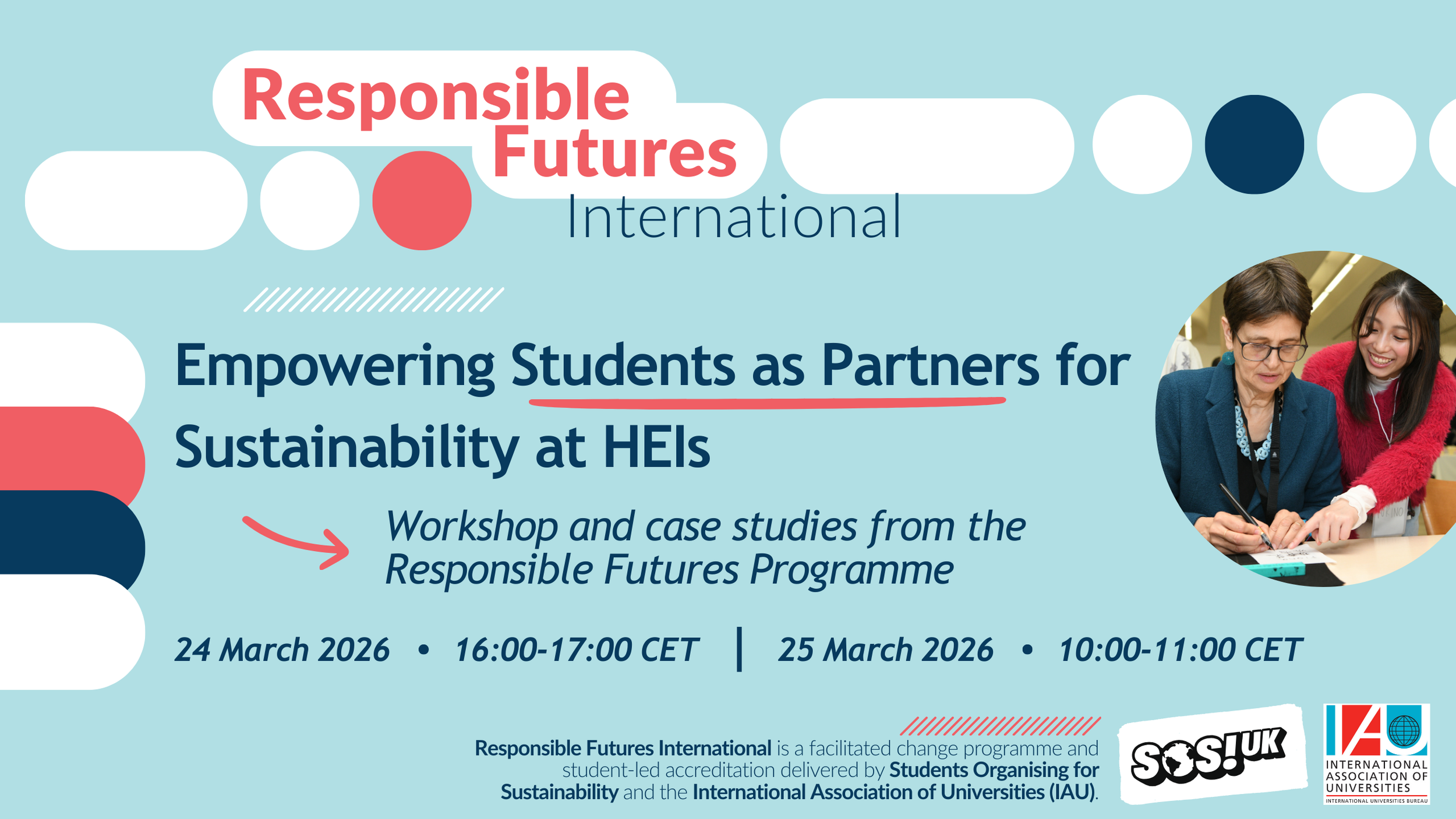
A workshop with case studies from the Responsible Futures International Programme
Higher education institutions play a critical role in educating current and future leaders who can respond effectively to sustainability challenges. In 2026, universities continue to face pressing environmental, social, and economic challenges. While there is broad agreement among educators, students, and institutional leaders that sustainability must be a priority, approaches to embedding it throughout the institution vary widely. How do we teach and conduct research for sustainability? How can the SDGs be meaningfully integrated into curricula? And how can institutions transform campus-wide practices through a strategic whole-institution approach?
Through peer-to-peer exchange and case studies from the Responsible Futures International programme, these two online workshops explored practical ways to meaningfully engage students as genuine partners in transforming the curriculum and learning environment. Institutions interested in whole-institution change and student leadership approaches to integrating sustainability throughout learning, teaching, and campus activities were invited to participate.
Find the recordings for the two online sessions below:
Speakers
Isabel Toman, Senior Programme Officer, HESD, IAU
Sonya Peres, Senior Project Manager, Education, Students Organising for Sustainability UK
Case study presentations from HEIs participating in Responsible Futures
24 March:
25 March:
About Responsible Futures
Responsible Futures brings together staff and students from across the institution to collaboratively incorporate sustainability into the whole learning experience.
Students Organising for Sustainability UK (SOS-UK) and the IAU partnered in 2023 to launch an international pilot of the long-running Responsible Futures programme. Together, pilot institutions and their students have worked to integrate sustainability into strategies and policies, embed sustainability across a broad range of disciplines, and center local/regional perspectives on sustainability. The seven pilot institutions co-created the programme, with work including the development of an international framework of good practice and structuring student-led audits to determine Responsible Futures accreditation.